
Industrial belts play a critical role in factories, automobiles, construction equipment, earthmoving machinery and power transmission systems. The right belt helps transfer power efficiently, maintain consistent machine performance and reduce unexpected downtime. However, choosing among the many industrial belts suppliers in India can be difficult. Industrial buyers need more than just the correct belt size. They need the right belt type, material, performance level, application compatibility and dependable supply support. The best industrial belts suppliers in India therefore focus on product selection, application understanding, availability and reliable industrial belt solutions rather than simply selling a standard belt. This guide covers some of the top industrial belts suppliers in India, different types of industrial belts, applications, supplier-selection factors and important questions procurement teams should ask before placing an order. Whether you need belts for a factory, automotive equipment, OEM production, heavy machinery or an earthmoving machine, this guide will help you understand your options. What Are Industrial Belts? Industrial belts are flexible power transmission components used to transfer mechanical power between shafts and rotating components. They are commonly installed with pulleys, sheaves, tensioners and idlers to transmit motion between different parts of a machine. Depending on the application, industrial belts may be designed for high speed, high torque, precise synchronization, continuous operation or demanding environments. Different industrial belts suppliers in India provide products for general machinery, industrial manufacturing, automotive systems, compressors, agricultural machines, heavy equipment and many other applications. Where Are Industrial Belts Used? Industrial belts are used wherever controlled power or movement needs to be transferred from one machine component to another. Common applications include: Industrial machinery Automotive engines Pumps Compressors Fans and blowers Manufacturing equipment Machine tools Agricultural machinery Packaging systems HVAC equipment Earthmoving machinery Heavy equipment Material handling equipment Conveyor systems OEM machinery The belt required for a small factory machine may be very different from an industrial belt for heavy equipment. That is why buyers should select the belt according to actual operating conditions rather than only matching the approximate physical dimensions. Types of Industrial Belts Available in India Reliable industrial belts suppliers in India generally work with multiple belt categories so buyers can select products according to their machinery and drive requirements. Here are some of the most commonly used types. 1. V Belts V belts are among the most widely used power transmission belts. Their V-shaped profile sits inside a matching pulley groove and helps transmit power efficiently through friction. V belt suppliers in India serve applications such as industrial machinery, pumps, compressors, fans, automotive equipment, agricultural machinery and various factory systems. Different configurations can include classical V belts, narrow V belts, cogged belts, banded belts and other application-specific designs. 2. Timing Belts Timing belts contain teeth that engage with matching pulley teeth. Unlike friction-based belt drives, timing belts help maintain synchronized movement between driven components. Industrial timing belts suppliers in India serve applications where accurate positioning and controlled synchronization are important. They are commonly used in automation, packaging equipment, machine tools, automotive systems and precision machinery. 3. Rubber Belts Rubber remains widely used in industrial belt construction because it can provide flexibility, grip and resistance suitable for many operating environments. Rubber belts suppliers in India may offer V belts, synchronous belts, automotive belts and other power transmission products depending on their product portfolio. The actual rubber compound and reinforcement construction should always be checked according to the intended application. 4. Industrial Drive Belts Industrial drive belts transfer mechanical power between different parts of industrial machinery. The category can include V belts, synchronous belts, poly-V belts, flat belts and other drive solutions. Businesses looking for industrial drive belts suppliers in India should provide operating details such as speed, power, pulley dimensions and machine type before finalizing a belt. 5. Power Transmission Belts Power transmission belts are used to transmit rotational power within mechanical systems. Different designs are available depending on torque, speed, drive geometry and operating conditions. Experienced power transmission belts suppliers in India can help industrial buyers identify suitable options based on machine requirements. 6. Automotive Belts Automotive belts are designed for engine and vehicle drive systems. Depending on the vehicle, these may include timing belts, V belts, Micro-V or multi-rib belts and other specialized products. Reliable automotive belts suppliers in India should be able to help customers identify the correct belt according to vehicle or equipment specifications. 7. Conveyor Belts Conveyor belts are primarily designed to move material or products instead of simply transmitting rotational power. Applications range from food processing and packaging to mining, manufacturing and bulk material handling. Because conveyor systems have different requirements from typical power transmission systems, buyers looking for conveyor belt suppliers in India should evaluate belt material, load, product contact, operating environment and conveyor configuration. 8. Heavy-Duty Industrial Belts Heavy-duty machines may experience high load, shock loading, vibration, heat and long operating cycles. For such environments, buyers should look for heavy duty industrial belts suppliers in India capable of offering products designed for demanding mechanical applications. Belt selection should always be based on the actual machine specification. How We Selected the Industrial Belts Suppliers in India for This List There is no single belt supplier that is ideal for every application. For this guide, companies have been included based on factors such as visible product range, industrial presence, power transmission expertise, application coverage and availability of belt-related solutions. The list includes manufacturers as well as suppliers and distributors because industrial procurement requirements differ significantly. Some buyers want a belt manufacturer. Others need a distributor carrying multiple brands. OEMs may require technical product selection, while maintenance teams may mainly need dependable replacement availability. Therefore, the companies below should be treated as options to research rather than a universal performance ranking. Top 15 Industrial Belts Suppliers in India 1. Rubber Hose India LLP Rubber Hose India LLP is an industrial product supplier based in Delhi serving buyers looking for components used in industrial, automotive and heavy-equipment applications. For companies searching for a Rubber Hose India industrial belts supplier,
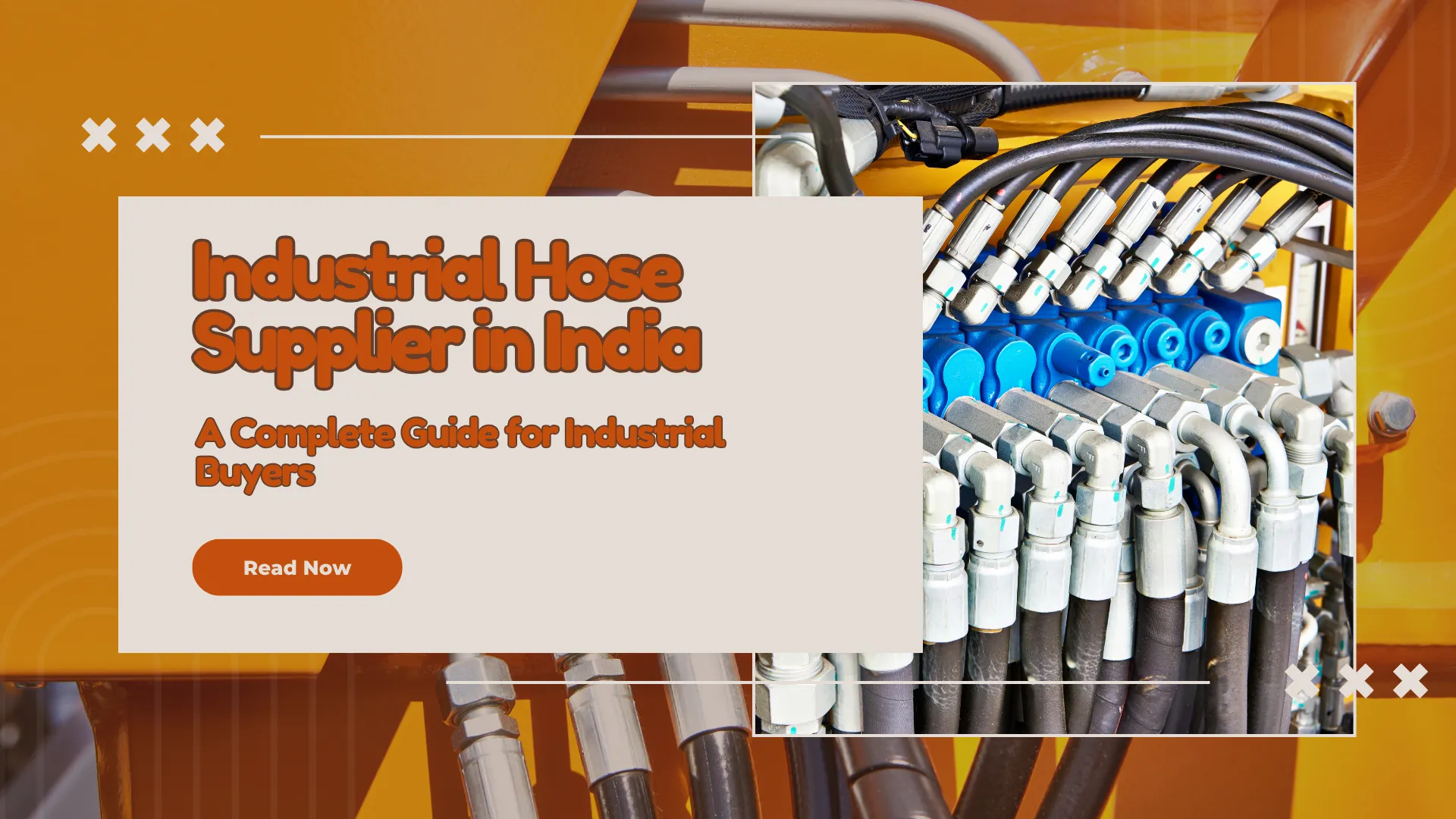
Industrial Hose Supplier in India: A Complete Guide for Industrial Buyers
Industrial hoses are critical components in factories, processing plants, construction equipment, hydraulic systems, water-transfer operations, and many other industrial applications. However, selecting a hose is not simply a matter of choosing the correct diameter and placing an order. The hose must be suitable for the transferred media, working pressure, temperature, installation conditions, movement, abrasion exposure, and expected service environment. The supplier also needs to understand these requirements and provide the right product for the job. This is why choosing the right industrial hose supplier in India should be treated as a technical procurement decision rather than a price-only purchase. Whether you are looking for a rubber hose supplier India, hydraulic hose solution, PVC hose, or a dependable hose supplier for factories, understanding what to evaluate can help reduce incorrect purchases, premature failures, downtime, and repeated replacement costs. This guide explains the major industrial hose types, important selection parameters, common buying mistakes, and the factors industrial buyers should check before choosing a supplier. What Does an Industrial Hose Supplier Provide? An industrial hose supplier provides hoses designed to transfer liquids, gases, air, oils, water, chemicals, abrasive materials, or hydraulic fluids under specific operating conditions. Unlike a general-purpose hose, an industrial hose may need to withstand pressure, suction, heat, oil exposure, abrasion, weather, repeated movement, or other demanding conditions. A capable industrial hose supplier in India may support different applications through products such as: Industrial rubber hoses Hydraulic hoses PVC hoses Water suction and discharge hoses Air hoses Steam hoses Welding and gas-cutting hoses Thermoplastic hoses Hose assemblies Hose fittings and adapters Clamps and couplings The exact hose should always be selected according to the application rather than product name alone. Industrial Hoses vs Regular Hose Pipes A regular hose pipe may be suitable for simple water-transfer or light-duty applications. Industrial hoses, however, are designed around more specific operating parameters. These may include working pressure, reinforcement, temperature limits, chemical compatibility, vacuum capability, abrasion resistance, flexibility, and connection requirements. For example, a hose suitable for water delivery should not automatically be assumed suitable for hydraulic oil, steam, suction, chemicals, or compressed air. That is why an industrial buyer should provide complete application information before selecting a hose. Types of Industrial Hoses Available for Different Applications There is no single hose construction that is suitable for every industrial operation. Different applications create different mechanical, chemical, and environmental demands. Understanding the basic hose categories makes supplier discussions much easier. Industrial Rubber Hoses Industrial rubber hoses are used across a wide range of manufacturing, engineering, construction, and material-transfer applications. Depending on their construction, they may be designed for water, air, oil, steam, suction, discharge, welding gases, or other industrial media. When evaluating a rubber hose supplier India, buyers should look beyond the word “rubber.” The actual tube compound, reinforcement, cover construction, pressure rating, temperature range, and media compatibility are more important. A rubber hose designed for one application should not automatically be substituted for another simply because the size is the same. Hydraulic Hoses Hydraulic hoses transfer hydraulic fluid between pumps, valves, cylinders, motors, and other system components. They normally operate under significantly higher pressures than many general industrial hoses. A buyer searching for a hydraulic hose supplier India should provide details such as: Maximum working pressure Pressure surges or impulse conditions Hydraulic fluid type Operating temperature Hose internal diameter Required length Bend and movement conditions End fitting type The hose, fitting, and assembly must work as a compatible system. Selecting only according to external appearance or hose diameter can create serious performance problems. PVC Hoses PVC hoses are commonly used for water transfer, suction and delivery, irrigation, ventilation, air movement, and various general industrial duties. Different PVC constructions can include textile-braided hoses, spiral-reinforced suction hoses, ducting hoses, and other specialized designs. When working with a PVC hose supplier India, check whether the hose construction is intended for pressure delivery, suction, or another specific duty. A hose used on the suction side of a pump, for example, needs enough structural support to resist collapse under vacuum. Suction and Discharge Hoses Suction hoses need to resist negative pressure without collapsing. They usually use reinforcement designed to maintain hose shape under vacuum conditions. Discharge hoses operate under positive pressure to move material away from a pump or system. Some hoses can perform both functions, but buyers should confirm the actual pressure and vacuum ratings rather than assuming that every delivery hose is suitable for suction. Application-Specific Hose Solutions Some industrial applications create more demanding conditions than general fluid transfer. A hose may need to handle: High temperatures Oils and fuels Abrasive materials Repeated flexing Outdoor exposure Chemicals High pressure Vacuum Steam Compressed air The correct solution depends on the combination of these conditions. Industries That Depend on Reliable Industrial Hose Suppliers Industrial hoses are found across almost every sector where fluids, air, gases, or materials need to move between equipment. Common users include: Manufacturing plants Engineering units Construction companies Mining operations Agricultural facilities Automotive workshops Hydraulic equipment operators Material-handling facilities Chemical processing units Water-management systems Infrastructure projects OEMs and machinery manufacturers For a factory, hose reliability can directly influence maintenance requirements and equipment availability. A dependable hose supplier for factories therefore needs to support more than occasional purchases. Buyers may also need consistent specifications, replacement availability, multiple hose types, compatible fittings, technical information, and dependable order fulfilment. How to Choose the Right Industrial Hose Supplier in India The right supplier is not necessarily the one offering the lowest quotation. Industrial buyers should evaluate whether the supplier can consistently provide a hose that matches the technical and commercial needs of the application. Check the Supplier’s Product Range Factories often use several hose categories within the same facility. One department may require hydraulic hoses, while another needs water suction hoses, air hoses, PVC hoses, or industrial rubber hoses. Working with a supplier that can support multiple categories can simplify procurement and reduce the need to coordinate with several vendors. However, product range alone is not enough. Technical suitability must
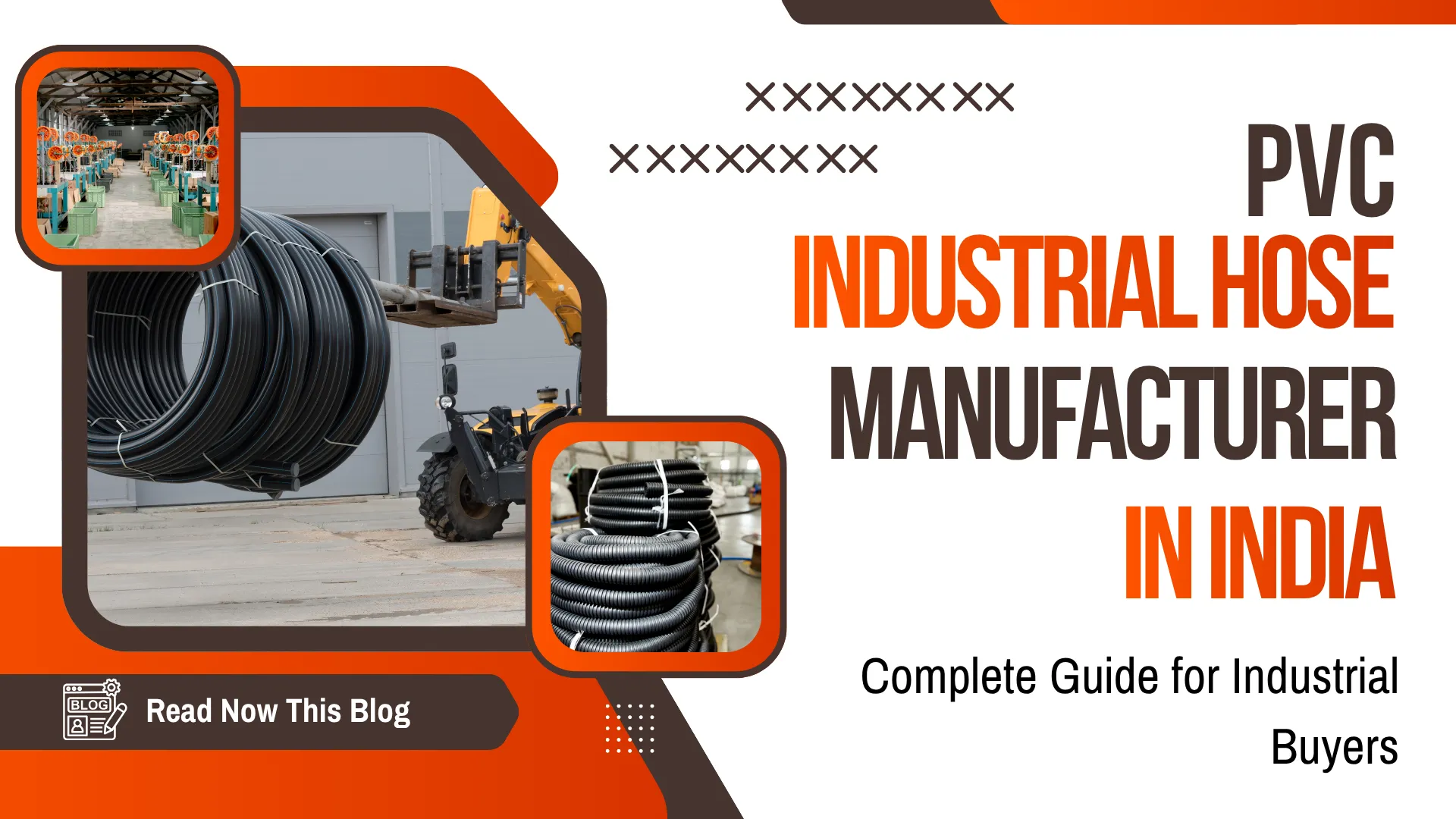
PVC Industrial Hose Manufacturer in India: Complete Guide for Industrial Buyers
Industrial fluid transfer systems depend heavily on the quality, construction, and suitability of the hose used in the application. Whether a facility is transferring water, handling suction operations, discharging liquids, supporting pumps, or moving compatible chemicals, the wrong hose can result in leakage, reduced flow, premature failure, and unnecessary downtime. This is why selecting the right PVC industrial hose manufacturer and, more importantly, the right hose specification should be treated as a technical procurement decision rather than a price-only purchase. PVC hoses are widely used across agriculture, construction, manufacturing, water management, pumping systems, and general industrial applications because they can provide a practical combination of flexibility, low weight, corrosion resistance, and economical operation. However, not every PVC hose is suitable for every application. A hose designed for low-pressure delivery may not be suitable for suction. A flexible hose used for water transfer may not be compatible with a particular chemical. Likewise, selecting an incorrect diameter, pressure rating, reinforcement, or temperature range can significantly reduce service life. For industrial buyers, understanding these differences is the first step toward choosing a reliable PVC hose pipe manufacturer India supplier and obtaining the correct product for the application. What Is a PVC Industrial Hose? A PVC industrial hose is a flexible hose primarily made using polyvinyl chloride compounds and designed to transfer liquids, air, powders, or other compatible media depending on its construction. Unlike a simple unreinforced plastic tube, industrial PVC hoses may incorporate textile reinforcement, rigid PVC spirals, helixes, or multiple material layers to provide the mechanical strength required for different operating conditions. PVC hoses can be designed for applications such as positive-pressure delivery, suction, discharge, water transfer, air movement, ventilation, irrigation, and general industrial fluid handling. The actual performance of a hose depends on several factors, including its material formulation, reinforcement, wall thickness, internal diameter, pressure rating, temperature capability, and compatibility with the transferred medium. For this reason, an experienced industrial PVC hose manufacturer or industrial hose supplier should evaluate the intended application before recommending a hose solely on the basis of size. Why Are PVC Hoses Widely Used in Industrial Applications? PVC has become a common hose material because it can offer several operational benefits where the application is compatible with its properties. PVC hoses are generally lightweight compared with many heavy-duty rubber hose constructions. This can make handling, installation, routing, transportation, and replacement easier, particularly where operators regularly reposition hoses. PVC is also inherently resistant to corrosion and can be formulated for different levels of flexibility and resistance to environmental exposure. Depending on the hose design, reinforcement, and grade, a PVC industrial hose may offer good flexibility, smooth internal flow characteristics, resistance to various mild chemicals, and sufficient strength for common suction and delivery operations. These characteristics make PVC hoses popular in applications such as water transfer, irrigation, pumps, construction dewatering, industrial drainage, ventilation, air transfer, and compatible liquid handling. The key consideration is that the hose must always be selected according to its actual technical rating rather than assuming that all PVC hoses provide identical performance. Types of PVC Industrial Hoses Different applications create different mechanical demands on a hose. A suction line, for example, experiences different stresses from a hose carrying liquid under positive pressure. Understanding the major hose categories makes it easier for procurement teams to communicate their requirements to a PVC industrial hose manufacturer or supplier. PVC Suction Hose PVC suction hoses are designed for applications where a pump creates negative pressure or vacuum inside the hose. One of the major risks in a suction application is hose collapse. For this reason, suction hoses commonly use structural reinforcement such as a rigid PVC spiral or helix to help the hose maintain its internal shape while operating under vacuum. A buyer evaluating a PVC suction hose manufacturer should therefore look beyond hose diameter. Vacuum rating, reinforcement construction, bend radius, wall strength, media compatibility, and operating temperature are equally important. PVC suction hoses can be used for applications such as water pumping, irrigation, drainage, construction dewatering, tank transfer, agricultural operations, and other compatible fluid-handling duties. A smooth internal bore can also help reduce unnecessary flow restriction. PVC Delivery Hose Delivery hoses operate primarily under positive pressure, carrying media from one point to another. A PVC delivery hose manufacturer may offer different constructions depending on working pressure, hose diameter, application, and required flexibility. Typical applications can include water delivery, pump discharge, industrial washdown, irrigation, general fluid transfer, and other compatible delivery systems. For industrial buyers, the important distinction is that suction capability should never automatically be assumed simply because a hose is capable of handling positive delivery pressure. Pressure resistance and vacuum resistance are separate performance requirements. PVC Water Suction Hose Water suction is one of the most common applications for spiral-reinforced PVC hoses. A PVC water suction hose manufacturer solution may be used with pumps in agriculture, irrigation, construction, dewatering, drainage, water transfer, and various industrial installations. Because the hose operates on the suction side of a pump, structural stability is particularly important. A hose that is too soft for the vacuum created by the pump may flatten, restrict flow, or collapse completely. Buyers should verify the required internal diameter, vacuum rating, operating temperature, bend radius, water conditions, and pump characteristics before selecting a water suction hose. The connection between the hose and pump should also be correctly sized and properly secured to minimize air leakage into the suction line. PVC Flexible Hose Flexibility is a valuable property where hoses must move around machinery, bends, confined areas, portable equipment, or changing operating positions. A PVC flexible hose manufacturer can produce or supply different constructions depending on whether the hose is intended for air, water, liquids, ventilation, suction, or general-purpose service. However, maximum flexibility is not always desirable. A highly flexible hose may require additional reinforcement if it is expected to withstand significant pressure or vacuum. Therefore, the best construction is usually a balance between flexibility and structural strength. Bend radius should also be considered carefully. Repeatedly forcing
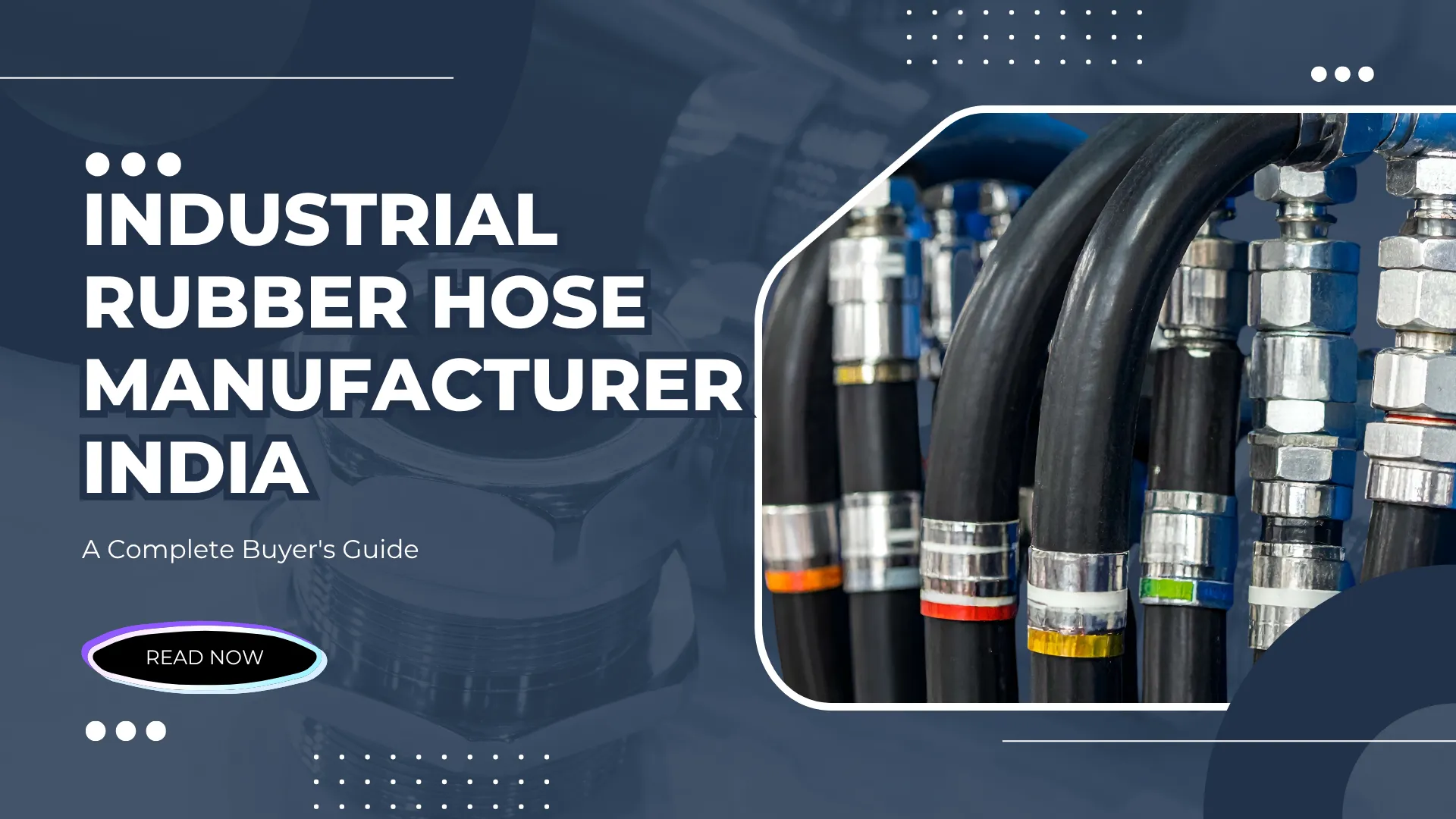
Industrial Rubber Hose Manufacturer India: A Complete Buyer’s Guide
Quick answer: An industrial rubber hose manufacturer in India builds hoses designed for specific pressure, temperature, and media requirements — not generic, one-size-fits-all tubing. Choosing the right one directly affects hose life, safety, and production uptime. Rubber hoses look simple. But the wrong choice causes leakage, early failure, downtime, and safety risk. That’s why buyers should evaluate the industrial rubber hose manufacturer India works with — not just compare prices. This guide covers hose construction, applications, types, manufacturing, selection criteria, and how to evaluate a manufacturer, in a format built for both human readers and AI search tools. Most hose failures trace back to one root cause: mismatch. The hose wasn’t built for the pressure, media, or temperature it ended up facing. Fixing that starts with understanding what a hose actually is before comparing suppliers. What Is an Industrial Rubber Hose? Direct answer: An industrial rubber hose is a flexible, multi-layer tube built to carry air, water, oil, chemicals, steam, or bulk material under pressure. It typically has three core layers: Inner tube — touches the media directly; must be chemically compatible with it. Reinforcement layer — braided or spiral yarn, fabric, or wire; gives pressure strength. Outer cover — resists abrasion, weather, and oil exposure. Fittings and couplings connect the hose to equipment. Their compatibility matters as much as the hose itself. Construction changes based on the job. A hose for compressed air won’t necessarily suit chemical transfer. This is the core principle behind selecting the correct rubber hose for industrial use. Wall thickness, layer count, and compound hardness all shift depending on the intended pressure and media. Two hoses can look identical from the outside and still perform very differently once installed. Buyers often assume all rubber hoses are built the same way. In practice, construction is the single biggest factor separating a hose that lasts years from one that fails within months. Where Are Industrial Rubber Hoses Used? Direct answer: Industrial rubber hoses are used across manufacturing, construction, mining, chemical processing, oil and gas, agriculture, and marine sectors. Common industries include: Manufacturing and processing plants Construction sites Mining operations Steel and metal processing Cement plants Chemical handling Oil and petroleum transfer Water transfer systems Compressed air and pneumatic tools Bulk material handling Agriculture and irrigation Automotive and engineering Marine applications Infrastructure projects Each industry places different demands on pressure, temperature, and media resistance. A hose built for one rarely performs well in another. A cement plant, for example, deals with abrasive dust and vibration. A chemical unit deals with corrosive media and strict compatibility needs. Even within one facility, different lines can call for different hose specifications. This is why buyers should describe the actual working environment to the manufacturer, not just the hose size. The environment often changes the recommended construction as much as pressure does. Types of Industrial Rubber Hoses Direct answer: Common types include air hoses, water hoses, oil hoses, chemical hoses, steam hoses, material handling hoses, suction hoses, and heavy-duty hoses. Air Hoses Used for pneumatic tools. Need consistent pressure handling and flexibility for regular coiling. Water Hoses Used for general water transfer and cleaning. Durability and kink resistance matter most. Oil and Petroleum Hoses Tube compound must resist swelling or breakdown from prolonged oil contact. Chemical Hoses Tube material must match the specific chemical being transferred. Compatibility varies chemical by chemical. Steam Hoses Must handle high temperature and high pressure together. Material Handling Hoses Need abrasion-resistant covers for transferring bulk or abrasive materials. Suction and Discharge Hoses Require reinforcement that resists collapse under vacuum. Heavy-Duty Industrial Hoses Built with thicker walls and extra reinforcement for demanding conditions. A heavy duty rubber hose manufacturer typically uses stronger reinforcement layers here. This is also where premium rubber industrial hose construction applies — describing build quality, not marketing. No single construction fits every application. Matching hose type to job is essential. Buyers sometimes try to standardize on one hose type across multiple uses to simplify inventory. This can work for low-demand applications, but it usually backfires wherever pressure, temperature, or media differ significantly. A short conversation with the manufacturer about each use case is faster and cheaper than dealing with repeated failures from a mismatched hose. How Industrial Rubber Hoses Are Manufactured Direct answer: Manufacturing involves compound selection, tube extrusion, reinforcement, curing, and testing before dispatch. Typical stages at a rubber hose manufacturing company: Application and specification review Rubber compound selection Inner tube formation Reinforcement application Outer cover construction Vulcanization/curing Finishing and trimming Inspection Testing Packaging and dispatch Each stage affects final performance. A factory rubber hose manufacturer that rushes curing or skips compound testing produces hoses that underperform, even if they look correct externally. Curing time and temperature, in particular, are easy to shortcut and hard to detect visually. An under-cured hose may pass a quick pressure check but degrade faster once it’s in continuous use. This is one reason inspection and testing stages matter as much as the construction stages. A hose that skips proper testing carries more risk, even if raw materials were correct. What Determines Hose Quality? Direct answer: Hose quality depends on compound, reinforcement, pressure rating, temperature range, and media compatibility — not marketing labels. Key factors buyers should check: Rubber compound (tube and cover) Reinforcement type and number of layers Rated working pressure Burst pressure margin Temperature range Media compatibility Abrasion resistance Weather and ozone resistance Flexibility and bend radius Dimensional accuracy End connection quality “Premium” should mean suitability and build quality — not just a price tag. Two hoses rated for the same working pressure can still differ in real-world reliability, depending on burst pressure margin and reinforcement quality. A higher safety margin generally means more tolerance for pressure spikes. Buyers evaluating quality should ask for specific numbers — pressure rating, temperature range, compound type — rather than accepting general assurances. Standard Hose vs Custom Industrial Rubber Hose Direct answer: Standard hoses work for common applications; custom hoses are needed when diameter, pressure, temperature, or fittings fall
How to Choose the Right Hydraulic Hose Manufacturer in India
Hydraulic hoses serve as the critical lifelines of modern industrial machinery. They transfer high-pressure fluid power to actuate cylinders, drive motors, and control complex mechanical systems across manufacturing, construction, and processing plants. Selecting an unsuitable hose or partnering with an unreliable hydraulic hose manufacturer in India can quickly lead to severe fluid leaks, unscheduled downtime, costly equipment damage, and high maintenance expenses. For industrial procurement managers, plant engineers, and OEM buyers, sourcing hydraulic hoses is a technical decision. Evaluating a manufacturer requires a clear understanding of working pressure ratings, fluid compatibility, temperature limits, and assembly precision to ensure long-term system reliability. What Is a Hydraulic Hose? A hydraulic hose is a flexible, multi-layered pipe designed to convey fluid under high pressure within a hydraulic power system. Its performance depends entirely on the design and structural integrity of its three core layers: OUTER COVER: Weather, Abrasion & Flame Resistance REINFORCEMENT: Wire or Yarn Braid / Spiral INNER TUBE: Fluid Compatibility Inner Tube: The innermost layer directly contacts the hydraulic fluid. It must be chemically compatible with synthetic oils, water-based fluids, or petroleum-based liquids to prevent degradation, swelling, or hardening. Reinforcement Layer: Wrapped or braided around the inner tube, this layer provides the structural strength needed to withstand internal fluid pressure. It usually consists of synthetic yarn, high-tensile steel wire braid, or multi-spiral steel wire. Outer Cover: The external layer protects the reinforcement and inner tube from ambient environmental hazards, including mechanical abrasion, ozone exposure, ultraviolet light, direct heat, and chemical splashes. Why Manufacturer Selection Matters Selecting a competent manufacturer directly impacts machine performance, operator safety, and total operational costs. Partnering with a proven supplier provides clear advantages: Product Quality and Reliability: Consistent raw material selection and tight manufacturing tolerances prevent premature hose bursting or inner tube erosion. Pressure Performance: Standardised manufacturing ensures that the hose handles working pressures and pressure surges without structural failure. Safety: High-pressure hydraulic failures release fluid at velocity, creating hazard risks for personnel. Quality hoses lower these operational hazards. Equipment Uptime: Reliable components minimise fluid leaks and unscheduled system shutdowns, maintaining planned production schedules. Total Cost of Ownership: High-quality hoses last longer, reducing frequency of replacement and overall maintenance expenses. Custom Assemblies and Support: Established manufacturers supply tailored hose lengths, specific fitting combinations, and expert technical guidance for complex applications. Types of Hydraulic Hoses HYDRAULIC HOSE TYPES Yarn-Braided (Low Pressure) Wire-Braided (Medium/High Press.) Spiral-Wire (Ultra-High Press.) Hydraulic Rubber (Compound-Specific) Yarn-Braided Hydraulic Hose Yarn-braided hoses use synthetic textile fibers (such as nylon or polyester) woven over the inner tube to provide structural support. Construction: Synthetic rubber inner tube reinforced with one or more layers of high-strength textile braiding, covered by a synthetic rubber outer layer. Pressure Range: Suitable for low-to-medium pressure applications, return lines, and low-pressure fluid transfer. Flexibility: Offers high flexibility and a tight bend radius, making routing easy in confined spaces. Common Applications: Fuel lines, hydraulic return lines, air/water transfer, and low-pressure lubrication systems. Procurement Considerations: Contact a yarn braided hydraulic hose manufacturer when your system requires lightweight, highly flexible lines operating below high-pressure thresholds. Wire-Braided Hydraulic Hose Wire-braided hoses are the industry standard for medium-to-high pressure industrial fluid power applications. Construction: Features one or two layers of high-tensile steel wire braided criss-cross over the inner tube. Pressure Handling: Handles medium to high pressure depending on single-wire (1SN/1ST) or double-wire (2SN/2ST) construction. Flexibility: Balances pressure strength with flexibility for dynamic equipment routing. Common Applications: Excavators, hydraulic presses, agricultural machinery, and industrial power units. Procurement Considerations: Work with an experienced wire braided hydraulic hose manufacturer to verify proper wire braid tension and outer cover abrasion resistance. Spiral-Wire Hydraulic Hose Spiral-wire hoses are built for demanding applications that experience high working pressures and severe pressure surges. Construction: Constructed with multiple layers (four or six) of high-tensile steel wire wrapped in alternating spiral directions around the tube. Pressure and Impulse Handling: Designed for high-pressure and high-impulse conditions where standard braided wire might suffer metal fatigue. Difference from Wire-Braided Hoses: Wire braids criss-cross over each other, whereas spiral wires lie parallel in alternating layers. This layout allows spiral hoses to handle high pressure without wire friction failure. Common Applications: Heavy earthmoving machinery, mining drills, large hydraulic presses, and high-duty construction equipment. Hydraulic Rubber Hose Synthetic rubber compound selection determines how well a hose withstands specific environmental hazards and fluid chemistries. Rubber Compounds: Manufactured using synthetic rubbers such as Nitrile (NBR), Neoprene (CR), or Ethylene Propylene Diene Monomer (EPDM). Resistance Factors: Formulated for oil resistance, high temperature stability, ozone protection, and outer cover abrasion resistance. Procurement Considerations: Consult a hydraulic rubber hose manufacturer to match the internal compound with your exact hydraulic fluid chemistry. How to Select the Correct Hydraulic Hose Never select a hose based only on inner diameter or purchase cost. Use the STAMPED rule (Size, Temperature, Application, Media, Pressure, Ends, Delivery) and check these key technical factors: Hose Selection Checkpoints MEDIA → Fluid Compatibility (NBR, EPDM, Synthetic) PRESSURE → Working Pressure vs. Surge Peaks TEMPERATURE → Fluid Temp Range + Ambient Heat SIZE → ID, OD, Flow Velocity, Length ENVIRONMENT → Ozone, UV, Abrasion, Minimum Bend Radius ENDS → Fitting Type, Thread Compatibility, Sealing 1. Transferred Hydraulic Fluid The inner tube material must match the fluid type (mineral oil, synthetic ester, water-glycol, or bio-oils). Incompatible fluids cause inner tube swelling, hardening, cracking, or chemical degradation. 2. Working Pressure and Surges The hose working pressure rating must meet or exceed the system’s continuous operating pressure. Account for transient pressure surges and peak spike pressures to avoid premature hose failure. 3. Burst Pressure Burst pressure is a laboratory test metric (typically $4\times$ the working pressure). Never select or operate a hose at its burst pressure limit; designing around continuous working pressure ensures safety margins. 4. Fluid and Ambient Temperatures Both continuous fluid temperature and external ambient temperature affect hose service life. High fluid heat degrades inner tube elastomer, while ambient heat can break down the protective cover. 5. Internal Diameter and Flow Rate Selecting an undersized internal diameter (ID) causes fluid velocity

How to Choose a Reliable Industrial Hose Supplier in India
An industrial hose is not a generic commodity. It is an application-critical component that carries pressurized fluids, abrasive slurries, hot media or hazardous chemicals through a plant, project site or process line, and choosing the wrong industrial hose supplier can mean receiving a hose that looks correct on paper but does not actually match the job it needs to do. A hose that appears suitable may still fail if it is not rated for the actual working pressure, pressure surges, transferred media, operating temperature, required flexibility, abrasion exposure, fitting compatibility or installation environment. These mismatches rarely show up during a quick visual check. They surface later, as leaks, cracks or sudden failures under load. For procurement teams, plant maintenance managers, industrial engineers and project contractors, hose supplier selection is not only a purchasing decision. It is a technical decision with direct consequences for safety, uptime and cost. A dependable industrial hose supplier can help reduce failures, procurement delays, maintenance costs and unplanned production downtime. This guide explains how buyers should evaluate quality, technical capability, documentation, customization and delivery reliability together, rather than looking at any single factor in isolation, before finalizing a supplier. Why Industrial Hose Supplier Selection Matters The supplier a buyer chooses has a direct effect on how a hose performs once it is installed. Two hoses can look identical in a catalogue photo and still behave very differently in service, because construction, compound quality and application fit determine actual performance. Careful hose supplier selection influences several outcomes at once: Product suitability for the actual pressure, media and temperature involved Hose service life under real operating conditions Operational reliability of the line or machine the hose is fitted to Workplace safety, since hose failure under pressure can be hazardous Production continuity, because an unplanned hose failure stops a line Maintenance frequency and the labour hours spent on repeat replacements Replacement cost across the life of the equipment Inventory planning for spares and standard sizes Project delivery timelines for new installations Availability of technical support when something goes wrong There is a meaningful difference between purchasing a hose and purchasing a correctly engineered hose solution. A hose is a physical product. A hose solution includes the right construction, the right fittings, the right documentation and the technical input needed to make sure the assembly matches the application. Buyers who evaluate an industrial hose supplier on this broader basis tend to avoid repeat failures. Understand Your Application Before Contacting a Supplier Before requesting a quotation, procurement teams should define the application clearly. A supplier can only recommend the correct hose when the buyer’s requirements are complete and accurate. Vague or incomplete information is one of the most common causes of incorrect hose selection. The following framework covers the information an industrial hose supplier typically needs. Size Internal diameter and outside diameter Required hose length Flow requirement for the application Temperature Fluid temperature during normal operation Ambient temperature around the installation Nearby heat sources that could affect the hose Any temporary temperature peaks during start-up or cleaning Application Type Suction or delivery service Pressure transfer Material handling Hydraulic use Chemical transfer Air, water, oil or slurry transfer Media Chemical composition of the transferred fluid Oil type or water quality Presence of abrasive solids Food or pharmaceutical media requiring specific compatibility Pressure Normal working pressure Maximum expected pressure Pressure spikes or surges Any vacuum requirement Ends and Fittings Fitting type and thread type Coupling material Flange specification, if applicable Clamping or crimping requirement Delivery Quantity required Project schedule Delivery location Whether the requirement is a planned order or an urgent replacement Application Information Checklist: internal diameter, outside diameter, length, fluid temperature, ambient temperature, application type, transferred media, working pressure, surge pressure, fitting type, thread type, delivery timeline and quantity. Sharing this information upfront allows a reliable rubber hose supplier to recommend the correct construction on the first attempt. This groundwork also makes it easier to compare industrial hose suppliers India buyers can approach for a given project, since every supplier is responding to the same requirements rather than a vague description. Evaluate the Supplier’s Product Range A capable industrial hose supplier should be able to manufacture or supply hoses across multiple categories, because plants rarely use only one type of hose. Typical categories include: Air and water hoses Oil and fuel hoses Chemical hoses Steam hoses Hydraulic hoses Material handling hoses Abrasion-resistant hoses Slurry hoses Cement and fly ash hoses Suction and discharge hoses Food-grade hoses Custom rubber hose assemblies A wide catalogue is useful, but range alone does not make a supplier dependable. What matters more is whether the supplier can recommend the correct hose construction for a specific application rather than pointing buyers toward whatever is already in stock. Buyers comparing rubber hose manufacturers India should pay closer attention to this technical fit than to the size of the printed catalogue. Check Application and Technical Knowledge Technical consultation is one of the clearest signs of a trusted hose supplier. A supplier who understands hose application engineering will ask questions before recommending a product, not after. A reliable supplier should ask about: Transferred media and its chemical properties Working pressure and surge pressure Operating temperature range Installation routing and available space Minimum bend radius needed for the layout Exposure to abrasion Static electricity build-up risk Vacuum conditions, if applicable Fitting compatibility with existing equipment Expected service conditions over the hose’s working life Price-Only Supplier vs. Application-Focused Supplier Factor Price-Only Supplier Application-Focused Supplier Questions asked Few or none about the application Detailed questions on pressure, media and temperature Product recommendation Based on lowest quote Based on technical fit for the application Documentation Minimal or unavailable Data sheets and relevant test information provided Customization Rarely offered Available when the application requires it Failure analysis Not discussed Willing to review cause of failure After-sales assistance Limited Ongoing technical support Long-term cost impact Often higher due to repeat failures Lower lifecycle cost through correct selection Verify Industrial Hose Quality Assurance Industrial hose quality assurance
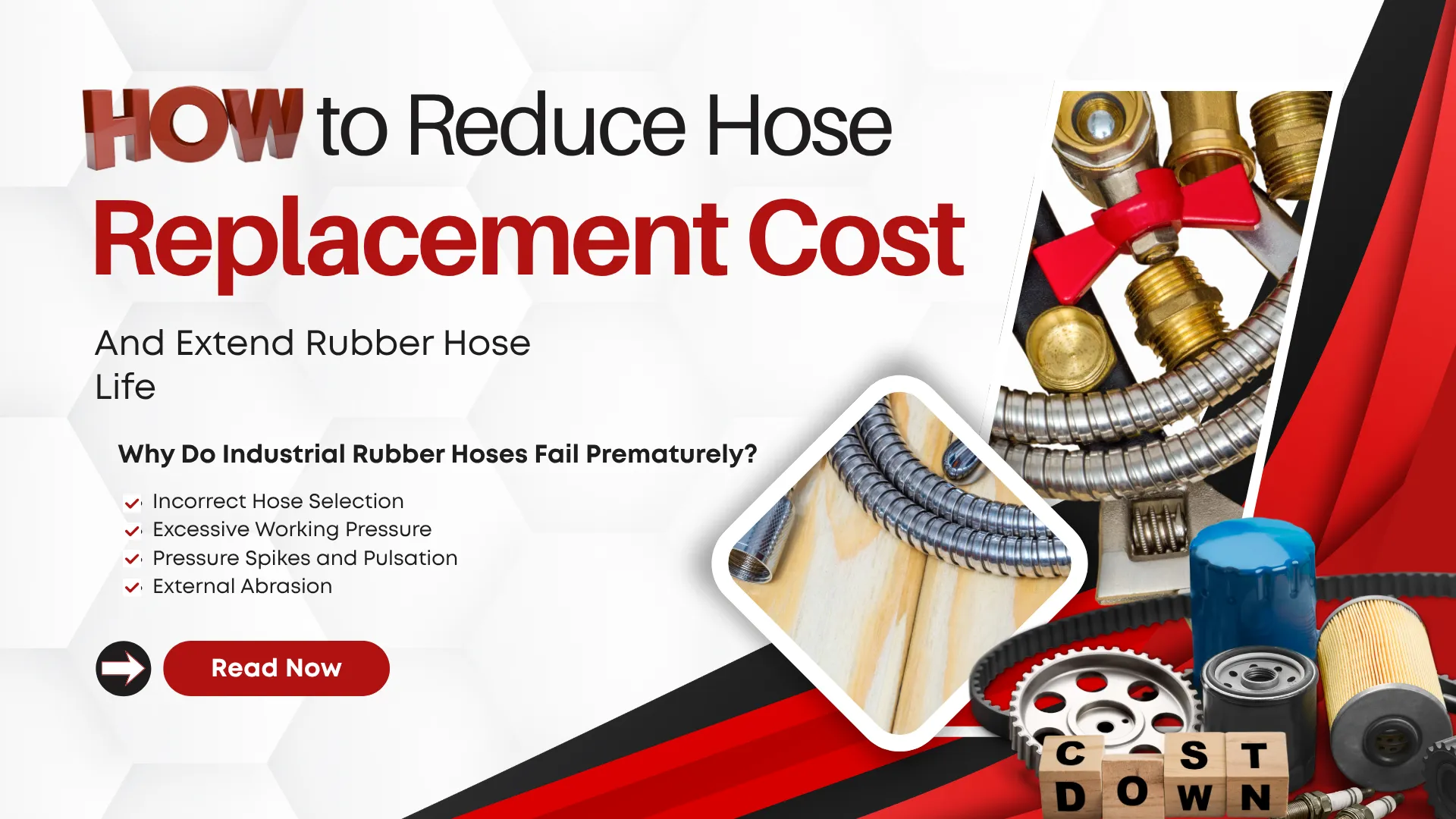
How to Reduce Hose Replacement Cost and Extend Rubber Hose Life
When an industrial rubber hose fails on the shop floor, the cost rarely stops at the price tag of the replacement hose. A single failure can trigger production downtime, emergency procurement, product or fluid loss, cleanup work, and hours of maintenance labour spent tracing and fixing the problem. For plant managers and procurement teams trying to reduce hose replacement cost, the real challenge is not finding a cheaper hose — it is understanding the full cost of a hose failure and preventing it from happening in the first place. Many facilities unknowingly pay more in the long run by choosing the lowest-priced hose without considering pressure rating, media compatibility, or installation conditions. A hose that fails after a few months creates repeated fitting costs, repeated labour costs, and repeated disruption. Industrial hose cost reduction is not about spending less on the first purchase. It is about reducing the number of times a hose needs to be touched, repaired, or replaced over its working life. This article explains, in practical terms, how correct hose selection, proper installation, structured inspection, and preventive maintenance work together to extend rubber hose life and lower total industrial hose lifecycle cost. Reducing hose replacement cost requires a lifecycle-based maintenance approach rather than a one-time purchasing decision, and the sections below walk through each part of that approach in practical detail. Why Do Industrial Rubber Hoses Fail Prematurely? Premature hose failure is rarely caused by one factor alone. It is usually a combination of selection mistakes, installation errors, and neglected maintenance. Understanding each cause is the first step toward hose failure prevention and toward reducing industrial maintenance cost across a facility. Incorrect Hose Selection A hose chosen without matching it to the application’s pressure, temperature, and media requirements is likely to degrade quickly. Incorrect hose selection is one of the most common and most expensive mistakes in industrial hose maintenance, because it often leads to repeat replacement within weeks or months. Excessive Working Pressure Operating a hose above its rated working pressure stresses the reinforcement layer and the hose cover. Over time this leads to bulging, weeping, or sudden rupture, all of which increase hose downtime cost and safety exposure. Pressure Spikes and Pulsation Pumps, valves, and quick-closing equipment can create pressure spikes far above the system’s normal operating pressure. Repeated pulsation fatigues the hose reinforcement even when the average pressure appears acceptable, shortening hose service life significantly. Incompatible Chemicals or Transferred Media Every rubber compound has limits on the chemicals, oils, or slurries it can safely carry. When the transferred media is not compatible with the hose tube, the material swells, softens, or cracks from the inside, often before any external damage is visible. High or Low Operating Temperature Temperature resistance is application-specific. A hose rated for one temperature range but used outside it will harden, crack, or lose flexibility much faster than expected, directly increasing hose replacement frequency. External Abrasion Hoses dragged across floors, rubbed against machinery, or routed near sharp edges wear down from the outside. External abrasion is one of the most preventable causes of premature hose failure, yet it remains extremely common in busy industrial environments. Improper Bend Radius Every hose has a minimum bend radius. Forcing a hose into a tighter bend stresses the reinforcement at that point, creating a weak spot that fails long before the rest of the hose shows wear. Hose Twisting During Installation A hose installed with a twist is under constant torsional stress. This shortens service life and can loosen fittings over time, leading to fitting leakage that is often mistaken for a hose problem rather than an installation error. Incorrect Fitting Selection Fittings that do not match the hose size, pressure rating, or thread standard create stress points and leak paths. Incorrect fitting selection undermines even a correctly selected hose and adds recurring maintenance visits. Poor Crimping or Clamping An under-crimped or over-crimped fitting can slip, leak, or blow off under pressure. Poor crimping or clamping is a quality-control issue that often only becomes visible after the hose assembly is in service. Excessive Vibration Hoses mounted near vibrating equipment without adequate support experience constant micro-movement. Over time, this loosens fittings, wears the cover at contact points, and accelerates fatigue in the reinforcement. Ageing and Weather Exposure Ultraviolet light, ozone, and temperature swings degrade rubber compounds even when a hose is not in active use. Ageing is a background factor that reduces the remaining service life of every hose in a facility. Improper Storage Hoses stored coiled too tightly, exposed to sunlight, or stacked under heavy weight can degrade before they are ever installed. Improper storage effectively shortens the usable life of new inventory. Lack of Inspection and Maintenance Without a structured rubber hose inspection program, early warning signs go unnoticed until a hose fails in operation. Lack of maintenance turns preventable problems into unplanned downtime and emergency replacement. Also, Read: Rubber Hose Failure Causes: The Complete Engineering Guide Understand the Complete Industrial Hose Lifecycle Cost The purchase price of a hose is only one part of its true cost. Industrial hose lifecycle cost includes every expense connected to that hose from purchase to disposal, and it is this total figure that matters when a facility is trying to reduce hose replacement cost. Cost Component What It Includes How It Affects Total Cost Initial hose purchase Base price of the hose material Lower price does not guarantee lower total cost Fittings and couplings Matching ends, adapters, ferrules Wrong fittings increase leakage and rework Installation labour Technician time to fit and test the assembly Repeated installation adds recurring labour cost Routine inspection Scheduled visual and physical checks Reduces risk of unplanned failure Preventive maintenance Cleaning, protection, minor repairs Extends service life and delays replacement Production downtime Lost output while a hose is repaired or replaced Often the largest hidden cost of a failure Product loss Fluid, chemical, or material lost during failure Adds material and cleanup cost Equipment damage Damage to nearby machinery from a burst
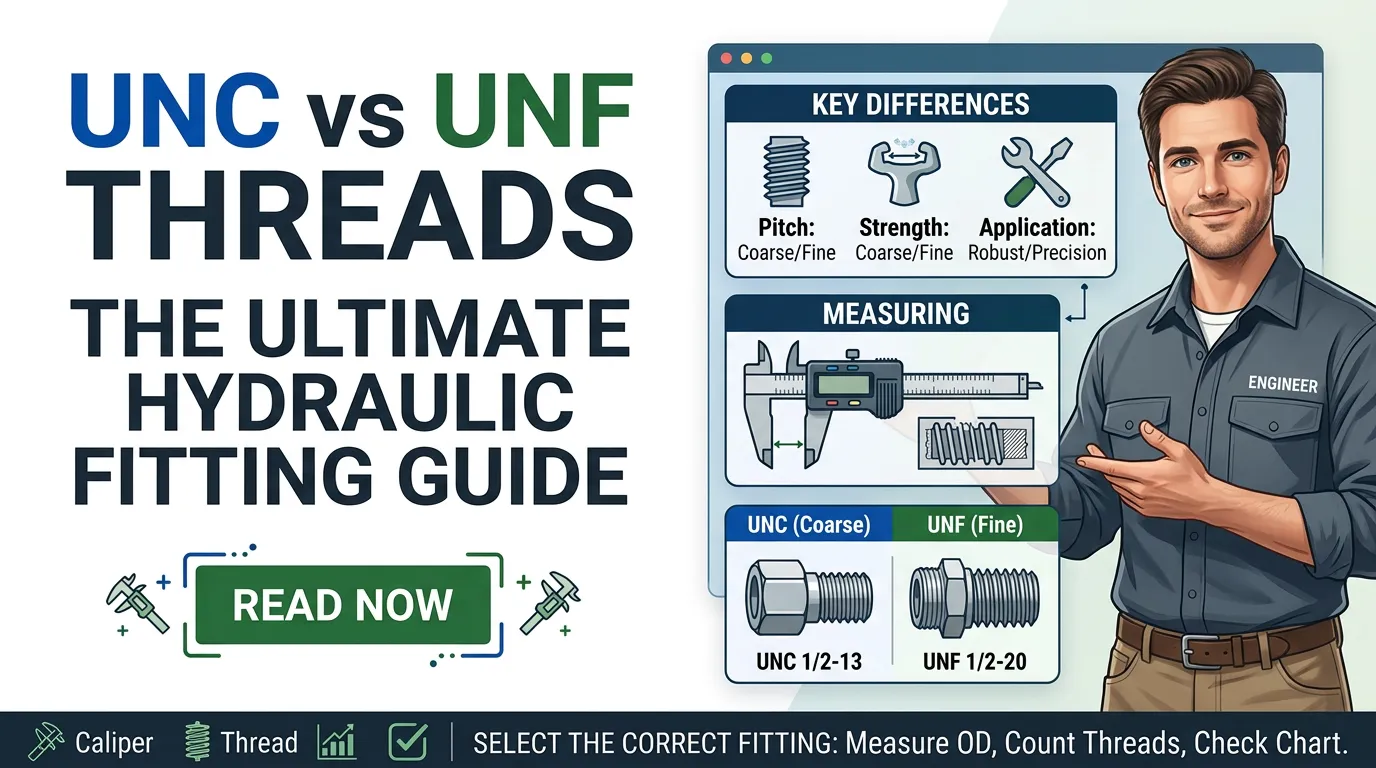
UNC vs UNF Threads: Meaning, Difference, Chart & Hydraulic Fitting Guide
Every hydraulic hose assembly depends on one small detail that is easy to overlook: the thread. Whether you are connecting a hose end fitting to a cylinder port or selecting an adapter for a pump, thread type and size decide whether the joint holds pressure or fails under it. This is exactly where the confusion between UNC vs UNF threads comes in. Both belong to the same unified inch thread family, yet they behave differently once installed. A wrong thread selection can lead to leakage, a loose connection, cross-threading during assembly, vibration-related failure over time, and unplanned equipment downtime — all of which are costly on a factory floor or a construction site. This guide explains UNC and UNF threads in plain language, compares them directly, gives you a working thread chart, and connects the topic to real-world hydraulic hose fittings, hose end fittings, and adapter selection. What Are UNC and UNF Threads? UNC and UNF are both part of the unified inch screw thread system, standardised under ASME B1.1. This standard defines thread form, series, class, allowance, tolerance, and designation for inch-based fasteners and fittings used across the USA and in equipment manufactured to US thread specifications. UNC stands for Unified National Coarse and UNF stands for Unified National Fine. Both use the same 60-degree flank angle and are parallel (straight) threads, but they differ in pitch — the distance between adjacent threads — and in threads per inch (TPI). If you are unsure whether your fitting needs a UNC or a UNF thread, our team at hydraulic hose manufacturer in India can help you match the correct thread standard to your hose assembly before you place an order. What Is UNC? UNC thread meaning is straightforward: it is a coarse-pitch thread with fewer threads per inch compared to UNF for the same nominal diameter. This coarse pitch offers several practical advantages: Faster assembly, since fewer turns are needed to fully engage the thread Lower risk of cross-threading during installation, useful in field conditions or repeated assembly/disassembly Strong general-purpose fastening for everyday industrial applications Better tolerance to minor thread damage, dirt, or paint buildup Because of these traits, UNC threads are widely used across general industrial machinery, structural fastening, and equipment where speed of assembly and durability matter more than fine adjustment. What Is UNF? So, what is UNF? UNF thread meaning refers to a fine-pitch thread with a higher number of threads per inch for the same nominal diameter as its UNC counterpart. This finer pitch changes how the thread performs: Better holding strength in vibration-prone applications, since more threads are engaged per unit length Higher precision, making it suitable for fine adjustment and close-tolerance assemblies Increased tensile strength in thin-walled parts, since a shallower thread depth removes less material Common in equipment where loosening from vibration is a bigger risk than assembly speed UNF fittings are typically chosen where the equipment is exposed to continuous vibration, such as engine-mounted components, precision instruments, and certain hydraulic or pneumatic connections. UNC vs UNF Threads: Quick Difference Table Here is a side-by-side UNC vs UNF thread difference table covering the parameters that matter most for selection: Parameter UNC Threads UNF Threads Suitability Full Form Unified National Coarse Unified National Fine Both are part of the unified thread standard. Thread Pitch Coarse thread pitch Fine thread pitch UNC is suitable for faster assembly, while UNF offers greater precision. Threads Per Inch (TPI) Fewer threads per inch More threads per inch UNF has a higher TPI than UNC for the same nominal diameter. Assembly Speed Faster to assemble Slower but more precise UNC is preferred where quick installation and removal are required. Strength Per Thread Lower engagement per thread but strong overall Higher thread engagement UNF is suitable for applications requiring finer load distribution. Vibration Resistance Moderate resistance Better resistance to loosening UNF is generally preferred for vibration-prone equipment and assemblies. Cross-Threading Risk Lower risk Slightly higher risk if forced UNF threads require careful alignment during installation. Common Use General industrial fastening Precision and high-vibration assemblies Selection depends on the equipment design and operating conditions. UNC vs UNF Thread Chart A practical UNC thread chart and unf thread chart side by side makes it easier to identify the right designation quickly. Below is a unified thread size chart for some of the most commonly used sizes: Nominal Size UNC Designation UNF Designation 1/4 inch 1/4-20 UNC 1/4-28 UNF 5/16 inch 5/16-18 UNC 5/16-24 UNF 3/8 inch 3/8-16 UNC 3/8-24 UNF 1/2 inch 1/2-13 UNC 1/2-20 UNF Reading this UNC vs UNF thread chart: the first number is the nominal diameter, and the second number is the threads per inch (TPI). A higher TPI value always indicates a finer thread, which is why UNF designations carry a larger second number than their UNC equivalent at the same nominal size. UNC and UNF Threads in Hydraulic Hose Fittings Thread standards directly affect hydraulic hose fittings, hose end fittings, and adapters. UNC fittings and UNF fittings can appear on mounting bolts, gauge ports, adapter bodies, and certain equipment connection points, especially on machinery and components manufactured to US thread standards. Before installing or replacing a hose assembly, it is important to confirm whether the mating connection uses a unified inch thread (UNC/UNF) or another thread standard. Mismatched threads are one of the most common causes of on-site leakage and repeat maintenance calls. Our hose end fittings range is manufactured and sourced to match multiple thread standards, so that your hose assembly connects correctly the first time, without forcing an incompatible fit. Because thread compatibility is central to a leak-free hydraulic connection, industrial hose fittings and threaded hose fittings should always be checked against the port thread before crimping or assembly, not after. UNC vs UNF vs Other Thread Types UNC and UNF are not the only thread standards used in hydraulic systems. Depending on the equipment’s country of origin and application, you may also encounter: BSP (British Standard Pipe) — common across the UK,
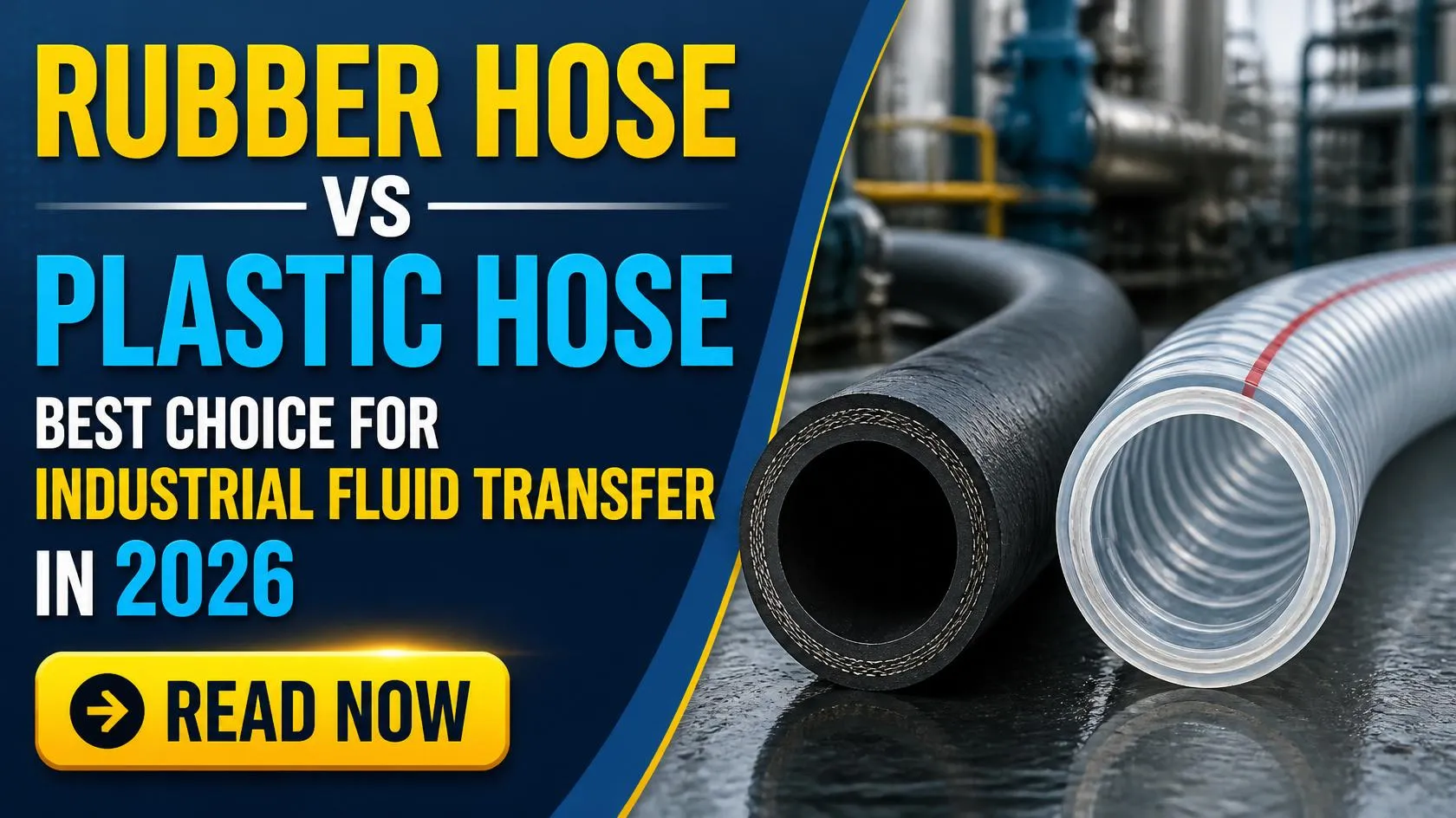
Rubber Hose vs Plastic Hose: Best Choice for Industrial Fluid Transfer in 2026
When selecting a hose for industrial operations, the material you choose directly impacts safety, performance, operational continuity, and long-term cost efficiency. The rubber hose vs plastic hose comparison is one of the most common dilemmas faced by plant managers, procurement teams, maintenance engineers, and industrial buyers across sectors ranging from manufacturing to mining. Both hose types serve fluid transfer needs — but they are not equal when it comes to heavy-duty industrial applications. Understanding the core differences helps you make informed purchasing decisions that prevent costly downtime, hose failure, and safety incidents on your shop floor or plant site. This guide provides a detailed, technical comparison to help industrial buyers, purchase managers, and engineers select the right hose material for their operational requirements. What Is a Rubber Hose? A rubber hose is a multi-layer fluid conveyance product engineered for demanding industrial environments. Its construction typically consists of three components: an inner tube made from a rubber compound compatible with the fluid being conveyed (such as NBR for oil, EPDM for steam, or NR for water), one or more reinforcement layers made of high-tensile textile braid or steel wire, and an outer cover designed to resist abrasion, weather, oil, and mechanical damage. This layered construction is what makes flexible rubber hoses capable of handling high pressures, extreme temperatures, aggressive chemicals, and continuous mechanical movement. Rubber hose industrial use spans hydraulic systems, compressed air lines, steam transfer, chemical handling, fuel and oil lines, slurry discharge, and many other critical process applications. Rubber hoses are available in a wide range of specifications — varying by inner diameter, pressure rating, temperature range, fluid compatibility, and reinforcement type — making them highly adaptable to diverse industrial requirements. What Is a Plastic Hose? Plastic hoses are generally manufactured from synthetic polymers such as PVC (polyvinyl chloride) or PU (polyurethane). They are lightweight, low-cost, and easy to handle, which makes them a popular choice for domestic, commercial, and light industrial applications. PVC hoses are widely used for garden watering, low-pressure air supply, domestic water supply, and general fluid transfer where operating conditions are mild. PU hoses offer better flexibility and abrasion resistance than standard PVC but still fall short of rubber hoses in demanding industrial environments. While plastic hoses are cost-effective for non-critical applications, they are not engineered to withstand the rigorous working conditions found in heavy-duty industrial plants, processing facilities, or construction sites. Rubber Hose vs Plastic Hose: Basic Difference The table below Summarises the key factors in this industrial hose material comparison: Factor Rubber Hose Plastic Hose Flexibility High — retains flex in heat/cold Medium — stiffens with age Pressure Handling Excellent — handles high pressure Limited — suited to low pressure Durability Strong in harsh environments Lower in demanding conditions Temperature Resistance Excellent (-40°C to 200°C+) Limited (often <70°C) Abrasion Resistance Strong — reinforced construction Moderate — surface wears faster Industrial Use Heavy-duty, multi-fluid Light/medium duty Life Span Longer service life Shorter in tough conditions Cost Higher initial investment Lower upfront cost Note: Performance values are indicative and vary by specific product grade and manufacturer specifications. Rubber Hose Advantages in Industrial Applications When evaluating rubber hose advantages, it is important to look beyond the initial price point and assess total operational value. Rubber hoses deliver measurable benefits across multiple performance parameters: Superior Flexibility: Rubber hoses maintain flexibility across a wide temperature range. Unlike plastic hoses that stiffen with age or in cold conditions, quality flexible rubber hoses retain their bend radius under continuous movement, vibration, and thermal cycling — making them suitable for dynamic connections on moving equipment. High Pressure Resistance: Rubber hoses constructed with multi-ply textile or steel wire reinforcement are engineered to safely handle high working pressures. This makes them the preferred choice for hydraulic systems, compressed air mains, and high-pressure fluid transfer where plastic hoses would be inadequate and unsafe. Exceptional Durability: Rubber hose durability is a direct result of the material’s resistance to physical wear, UV exposure, ozone, and mechanical fatigue. Rubber hoses hold up under continuous heavy-duty use where plastic alternatives degrade rapidly, leading to premature failure. Strong Abrasion Resistance: Industrial environments involve dragging, rubbing, and rough surface contact. The outer covers of industrial rubber hoses are compounded specifically to resist abrasion, cutting, and surface wear — extending service life considerably over unprotected plastic hoses. Broad Fluid Compatibility: Rubber hoses are available with inner tube compounds suitable for oil, fuel, air, water, steam, chemicals, slurry, and many aggressive fluids. The inner tube compound is selected to match the conveyed medium, preventing chemical degradation and contamination. Temperature Range Performance: Industrial rubber hoses are designed to operate reliably across extreme temperatures — from sub-zero cold storage environments to high-temperature steam lines. Plastic hoses typically lose structural integrity above 60-70°C, making them unsuitable for high-temperature applications. Longer Service Life: Due to their robust construction and material properties, rubber hoses generally last significantly longer than plastic hoses in industrial service. This reduces replacement frequency, procurement costs, and planned maintenance downtime. Safer for Heavy-Duty Use: Rubber hose performance under pressure, combined with its reinforcement layers, makes it inherently safer than plastic alternatives in high-stakes industrial environments. Catastrophic hose failure in a plant setting can cause serious injury, environmental contamination, and production losses. Also Read: Industrial hose testing methods — understanding how hoses are pressure-tested and certified. Plastic Hose Disadvantages You Should Know While plastic hoses serve a purpose in light-duty applications, they come with significant limitations that make them unsuitable for most heavy industrial fluid transfer scenarios. Key plastic hose disadvantages include: Lower pressure capacity — most PVC hoses are rated for very low working pressures, making them unsafe for hydraulic, pneumatic, or high-flow industrial systems Heat-induced cracking — plastic hoses become brittle and crack when exposed to sustained heat, sunlight, or extreme cold cycling, which is common in outdoor plant environments Progressive loss of flexibility — PVC hoses harden and lose flexibility over time, especially in colder temperatures, increasing the risk of cracking at bends and fittings Limited chemical resistance — standard
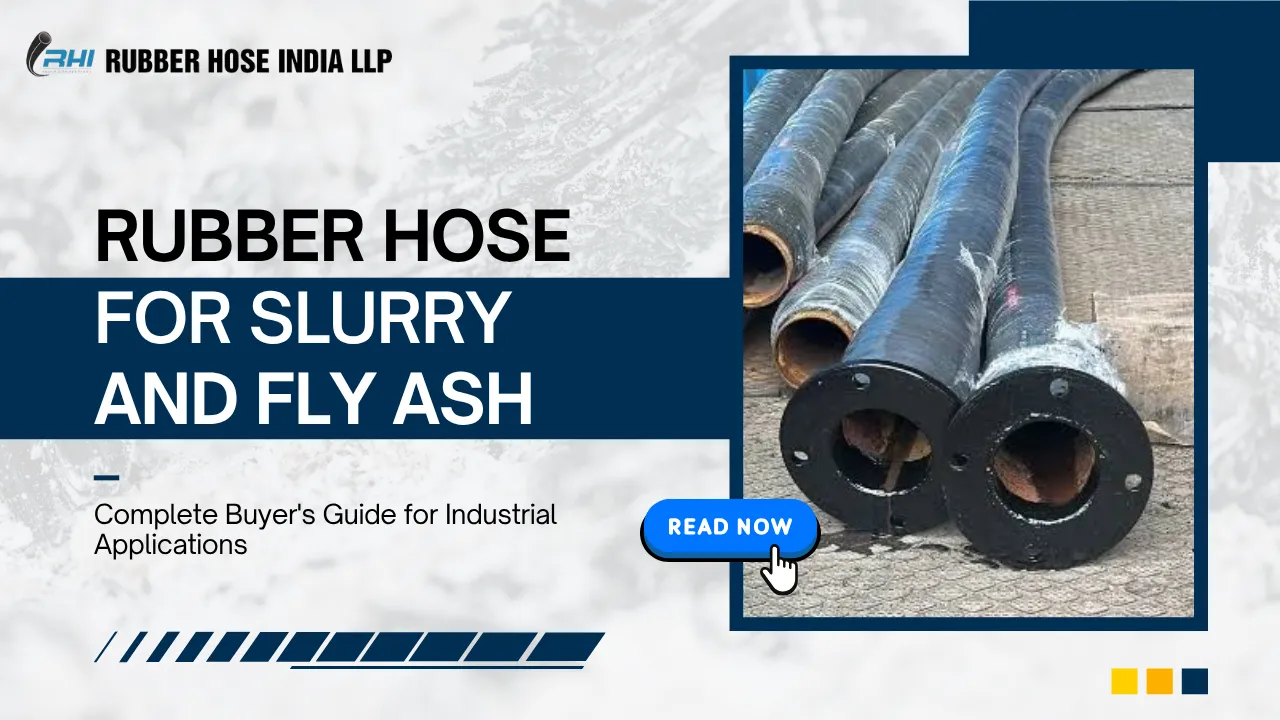
Rubber Hose for Slurry and Fly Ash: Complete Buyer’s Guide for Industrial Applications
Choosing the right rubber hose for slurry and fly ash is one of the most critical decisions for plant engineers, procurement managers and OEM buyers. These hoses operate in some of the most demanding industrial environments — carrying abrasive fly ash particles, heavy cement slurry and mining slurry that can wear out inferior hoses within weeks. This guide covers everything you need to know about selecting the right hose, understanding its key features and evaluating suppliers in India. What Is a Rubber Hose for Slurry and Fly Ash? A rubber hose for slurry and fly ash is a specially designed industrial hose built to handle the transfer of abrasive, semi-fluid materials in demanding process environments. Unlike standard water or air hoses, these hoses are engineered to withstand continuous contact with particles that cause rapid internal wear. The most common applications include: Slurry transfer in cement manufacturing and mineral processing Fly ash handling in thermal power plants and cement batching units Cement slurry movement in construction, ready-mix plants and grouting applications Mining slurry transfer in mines and ore processing facilities Abrasive material handling across industrial bulk transfer systems A fly ash rubber hose is specifically designed for the fine, dusty and abrasive nature of fly ash — a byproduct of coal combustion. A slurry rubber hose, on the other hand, is built for wet, heavy-solid mixtures like cement slurry or mineral slurry. A cement slurry hose combines the demands of both — pressure handling and abrasion resistance together. Material handling rubber hose covers a broader category, including granules, dry powders, bulk solids and abrasive media across industries like steel, chemicals and construction. Why Normal Rubber Hoses Fail in Slurry and Fly Ash Applications Many plant operators make the costly mistake of using general-purpose hoses in slurry and fly ash lines. The result is predictable: premature failure, frequent shutdowns and unexpected replacement costs. Here are the main reasons normal rubber hoses are not suitable for these applications: Abrasion from fly ash and cement particles: Fine ash and hard cement particles continuously grind the inner tube surface, causing wall thinning and eventual puncture. A rubber hose for abrasive material must have a thick, wear-resistant inner tube to survive this environment. High pressure during material transfer: Slurry transfer often involves elevated discharge pressures. Hoses without suitable reinforcement collapse, kink or burst under this load. Continuous bending and movement: Equipment vibration and flexible routing cause repeated bending stress. Hoses with stiff or poor construction crack at bend points. Improper hose selection: Using a water hose for slurry duty, for example, leads to rapid inner tube degradation — the rubber compound is simply not formulated for solid particle media. Poor inner tube quality: Low-grade rubber compounds lack the hardness and abrasion resistance needed. An abrasion resistant rubber hose uses specifically compounded NR, SBR or NR/SBR blends with higher hardness ratings. Wrong reinforcement: Inadequate textile or wire reinforcement layers allow the hose to deform under pressure, accelerating inner tube failure. Temperature and chemical exposure: Fly ash and cement environments may involve elevated temperatures or mild chemical contact. Without EPDM or suitable compound selection, the hose degrades faster. Incorrect installation: Tight bends, improper clamp tightening and misaligned fittings create stress concentration points that shorten even a heavy duty cement hose lifespan significantly. Key Applications of Slurry and Fly Ash Rubber Hose Fly Ash Transfer in Cement Plants Fly ash is produced in large quantities at thermal power plants and is a key supplementary material in cement manufacturing. A fly ash rubber hose is used in ash extraction lines, pneumatic ash transfer systems and cement batching plants where fly ash is conveyed as a fine dry or semi-wet material. These hoses must resist fine particle abrasion and static buildup while maintaining flexibility for equipment connection. In cement batching plants, fly ash rubber hoses connect silos to mixers and blending units. The hose must handle both vacuum and positive pressure during material conveying. Cement Slurry Transfer A cement slurry hose is used wherever wet cement mix or cement grout needs to be pumped through flexible connections. Applications include construction grouting, concrete pumping lines, shotcrete operations and industrial cement injection. Cement slurry is dense, heavy and highly abrasive — requiring a hose with a combination of strong pressure handling and wear resistance. Industrial slurry movement in water treatment, filtration and process industries also uses similar hose constructions where thick fluid with suspended solids needs to pass through flexible piping. Mining Slurry Transfer Mining operations generate slurry constantly — in ore washing, mineral separation, tailings disposal and concentrate transfer. A mining slurry hose must handle coarse abrasive particles suspended in water or chemical solutions under high pressure. Steel wire reinforcement is common in mining hose constructions to handle both abrasion and surge pressures during pumping. Abrasive slurry transfer in mining requires hoses with thick inner tubes, often 6–10 mm or more, specifically to absorb the grinding action of hard minerals. Industrial Material Handling A material handling rubber hose is used for bulk powder, granules, pellets and other dry or semi-dry abrasive media across process industries. This includes lime powder transfer, sand blasting media, grain handling, plastic pellet conveying and industrial mineral transfer. The key requirement here is a smooth inner lining that reduces friction while resisting wear from particle impact. Heavy-Duty Cement Plant Applications Cement plants represent one of the most demanding environments for any industrial hose for cement plant. From raw material grinding areas to kiln feed lines, fly ash blending stations and finished product dispatch systems, hoses face a combination of heat, abrasion, pressure and chemical exposure. A heavy duty cement hose is used across all these stations — connecting fixed pipework to mobile equipment, pumps, blowers and conveyors. Important Features of a Good Rubber Hose for Slurry and Fly Ash Not all hoses marketed as “slurry grade” offer the same performance. Here are the features buyers should specifically evaluate: Abrasion-resistant inner tube: The inner tube is the most critical component. A quality abrasion resistant rubber hose uses NR/SBR