
Industrial failures don’t always start with pressure — many begin with temperature.
Extreme heat and freezing conditions silently damage rubber hoses long before visible signs appear. The result? Sudden leaks, unexpected downtime, and costly equipment failure.
Understanding the temperature effects on rubber hoses is not just a technical requirement — it’s a critical factor in safety, performance, and long-term cost control.
This guide breaks down how temperature impacts rubber hoses, why failures happen, and how to select the right hose for demanding industrial environments.
What Are Temperature Effects on Rubber Hoses?
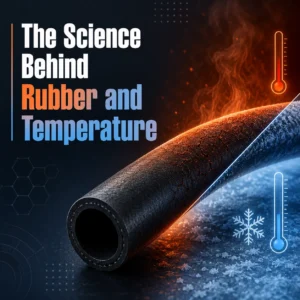
Temperature effects on rubber hoses refer to the physical and chemical changes caused by exposure to extreme heat or cold. These changes directly impact:
- Flexibility
- Pressure handling capacity
- Material strength
- Lifespan of the hose
What are temperature effects on rubber hoses?
Temperature effects on rubber hoses refer to the physical and chemical changes that occur when industrial hoses face extreme heat or cold. These thermal rises and falls keep changing that directly impact the flexibility, tensile strength, and working lifespan of the hose material.
Understanding these dynamics prevents catastrophic failures in industrial applications. Key temperature effects include:
- Thermal degradation: High heat accelerates curing, causing hardening and cracking.
- Cold embrittlement: Freezing temperatures make rubber stiff, brittle, and prone to shattering.
- Volumetric changes: Materials expand when heated and contract when cooled, weakening fittings.
- Accelerated wear: Continuous temperature cycling breaks down polymer chains faster.
- Pressure rating shifts: Operating pressure capabilities drop significantly as temperatures rise.
Industrial facilities rely on precise fluid and gas transfer to keep operations running smoothly. When extreme thermal conditions enter the equation, the structural integrity of your equipment faces intense stress.
Ignoring the temperature effects on rubber hoses leads to unexpected downtime and severe safety hazards. This guide breaks down the science of thermal exposure and helps you protect your investments.
The Science Behind Rubber and Temperature
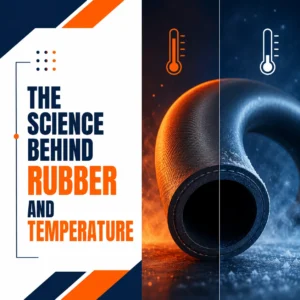
Rubber is a complex elastomer built from long chains of polymers. These polymer chains give the material its unique ability to stretch and return to its original shape.
The manufacturing process uses vulcanization to cross-link these chains. This cross-linking creates a durable, flexible structure suitable for industrial environments.
However, thermal energy actively interacts with these molecular bonds. Adding heat excites the molecules, while removing heat slows them down. Both extremes trigger specific chemical and physical reactions that alter the performance of the hose.
How High Heat Affects Rubber Physically and Chemically
Subjecting a hose to excess heat essentially continues the vulcanization process. The rubber absorbs the thermal energy, causing the polymer chains to form additional cross-links.
This chemical alteration permanently changes the physical state of the material. The rubber loses its elasticity and becomes progressively stiffer over time.
Once the material loses its flexibility, it cannot bend or absorb vibrations without sustaining damage. This loss of elasticity creates a rigid structure that easily develops micro-cracks under normal operating pressure.
You must use a proper heat resistant rubber hose to combat these chemical shifts. Standard materials will quickly bake, harden, and fail when exposed to conditions beyond their design limits.
Investing in a specialized high temperature rubber hose ensures the polymer structure remains stable. These advanced hoses use heat-stabilized compounds to resist unwanted cross-linking during prolonged thermal exposure.
How Freezing Conditions Alter Rubber
Cold environments introduce an entirely different set of physical challenges for industrial elastomers. As the ambient or media temperature drops, the polymer chains lose their kinetic energy.
This loss of energy prevents the molecules from sliding past one another smoothly. The rubber gradually stiffens, transitioning from a flexible elastomer into a rigid, plastic-like state.
This transition point is known as the glass transition temperature. Once a hose reaches this threshold, any flexing, vibration, or impact can cause the material to shatter like glass.
Standard rubber formulations struggle to maintain flexibility in freezing environments. You must prioritize cold temperature hose performance when operating in winter climates or handling cryogenic fluids.
A specialized low temperature rubber hose utilizes plasticizers and specific polymer blends to prevent stiffening. These additives keep the molecular chains mobile, ensuring the hose remains pliable and safe to operate in extreme cold.
Understanding the Temperature Effects on Rubber Hoses Range
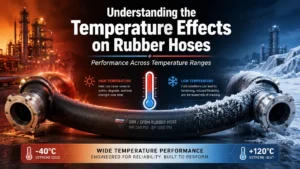
Every industrial hose comes with a specific thermal rating established by the manufacturer. The rubber hose temperature range dictates the safe operating limits for both the external environment and the internal media.
Pushing a hose beyond these published limits immediately compromises its structural integrity. The pressure rating of a hose is intrinsically tied to its operating temperature.
As a hose gets hotter, its ability to contain internal pressure decreases significantly. A hose rated for 300 PSI at room temperature might only safely handle 150 PSI at its maximum heat limit.
Facility managers must account for both the ambient temperature of the facility and the temperature of the fluid being transferred. A miscalculation in either area can quickly push the assembly outside its safe rubber hose temperature range.
Thermal Expansion and Contraction Behavior
Thermal dynamics dictate that materials change volume as their internal temperatures fluctuate. A thermal expansion rubber hose experiences measurable dimensional changes during operation.
When exposed to high heat, the rubber compound and internal reinforcement layers expand. This expansion increases the overall length and outside diameter of the hose assembly.
Conversely, cold temperatures cause the materials to contract and shrink. This continuous cycle of growing and shrinking puts massive stress on the hose structure.
The most critical danger zone for thermal expansion is at the connection points. As the rubber expands and contracts, the hose can pull away from its metal fittings.
This movement creates tiny gaps between the hose tube and the fitting barb. These gaps eventually lead to weeping, leaks, and total blow-offs if the assembly lacks proper crimping.
Engineers must account for thermal expansion when routing hoses in confined spaces. Providing adequate slack allows the thermal expansion rubber hose to grow and shrink without stressing the couplings.
The Reality of Rubber Hose Ageing
All industrial elastomers experience a natural lifecycle, but thermal exposure acts as a massive accelerant. Rubber hose ageing occurs much faster in environments with extreme temperature fluctuations.
Heat naturally drives off the plasticizers and protective waxes embedded in the rubber compound. As these vital components evaporate, the rubber becomes dry, brittle, and highly susceptible to ozone damage.
Continuous heating and cooling cycles create microscopic stress fractures throughout the hose cover. These tiny fractures allow moisture and chemicals to penetrate the reinforcement layers, accelerating degradation.
You can visually identify severe rubber hose ageing by inspecting the outer cover for a baked, cracking appearance. If the hose feels incredibly stiff or leaves black residue on your hands, the material has severely degraded.
Proactive replacement schedules are essential to manage rubber hose ageing effectively. Waiting for a heat-damaged hose to fail visibly is a dangerous and costly approach to maintenance.
Common Temperature Related Hose Failure Modes
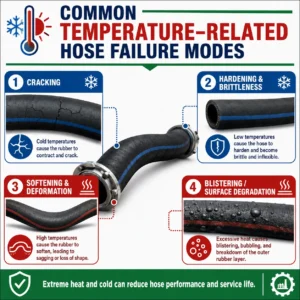
Recognizing the early warning signs of thermal damage can save your facility from disastrous spills and injuries. Temperature related hose failure typically manifests in a few distinct, recognizable patterns.
Understanding these failure modes helps maintenance teams diagnose issues before they cause unexpected downtime.
Cracking and Hardening
The most frequent sign of a temperature related hose failure is a hard, cracked outer cover. This occurs when ambient heat bakes the rubber, draining its elasticity.
You will often see this cracking along the outside radius of a bend, where the rubber is stretched the tightest. The material simply cannot stretch anymore and tears under the tension.
Pin-hole Leaks and Weeping
High temperatures degrade the inner tube just as severely as the outer cover. As the internal tube hardens from hot fluid transfer, it develops tiny fissures.
The pressurized media forces its way through these fissures and into the reinforcement layers. The fluid eventually breaches the outer cover, resulting in slow weeping or dangerous pin-hole leaks.
Fitting Blow-offs
Cold temperatures cause the hose material to compress and shrink away from the metal fittings. This loss of compression drastically reduces the holding power of the crimp or clamp.
When the system pressurizes, the weakened connection fails to hold the hose in place. The fitting blows off violently, releasing hazardous media into the workspace at high velocity.
Core Blisters and Bubbles
Rapid temperature changes can cause dissolved gases within the transferred fluid to expand rapidly. If the heat penetrates the inner tube quickly, these gases become trapped under the rubber surface.
This trapped gas forms large blisters or bubbles inside the hose tube. These blisters restrict fluid flow and eventually burst, contaminating the media and destroying the hose.
Also, Read: Industrial Hose Quality Standards & Certifications Guide
Material Comparison for Extreme Temperatures
Solving thermal challenges requires selecting the exact right polymer for the job. Industrial hose material selection determines how long your assembly will survive in harsh conditions.
Different synthetic rubbers offer vastly different molecular defenses against heat and cold. Comparing these materials ensures you match the chemical properties to your environmental demands.
EPDM (Ethylene Propylene Diene Monomer)
EPDM is highly regarded for its exceptional industrial hose heat resistance and weatherability. This material excels in transferring steam, hot water, and mild agricultural chemicals.
An EPDM high temperature rubber hose typically operates safely up to 300°F (149°C) depending on the reinforcement. It also maintains excellent flexibility in cold weather, resisting cracking down to -40°F (-40°C).
However, EPDM has a major vulnerability regarding petroleum products. Exposure to oils or fuels will cause EPDM to swell, soften, and fail rapidly, regardless of the temperature.
NBR (Nitrile Butadiene Rubber)
Nitrile is the undisputed champion of the oil and gas industry due to its petroleum resistance. It is the primary choice for transferring diesel, hydraulic fluid, and lubricating oils.
Standard NBR offers moderate industrial hose heat resistance, generally capping out around 212°F (100°C). Pushing NBR beyond this limit causes the material to harden rapidly and lose its oil-resistant properties.
Specially compounded NBR can push these limits slightly higher for specific hydraulic applications. However, for truly extreme heat involving petroleum, you often need to upgrade to more advanced fluoropolymers.
Silicone Rubber
When standard elastomers fail, silicone steps in to handle the most extreme thermal environments. Silicone boasts an incredibly wide temperature operating range, surviving conditions that would incinerate other rubbers.
A silicone heat resistant rubber hose can continuously operate at temperatures exceeding 400°F (204°C). It also boasts incredible cold temperature hose performance, remaining completely flexible down to -65°F (-54°C).
Silicone is widely used in automotive cooling systems, food processing, and high-heat manufacturing. While it lacks the abrasion resistance of NBR, its thermal stability remains unmatched in standard industrial applications.
Industrial Applications and Thermal Risks
Every industrial sector faces unique thermal challenges that threaten hose longevity. Recognizing these industry-specific risks helps you prioritize proper industrial hose material selection.
In the manufacturing sector, steam cleaning and hot water washdowns are daily occurrences. Using standard water hoses for steam service leads to immediate inner tube failure and dangerous steam bursts.
The hydraulic and heavy equipment industry deals with extreme heat generated by fluid friction. A hydraulic system working under heavy load can easily push fluid temperatures past 200°F, destroying standard lines.
Cold storage facilities and arctic drilling rigs face the opposite extreme. A standard air or fluid hose will turn into a rigid pipe in sub-zero conditions, shattering when dropped or bent.
Food and beverage plants require strict sanitation, often using boiling water and caustic chemicals. These facilities need hoses that withstand high heat without shedding degraded rubber particles into the food supply.
How to Choose the Right Rubber Hose for Temperature Conditions
Selecting the proper hose requires a methodical approach to ensure safety and longevity. Mastering industrial hose material selection directly impacts your bottom line by reducing replacement frequency and preventing downtime.
You must evaluate the entire scope of the application, not just the pressure requirements. Use the STAMPED method (Size, Temperature, Application, Material, Pressure, Ends, Delivery) to guide your purchasing decisions.
First, determine the maximum internal fluid temperature and the maximum external ambient temperature. You must select a hose compound rated higher than both of these maximums to build in a safety margin.
Next, evaluate the fluid being transferred to ensure chemical compatibility with the chosen thermal material. A hose might handle 300°F perfectly, but if the fluid dissolves the tube, the heat rating becomes irrelevant.
Invest in industrial-grade assemblies specifically designed for your environment. Purchasing a specialized low temperature rubber hose costs more upfront but prevents catastrophic winter failures that halt production.
Partner with reputable manufacturers who publish clear, tested data on their rubber hose temperature range. High-quality construction and proper crimping techniques are essential to surviving extreme thermal expansion and contraction.
Taking these steps ensures you maximize long-term cost savings. Proper selection guarantees your equipment runs efficiently, safely, and predictably, regardless of the thermal environment.
Conclusion
Understanding the temperature effects on rubber hoses is not just a technical detail — it directly impacts safety, performance, and operational costs. Ignoring temperature limits can lead to unexpected failures, costly downtime, and serious risks in industrial environments.
By selecting the right materials, monitoring operating conditions, and respecting the rubber hose temperature range, you can significantly extend hose life and ensure reliable performance.
Whether your application demands a high temperature rubber hose for demanding environments or a low temperature rubber hose for extreme cold, the right choice makes all the difference.
Also, Read: Rubber Hose Failure Causes: The Complete Engineering Guide
Frequently Asked Questions (FAQs)
How does heat damage rubber hoses?
Heat causes rubber to harden, lose flexibility, and crack. Over time, it becomes brittle and prone to leaks or failure under pressure.
Which rubber hose is best for high temperature?
Silicone hoses are best for extreme heat (400°F+).
EPDM hoses are ideal for hot water and steam applications.
How do freezing temperatures affect hose performance?
Cold makes rubber stiff and brittle, increasing the risk of cracking. It can also loosen fittings due to material contraction.
Why is my rubber hose cracking on the outside?
Cracking is caused by heat, UV exposure, and ageing. It means the hose has lost flexibility and should be replaced.
Does high temperature reduce hose pressure rating?
Yes. Higher temperatures reduce strength and pressure capacity, increasing the risk of bursting.