
A poorly manufactured rubber hose can fail under pressure, leading to costly downtime, safety hazards, and equipment damage. In industrial environments, choosing the right hose is not just a technical decision — it directly impacts performance, safety, and long-term operational costs.
Understanding how rubber hoses are made is crucial for engineers and industrial buyers. The right industrial hose ensures safety, operational efficiency, and long-term cost savings. This guide explores the complete rubber hose manufacturing process. You will learn about material selection, extrusion, reinforcement, vulcanization, and quality control. By the end, you will know exactly what goes into creating a reliable, high-performance rubber hose.
What Is the Rubber Hose Manufacturing Process?
The rubber hose manufacturing process transforms raw synthetic or natural rubber into durable, flexible conduits. This multi-step procedure guarantees that the final product can handle extreme pressures, abrasive materials, and harsh chemicals.
Every stage of the rubber hose production process requires precision. A typical hose consists of three main components: an inner tube, a reinforcement layer, and an outer cover. Engineers must align each component perfectly to meet specific industry standards. Whether you need hoses for hydraulic systems, chemical transport, or water delivery, the fundamental steps remain similar, though specific materials and techniques vary.
Step-By-Step Rubber Hose Manufacturing Process
The rubber hose manufacturing process follows a structured sequence to ensure durability and performance:
- Material Selection – Choosing the right elastomers and additives
- Compounding – Mixing rubber with strengthening agents
- Extrusion – Forming the inner tube through an extruder
- Reinforcement – Adding textile or steel layers
- Outer Cover Application – Protecting against external damage
- Vulcanization – Curing rubber under heat and pressure
- Quality Testing – Ensuring performance and safety standards
How Are Raw Materials Selected for Industrial Hose Manufacturing?
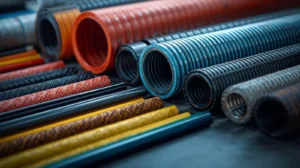
Before production begins, industrial hose manufacturing relies on meticulous material selection. The specific application determines which rubber compounds provide the best performance, durability, and chemical resistance.
In Simple Terms: The performance of a rubber hose depends on selecting the right elastomer and additives based on temperature, pressure, and chemical exposure.
Choosing the Right Elastomers
Engineers choose elastomers based on chemical compatibility, temperature resistance, and flexibility requirements. Common choices include Nitrile for oil resistance, EPDM for weather and heat resistance, and Neoprene for general industrial use. Selecting the correct base polymer determines the core capabilities of the hose.
Nitrile Vs EPDM Vs Neoprene: Quick Comparison
- Nitrile (NBR): Best for oil and fuel resistance
- EPDM: Ideal for heat, weather, and ozone resistance
- Neoprene: Suitable for general industrial applications
Use Nitrile for oil-based systems, EPDM for outdoor conditions, and Neoprene for balanced performance.
The Role of Compounding Agents
Raw rubber alone lacks the strength required for industrial applications. Technicians add compounding agents like carbon black, sulfur, plasticizers, and antioxidants to the mix. These additives enhance durability, improve flexibility, and prepare the rubber for the curing phase.
Compounding agents can significantly improve hose performance, enhancing tensile strength, flexibility, and resistance to wear and environmental stress.
Selecting the wrong material can lead to premature hose failure, reduced efficiency, and increased maintenance costs in industrial systems.
Also, Read: Types of Industrial Rubber Hoses
How Does the Rubber Hose Extrusion Process Work?
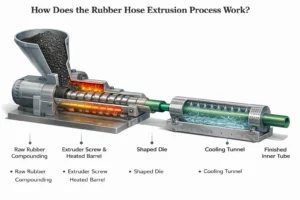
The rubber hose extrusion process forms the foundational inner tube of the hose. This inner tube directly carries the conveyed material, making its strength, chemical resistance, and structural integrity critical for overall hose performance.
In Simple Terms: Extrusion shapes raw rubber into a seamless inner tube, which directly carries fluids and determines the hose’s leak resistance and flow efficiency.
The Inner Tube Extrusion Phase
During extrusion, workers feed the compounded rubber into an extruder machine. A rotating screw pushes the rubber through a heated barrel, forcing it through a specifically sized die. This creates a continuous, seamless rubber tube. The seamless nature prevents leaks and ensures smooth fluid flow.
This process ensures consistent wall thickness and uniform internal structure, which are essential for maintaining pressure stability during operation.
Temperature and Pressure Controls
Operators carefully monitor temperature and pressure throughout the extrusion. If the temperature gets too high, the rubber might cure prematurely. If the pressure fluctuates, the tube’s wall thickness becomes uneven. Maintaining strict control ensures a uniform inner tube.
Even slight variations in temperature or pressure can lead to defects such as weak spots, uneven thickness, or reduced durability in the final hose.
Proper extrusion control plays a crucial role in preventing leaks, ensuring consistent flow, and maintaining the long-term reliability of industrial hoses.
What Are the Stages of Reinforced Hose Manufacturing?
An unreinforced rubber tube expands and bursts under pressure. Reinforced hose manufacturing enhances strength, pressure resistance, and structural stability, enabling hoses to perform reliably in high-pressure industrial environments.
In Simple Terms: Reinforcement adds strength to the rubber hose, preventing expansion, improving pressure resistance, and ensuring safe operation in demanding conditions.
Textile Braiding and Spiraling
For medium-pressure applications, manufacturers use textile reinforcements like polyester, nylon, or aramid fibers. Machines weave or spiral these yarns tightly around the inner tube. This step in rubber hose construction provides flexibility while preventing the hose from expanding under internal pressure.
The reinforcement layer controls hose expansion under pressure, ensuring dimensional stability and preventing sudden failure during operation.
Wire Reinforcement Techniques
High-pressure applications, such as hydraulic systems, require metal reinforcement. Machines wrap high-tensile steel wire around the inner tube. Manufacturers use either a braided pattern for flexibility or a spiraled pattern for maximum pressure resistance.
Braided Vs Spiral Reinforced Hoses
- Braided Reinforcement: Offers higher flexibility and is suitable for medium-pressure applications
- Spiral Reinforcement: Provides maximum strength and is ideal for high-pressure hydraulic systems
Braided hoses are preferred where flexibility is required, while spiral hoses are used in heavy-duty, high-pressure conditions.
Using the wrong type of reinforcement can lead to hose bursts, reduced lifespan, and increased maintenance costs in industrial systems.
How Is the Outer Cover Applied in Rubber Hose Construction?
After reinforcement, the hose needs protection from external environments. The outer cover protects the internal layers from abrasion, UV exposure, chemicals, and extreme environmental conditions, extending the hose’s lifespan and reliability.
In Simple Terms: The outer cover protects the hose from external damage like abrasion, sunlight, chemicals, and harsh weather, ensuring long-term durability.
Operators pass the reinforced tube through a second extruder. This machine applies a distinct layer of rubber over the reinforcement. The cover material often differs from the inner tube material, as its primary job is external protection rather than fluid compatibility. Common outer cover materials include EPDM for weather resistance, Neoprene for general industrial use, and Nitrile blends for oil-resistant environments. A tight bond between the inner tube, reinforcement, and outer cover is essential for the longevity of the hose.
A strong bond between all layers prevents delamination, which is a common cause of hose failure in industrial applications.
What Happens During the Hose Curing Process?
Vulcanization, or the hose curing process, transforms the soft, tacky rubber into a strong, elastic material. This chemical process cross-links polymer chains, significantly improving strength, elasticity, heat resistance, and overall durability of the rubber hose.
In Simple Terms: Vulcanization strengthens rubber by applying heat and pressure, making the hose durable, elastic, and capable of handling industrial stress conditions.
Autoclave Vulcanization Method
Many facilities use steam autoclaves for curing. Workers wrap the uncured hose in nylon curing tape and place it inside a massive pressure vessel. Steam fills the autoclave, applying intense heat and pressure. This forces the layers together, creating a solid, unified structure. After curing, workers remove the nylon tape, which often leaves a distinct textured finish on the hose cover.
Controlled curing ensures proper bonding between layers, preventing structural weaknesses and enhancing long-term performance.
Continuous Vulcanization Techniques
For long, continuous lengths of hose, manufacturers use continuous vulcanization. The extruded hose passes through a long, heated tunnel. Liquid salt baths, hot air, or microwave energy provide the necessary heat. This efficient method works exceptionally well for smaller diameter hoses.
Autoclave Vs Continuous Vulcanization
- Autoclave Vulcanization: Ideal for batch production, ensures strong bonding and uniform curing
- Continuous Vulcanization: Suitable for long hose lengths, offers faster production and efficiency
Autoclave methods provide high precision, while continuous methods improve manufacturing speed and scalability.
Improper curing can result in weak bonding, reduced elasticity, and premature hose failure under pressure.
Vulcanization is one of the most critical steps in rubber hose manufacturing, as it directly determines the hose’s strength, flexibility, and lifespan.
How Do Facilities Conduct Rubber Hose Quality Testing?
A responsible industrial hose factory never ships a product without strict verification. Rubber hose quality testing ensures every batch meets international safety and performance standards.
Burst and Pressure Testing
Technicians subject random samples to intense hydrostatic pressure. They pump water into the hose until it fails, determining its maximum burst pressure. This test verifies that the hose operates safely at its stated working pressure, typically requiring a 4:1 safety factor.
Adhesion and Flexibility Checks
Quality control teams perform adhesion tests to measure the bond strength between the tube, reinforcement, and cover. They also test flexibility in cold conditions and conduct ozone resistance tests. These checks guarantee the hose will not delaminate or crack during field use.
What Makes an Industrial Hose Factory Efficient and Safe?

Operating a successful industrial hose factory requires a commitment to safety and lean manufacturing. Workers handle heavy machinery, high temperatures, and complex chemical compounds daily.
Leading factories implement automated monitoring systems to track extrusion speeds, curing temperatures, and material usage. They also prioritize worker safety by installing advanced ventilation systems to handle rubber fumes and implementing strict lockout/tagout procedures for machinery maintenance. Efficiency and safety go hand-in-hand to produce consistent, high-quality products.
How Do Rubber Hose Manufacturers India Compare Globally?
The global supply chain relies heavily on diverse manufacturing hubs. Over the past decade, rubber hose manufacturers India have emerged as major players in the global market.
These manufacturers combine cost-effective production with advanced engineering capabilities. Many facilities hold ISO certifications and comply with DIN, SAE, and EN standards. By investing heavily in modern extrusion technology and rigorous quality testing facilities, they provide reliable hoses for automotive, agricultural, and industrial sectors worldwide.
How Can Buyers Choose the Right Hose for Their Application?
Understanding the rubber hose manufacturing process helps buyers make informed decisions. When selecting a hose, always use the STAMPED acronym: Size, Temperature, Application, Material, Pressure, Ends, and Delivery.
Evaluate the fluid you need to convey, the external environment the hose will face, and the maximum pressure of your system. Consult with manufacturers about their specific compounding and reinforcement techniques. A properly specified hose prevents catastrophic failures, reduces equipment downtime, and ensures a safer work environment for your team.
Also, Read: Industrial Rubber Hose Selection Guide
Conclusion: Understanding Rubber Hose Manufacturing for Better Decisions
The rubber hose manufacturing process involves multiple critical stages, including material selection, extrusion, reinforcement, outer covering, vulcanization, and quality testing. Each step plays a vital role in ensuring the hose can withstand pressure, temperature, and harsh industrial conditions.
A well-manufactured rubber hose delivers consistent performance, reduces maintenance costs, and enhances operational safety. On the other hand, poor material selection or manufacturing defects can lead to premature failure, system downtime, and safety risks.
For industrial buyers, understanding this process is not just technical knowledge — it is a strategic advantage. It helps in selecting the right hose, avoiding costly mistakes, and ensuring long-term reliability in demanding applications.
In Short: A high-quality rubber hose is the result of precise engineering, controlled manufacturing, and strict quality testing.
FAQs On Rubber Hose Manufacturing Process
What Are The Main Components Of A Rubber Hose?
A standard rubber hose consists of three main components:
- Inner tube (fluid contact layer)
- Reinforcement layer (strength and pressure resistance)
- Outer cover (environmental protection)
Each layer plays a critical role in durability and performance.
Which Materials Are Used In Industrial Hose Manufacturing?
Industrial hoses use elastomers like Nitrile, EPDM, and Neoprene, depending on application requirements.
Additives such as carbon black, sulfur, and plasticizers enhance strength, flexibility, and heat resistance.
How Does The Rubber Hose Extrusion Process Work?
In extrusion, compounded rubber is pushed through a heated die to form a seamless inner tube.
This process ensures uniform thickness, leak prevention, and smooth fluid flow.
Why Is Reinforcement Important In Rubber Hoses?
Reinforcement prevents hose expansion and failure under pressure.
Manufacturers use textile fibers for flexibility or steel wire for high-pressure applications.
What Is Vulcanization In Hose Manufacturing?
Vulcanization is the curing process that strengthens rubber by cross-linking polymer chains using heat and pressure.
It transforms soft rubber into a durable, elastic material.
How Are Rubber Hoses Tested For Quality?
Rubber hoses undergo burst pressure testing, adhesion checks, and flexibility tests.
These tests ensure safety, durability, and compliance with industry standards.
What Is The STAMPED Method For Selecting A Hose?
STAMPED stands for Size, Temperature, Application, Material, Pressure, Ends, and Delivery.
It helps buyers choose the right hose for their specific industrial application.
What Makes An Industrial Hose Factory Efficient?
An efficient hose factory uses automation, precise process control, and strict safety protocols.
This ensures consistent product quality and safe working conditions.
Are Rubber Hose Manufacturers In India Reliable?
Yes, many rubber hose manufacturers in India meet global standards like ISO, DIN, and SAE.
They offer cost-effective solutions with advanced manufacturing capabilities.