
Industrial rubber hose selection plays a critical role in the safe and efficient functioning of modern industries. From transferring water and air to handling aggressive chemicals, abrasive slurry, steam, oils, and food-grade materials, rubber hoses are an essential yet often underestimated component of industrial infrastructure.
In manufacturing plants, construction sites, chemical processing units, oil & gas facilities, and food production environments, even a single hose failure can result in serious safety risks, production losses, environmental hazards, and expensive downtime. This makes the process of selecting the right rubber hose far more important than simply choosing a hose based on size or price.
A structured industrial rubber hose selection process ensures that the hose performs reliably under real operating conditions, resists wear and chemical attack, meets regulatory standards, and delivers long-term value. This comprehensive guide explains how to choose the right rubber hose for industrial use, covering technical parameters, application considerations, hose types, industry standards, common mistakes, and the role of experienced industrial hose manufacturers in India.
Understanding Industrial Rubber Hoses and Their Importance
Before evaluating specifications, it is essential to understand what differentiates an industrial rubber hose from general-purpose hoses. An industrial rubber hose is a flexible, reinforced conduit designed to transport liquids, gases, or solid materials under specific pressure and temperature conditions.
Unlike rigid piping systems, rubber hoses offer:
-
Flexibility to absorb vibration and movement
-
Ease of installation in complex layouts
-
Resistance to mechanical stress and fatigue
-
Adaptability to dynamic operating environments
This flexibility makes rubber hoses indispensable in applications where equipment movement, thermal expansion, or vibration is unavoidable.
Why Rubber Is Preferred Over Other Hose Materials
While materials such as PVC, thermoplastics, and metal are used in certain applications, rubber hoses remain the preferred choice in heavy-duty industrial environments.
-
PVC hoses are lightweight and economical but tend to become brittle in cold conditions and lose strength at elevated temperatures.
-
Metal hoses provide excellent pressure resistance but lack flexibility, making them unsuitable for dynamic applications.
-
Rubber hoses strike the ideal balance between durability, flexibility, pressure handling, and environmental resistance.
This balance is the reason why industrial rubber hose selection is a foundational decision in system design and maintenance planning.
Why Industrial Rubber Hose Selection Is a Critical Safety Decision
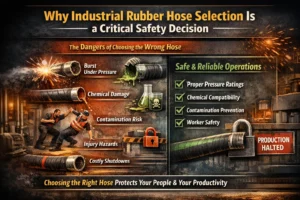
Many industrial accidents trace back to improper hose selection rather than manufacturing defects. Selecting an incorrect hose can result in:
-
Sudden hose bursts due to under-rated pressure
-
Chemical degradation of the inner tube
-
Contamination of conveyed materials
-
Slips, falls, burns, or injection injuries
-
Unplanned shutdowns and regulatory violations
Conversely, correct industrial hose selection improves system reliability, protects personnel, and reduces lifecycle costs. Treating hose selection as a strategic decision rather than a routine purchase is essential for long-term operational success.
Key Factors in Industrial Rubber Hose Selection Process
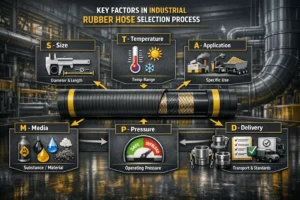
Selecting the right hose requires evaluating multiple parameters together. Industry professionals often follow the STAMPED method: Size, Temperature, Application, Media, Pressure, Ends, and Delivery.
Application Requirements in Industrial Rubber Hose Selection
The first step is understanding what the hose will be used for. Different applications impose different mechanical, chemical, and thermal stresses.
Key questions include:
-
Is the hose used for suction, discharge, or both?
-
Will it remain stationary or experience movement?
-
Is it exposed to vibration, bending, or dragging?
-
Is the environment indoor, outdoor, or underground?
A hose used for static water transfer has vastly different requirements from one used in dynamic concrete pumping or chemical loading operations. Dynamic applications demand higher flexibility and stronger reinforcement to prevent fatigue-related failures.
Media Compatibility for Rubber Hose for Industrial Use
The media flowing through the hose directly affects the choice of inner tube material. Media incompatibility is one of the most common causes of hose failure.
Typical media and compatible materials include:
-
Water: Natural rubber or EPDM
-
Oils & fuels: Nitrile (NBR) compounds
-
Chemicals: EPDM, Viton, UHMWPE, or XLPE linings
-
Food products: FDA-approved, non-toxic rubber
-
Abrasive materials: Thick, wear-resistant rubber liners
Using an incompatible compound can cause swelling, softening, cracking, or chemical breakdown of the hose liner, leading to leaks and contamination.
Also, Read: Understanding Hose Pipe: A Multi-Purpose Solution by Rubber Hose India LLP
Pressure Ratings in Industrial Rubber Hose Selection
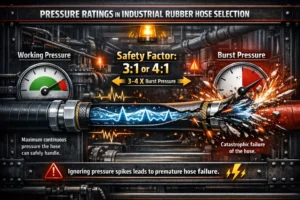
Pressure is a defining factor in hose performance. Two pressure ratings must always be considered:
-
Working Pressure: Maximum pressure the hose can handle continuously
-
Burst Pressure: Pressure at which the hose will fail catastrophically
Best practices dictate a safety factor of 3:1 or 4:1, meaning the burst pressure should be at least three to four times the working pressure. This margin accounts for pressure surges, system shocks, and operational variations.
Ignoring pressure spikes is a common mistake in industrial rubber hose selection and often leads to premature failure.
Temperature Limits and Thermal Resistance
Rubber compounds react significantly to temperature extremes. Industrial environments may expose hoses to:
-
Hot steam or oils
-
Cold outdoor conditions
-
Radiant heat from machinery
-
Temperature fluctuations during operation
High temperatures can harden rubber, reduce flexibility, and cause cracking. Low temperatures can make rubber brittle and prone to flex failure. Always ensure that both internal media temperature and external ambient temperature fall within the manufacturer’s specified limits.
Hose Size, Length, and Bend Radius Considerations
Proper sizing is critical for system efficiency.
-
Internal Diameter (ID): A hose with too small an ID increases fluid velocity, friction loss, heat generation, and pressure drop. Oversized hoses may reduce system efficiency.
-
Length: Hoses should be long enough to avoid tension but not excessively long, which can cause drag and pressure loss.
-
Minimum Bend Radius: Exceeding the bend radius causes kinking and damages reinforcement layers, significantly reducing hose life.
Correct sizing is a fundamental step in any rubber hose buying guide.
Reinforcement Type and Construction
Reinforcement provides strength and pressure resistance.
-
Textile reinforcement (polyester, nylon) is suitable for low to medium pressure applications.
-
Steel wire reinforcement (braided or spiral) is used for high-pressure and heavy-duty operations.
-
Multi-layer constructions combine flexibility with high strength.
The reinforcement type should align with both pressure requirements and flexibility needs.
Environmental Resistance and Durability
External conditions can be just as damaging as internal media. A heavy duty rubber hose used outdoors or in harsh environments must resist:
-
Abrasion from rough surfaces
-
UV radiation and ozone exposure
-
Oils, chemicals, and weathering
-
Mechanical impact and crushing
Selecting a hose with a suitable outer cover is essential for long service life.
Types of Industrial Rubber Hoses Used Across Industries
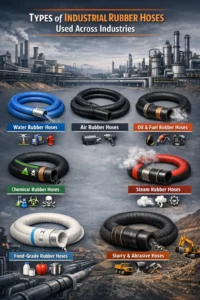
Understanding the types of industrial rubber hoses simplifies the selection process.
Water Rubber Hoses
Used for suction and discharge in irrigation, construction, firefighting, and dewatering operations.
Air Rubber Hoses
Designed for compressed air systems and pneumatic tools, often resistant to oil mist from compressors.
Oil and Fuel Rubber Hoses
Used in automotive, petrochemical, and hydraulic systems with NBR-lined tubes.
Chemical Rubber Hoses
Engineered for acids, solvents, and corrosive chemicals using UHMWPE or XLPE liners.
Steam Rubber Hoses
High-temperature EPDM hoses reinforced with steel wire for saturated and superheated steam.
Food-Grade Rubber Hoses
Manufactured with white, non-toxic liners for hygienic transfer of food and beverages.
Slurry and Abrasive Material Hoses
Extra-thick liners for mining, cement, and bulk material handling industries.
Rubber Hose Applications Across Major Industries
The versatility of rubber hoses supports diverse industrial operations:
-
Manufacturing: Air, water, hydraulic transfer
-
Automotive: Fuel systems, cooling lines
-
Chemical processing: Acid and solvent transfer
-
Oil & gas: Drilling, mud suction, crude oil transfer
-
Agriculture: Irrigation and spraying
-
Construction: Concrete pumping, dewatering
-
Food & beverage: Milk, beer, potable water transfer
-
Pharmaceuticals: Clean-room compliant fluid handling
Standards and Certifications in Industrial Hose Selection Guide
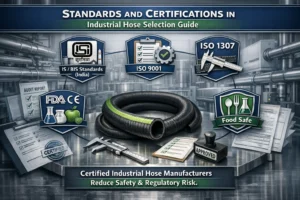
Compliance with recognized standards ensures safety and quality.
-
IS / BIS Standards: Mandatory benchmarks in India
-
ISO Certifications: ISO 9001, ISO 1307 for dimensional accuracy
-
FDA / EU Approvals: Required for food-grade applications
Working with certified industrial hose manufacturers in India ensures adherence to these standards and reduces regulatory risk.
Common Mistakes in Industrial Rubber Hose Selection
Even experienced professionals make avoidable mistakes, including:
-
Ignoring pressure safety margins
-
Selecting the wrong liner material
-
Overlooking environmental exposure
-
Prioritizing price over performance
The true cost of a hose includes downtime, replacement labor, and safety risks — not just purchase price.
How to Choose a Reliable Rubber Hose Supplier in India
A dependable rubber hose supplier in India should offer:
-
Industry-specific application knowledge
-
Custom hose assemblies and fittings
-
Technical consultation and after-sales support
-
Consistent inventory and delivery reliability
Supplier expertise directly impacts the success of industrial rubber hose selection.
Why Following an Industrial Rubber Hose Selection Guide Is Important
A structured industrial hose selection guide delivers long-term benefits:
-
Reduced maintenance and replacement costs
-
Improved worker safety
-
Extended equipment life
-
Stable and efficient operations
Correct industrial rubber hose selection protects both people and processes.
Role of Experienced Industrial Hose Manufacturers in India
The success of industrial rubber hose selection is closely linked to manufacturing expertise. Established industrial hose manufacturers in India design hoses that meet local operating conditions, regulatory requirements, and global performance standards.
Manufacturers such as Rubber Rubber Hose India are recognized within the industry for supplying a wide range of industrial rubber hoses engineered for pressure reliability, material compatibility, and consistent quality. Partnering with experienced manufacturers ensures access to technically sound products, proper documentation, and informed application guidance — all without compromising operational safety or compliance.
Also, Read: Rubber Hose Manufacturer in India: A Comprehensive Guide to the Top 30
FAQs Section
What is the best rubber hose for industrial use?
There is no single "best" hose. The best hose is the one specifically engineered for your application. For example, an EPDM hose is best for steam, while a Nitrile hose is best for oil.
How long does an industrial rubber hose last?
Lifespan varies based on usage intensity, environmental exposure, and maintenance. However, regular inspections should be conducted. If you see cracks, leaks, or exposed reinforcement, replace it immediately.
What is the difference between rubber and PVC hoses?
Rubber hoses offer superior flexibility, temperature resistance, and durability in heavy-duty applications. PVC is generally lighter and cheaper but can become brittle in cold weather and soften in high heat.
Are heavy duty rubber hoses suitable for high pressure?
Yes, specifically those reinforced with high-tensile steel wire. These are designed to withstand significant internal pressures found in hydraulic and industrial cleaning applications.
How to identify quality industrial hose manufacturers in India?
Look for manufacturers with ISO certifications, BIS (ISI) markings on their products, and a proven track record in your specific industry. Ask for test certificates and material data sheets before purchasing.