
In the intricate ecosystem of a manufacturing plant, where efficiency is measured in seconds and safety is non-negotiable, the components that connect the machinery are as critical as the machines themselves. Among these, industrial rubber hoses are the unsung workhorses. These flexible conduits are the veins and arteries of the factory floor, transferring everything from compressed air and water to volatile chemicals and abrasive materials. Choosing the right industrial hose pipe is not just a procurement task; it is an engineering decision that directly impacts uptime, operational costs, and worker safety.
A single hose failure can bring a multi-million-dollar production line to a halt, cause a hazardous spill, or result in serious injury. This is why understanding the different industrial rubber hose types and their specific industrial hose applications is crucial for plant managers, maintenance crews, and engineers. From the automotive hubs in Pune to the pharmaceutical plants in Hyderabad, the demand for reliable, heavy duty rubber hose solutions has never been higher.
This authoritative guide will walk you through the top 10 industrial rubber hoses used in modern manufacturing plants. We will break down their construction, performance capabilities, and ideal use cases, helping you make informed decisions to keep your operations running smoothly and safely.
The Critical Role of Rubber Hoses in Manufacturing
Before diving into the top 10, it’s important to understand why rubber is the preferred material for so many demanding manufacturing plant hoses. Unlike rigid pipes, rubber hoses offer flexibility to connect moving parts, absorb vibrations, and navigate complex layouts. A quality rubber hose for factory use must deliver on several fronts:
- Durability: Withstand constant flexing, abrasion, and harsh environmental conditions.
- Pressure & Temperature Resistance: Safely handle the specified operating pressures and temperatures without risk of bursting or degrading.
- Chemical Compatibility: Remain inert and not break down when exposed to the specific fluids or materials being transferred.
- Safety: Prevent leaks, spills, and catastrophic failures that could harm personnel or damage equipment.
Leading industrial hose manufacturers design these products with multiple layers. A typical reinforced rubber hose consists of an inner tube (formulated for the media), one or more reinforcement layers (textile, steel wire), and a tough outer cover to protect against external damage.
Top 10 Industrial Rubber Hoses for Manufacturing Plants
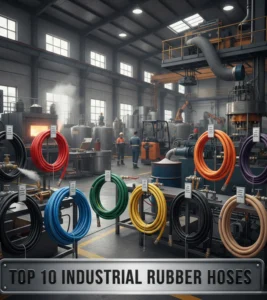
Here are the most common and essential types of industrial rubber hoses found on virtually every factory floor.
1. Industrial Air Hose
Working Principle: Designed to transfer compressed air from compressors to power pneumatic tools, control systems, and machinery.
- Material Construction: The inner tube is typically made from oil-resistant synthetic rubber like Nitrile (NBR) or SBR to handle oil mist from compressors. The outer cover is often made from EPDM or Neoprene for abrasion and weather resistance.
- Reinforcement: High-tensile textile braids (polyester or nylon) are used for standard pressures (up to 300 PSI).
- Pressure & Temperature: Standard hoses handle 200-300 PSI. Temperature ranges are typically -30°C to 80°C.
- Industrial Hose Applications: Powering pneumatic wrenches, drills, spray guns, operating actuators and cylinders, and general workshop air supply.
2. General-Purpose Water Hose
Working Principle: Used for the transfer of water for cooling, washdown, and general utility purposes.
- Material Construction: EPDM (Ethylene Propylene Diene Monomer) rubber is the most common choice for both the tube and cover. EPDM offers excellent resistance to heat, ozone, and weathering, making it a durable choice for a rubber hose for factory environments.
- Reinforcement: Multiple layers of synthetic textile braids.
- Pressure & Temperature: Typically rated for 150-250 PSI. Can handle water temperatures up to 90°C.
- Industrial Hose Applications: Machine cooling lines, plant cleanup and washdown, dust suppression, and general water discharge.
Also, Read: Rubber Hose vs PVC Hose: Best Industrial Hose Comparison Guide (2026)
3. Steam Hose
Working Principle: Safely transports saturated or superheated steam for processing, heating, and cleaning. This is one of the most critical and high-risk hose applications.
- Material Construction: The inner tube is made from high-grade EPDM formulated specifically to resist high-temperature steam. The outer cover is also EPDM, often pin-pricked to allow trapped gas to escape, preventing blistering.
- Reinforcement: One or two layers of high-tensile steel wire braids are essential for handling the high pressure and temperature of steam.
- Pressure & Temperature: Rated for pressures up to 250 PSI and can withstand temperatures up to 232°C for superheated steam.
- Industrial Hose Applications: Sterilization in food and pharmaceutical plants, process heating in chemical and rubber industries, and high-temperature cleaning.
4. Hydraulic Hose
Working Principle: Transfers hydraulic fluid under very high pressure to power heavy machinery and equipment. This is a classic example of a rubber hose for machinery that must withstand intense dynamic stress.
- Material Construction: The inner tube is oil-resistant synthetic rubber (like Nitrile). The outer cover is a tough, abrasion-resistant synthetic rubber designed to withstand external wear and tear.
- Reinforcement: This is the key differentiator. Hydraulic hoses use multiple layers of high-tensile steel wire braids or spirals to contain pressures that can exceed 6000 PSI.
- Pressure & Temperature: Pressure ratings vary widely based on the number of reinforcement layers. Temperature range is typically -40°C to 120°C.
- Industrial Hose Applications: Powering hydraulic presses, injection molding machines, forklifts, construction equipment, and machine tool actuators.
5. Chemical Transfer Hose
Working Principle: Designed to safely transfer a wide variety of acids, alkalis, solvents, and other chemicals.
- Material Construction: The inner tube material is critical and must be chosen based on the specific chemical. Common materials include XLPE (Cross-linked Polyethylene), UHMWPE (Ultra-High Molecular Weight Polyethylene), and specialized rubber compounds like Viton™. The cover is weather and abrasion-resistant EPDM.
- Reinforcement: Synthetic textile braids with a wire helix to prevent kinking and collapsing during suction.
- Pressure & Temperature: Generally designed for lower pressures (150-250 PSI). Temperature ratings vary based on the tube material.
- Industrial Hose Applications: Loading and unloading chemical tankers, in-plant chemical processing lines, and transferring chemicals to mixing tanks.
6. Oil and Fuel Hose
Working Principle: Used for the suction and discharge of petroleum-based products, including gasoline, diesel, and lubricating oils.
- Material Construction: The inner tube is made of high-quality Nitrile (NBR) rubber, which offers excellent resistance to swelling and degradation from oils and fuels. The outer cover is also oil and weather-resistant.
- Reinforcement: Textile braids and an embedded wire helix for suction capability.
- Pressure & Temperature: Varies by application, from low-pressure dispensing to higher-pressure fuel transfer lines.
- Industrial Hose Applications: Fuel dispensing at factory-owned stations, transferring lubricants to machinery, and hydraulic oil return lines.
7. Abrasion-Resistant Material Handling Hose
Working Principle: Designed to convey dry, abrasive materials like sand, gravel, cement, and plastic pellets, or wet slurries.
- Material Construction: The inner tube is made from a very thick layer of highly abrasion-resistant natural rubber or SBR blends. The thickness of this wear tube is the primary factor in the hose’s lifespan.
- Reinforcement: Multiple plies of synthetic fabric with a wire helix to maintain shape.
- Pressure & Temperature: Typically for low-pressure applications, but designed for high-velocity material flow.
- Industrial Hose Applications: Sandblasting, concrete pumping, bulk powder transfer in chemical and food industries, and conveying slurries in mining operations.
8. Food-Grade Rubber Hose
Working principle: Safely transfers edible liquids and foodstuffs without imparting taste, odor, or contaminants.
- Material Construction: The inner tube is made from FDA-compliant, non-toxic materials like Nitrile or EPDM. It is exceptionally smooth to prevent bacterial growth.
- Reinforcement: Textile braids with an optional wire helix for suction.
- Pressure & Temperature: Designed for low to medium pressures and can often be sterilized with steam.
- Industrial Hose Applications: Transferring milk, beer, wine, juices, and other liquid food products in processing plants.
9. Cement and Slurry Hose
Working Principle: A specialized type of material handling hose designed specifically for the extreme abrasion of concrete, plaster, and grout.
- Material Construction: Features an extra-thick inner tube made from a proprietary blend of natural and synthetic rubber for maximum abrasion resistance. The outer cover is tough and weather-resistant.
- Reinforcement: High-tensile steel cord plies for handling the high pressures associated with concrete pumping.
- Pressure & Temperature: Rated for high pressures, often exceeding 800 PSI.
- Industrial Hose Applications: Concrete placement at construction sites, mining slurry disposal, and grout injection.
10. Multipurpose Industrial Hose Pipe
Working Principle: A versatile “jack-of-all-trades” hose designed to handle air, water, oil, and some mild chemicals, reducing the need for multiple hose types for general-purpose tasks.
- Material Construction: The tube is typically made from a moderate oil-resistant Nitrile blend, while the cover is a durable, red EPDM or NBR/PVC blend for easy identification.
- Reinforcement: Spiral synthetic yarn.
- Pressure & Temperature: Usually rated for around 300 PSI and a temperature range of -30°C to 90°C.
- Industrial Hose Applications: Ideal for maintenance workshops, general factory use, and applications where the hose might be exposed to different media.
How to Choose the Right Rubber Hose for Your Factory
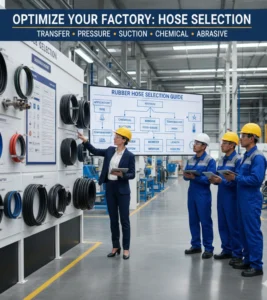
Selecting the correct industrial hose pipe can be simplified by following the S.T.A.M.P.E.D. method:
- Size: Inner diameter, outer diameter, and length.
- Temperature: The temperature of the media being conveyed and the ambient temperature.
- Application: The conditions of use (e.g., abrasion, flexing, routing).
- Media: The specific material or fluid being transferred.
- Pressure: The maximum working pressure, including any surges.
- Ends: The type of couplings or fittings required.
- Delivery: Testing, quality, and certification requirements.
Reliable rubber hose suppliers India play a vital role here, offering technical expertise to help plants in industrial clusters like Manesar or Sriperumbudur select the right hose. Always look for products from reputable industrial hose manufacturers that adhere to standards like IS, SAE, or EN.
Conclusion: The Backbone of Industrial Operations
Industrial rubber hoses are far more than simple tubes; they are engineered components vital to the productivity and safety of any manufacturing plant. From a simple water line to a complex, high-pressure hydraulic assembly, each hose is designed for a specific purpose. Understanding the top 10 industrial hose applications and their corresponding hose types empowers engineers and managers to make smarter choices.
By prioritizing quality from trusted industrial hose manufacturers and working with knowledgeable suppliers, you ensure that your facility is equipped with the right heavy duty rubber hose for every task. This proactive approach minimizes downtime, enhances safety, and ultimately strengthens the operational backbone of your entire manufacturing process.
Also, Read: Rubber Hose Manufacturer in India: A Comprehensive Guide to the Top 30
Frequently Asked Questions
Which rubber hose is best for machinery?
The best rubber hose for machinery depends on the machine's function. For powering moving parts, a high-pressure hydraulic hose is best. For cooling, an EPDM water hose is ideal. For pneumatic controls, a standard air hose is used. Always refer to the OEM's specifications.
How long do industrial rubber hoses last?
Lifespan varies greatly based on the application, pressure, temperature, and exposure to abrasion or chemicals. A stationary water hose might last over a decade, while a hydraulic hose on a highly dynamic machine might need replacement every 1-2 years as part of a preventive maintenance schedule. Regular inspection is crucial.
How do I select the right industrial hose pipe?
Use the S.T.A.M.P.E.D. method to define your requirements clearly. Specify the Size, Temperature, Application, Media, Pressure, Ends, and any required Delivery standards. Consulting with a technical expert from a trusted hose supplier is highly recommended.