
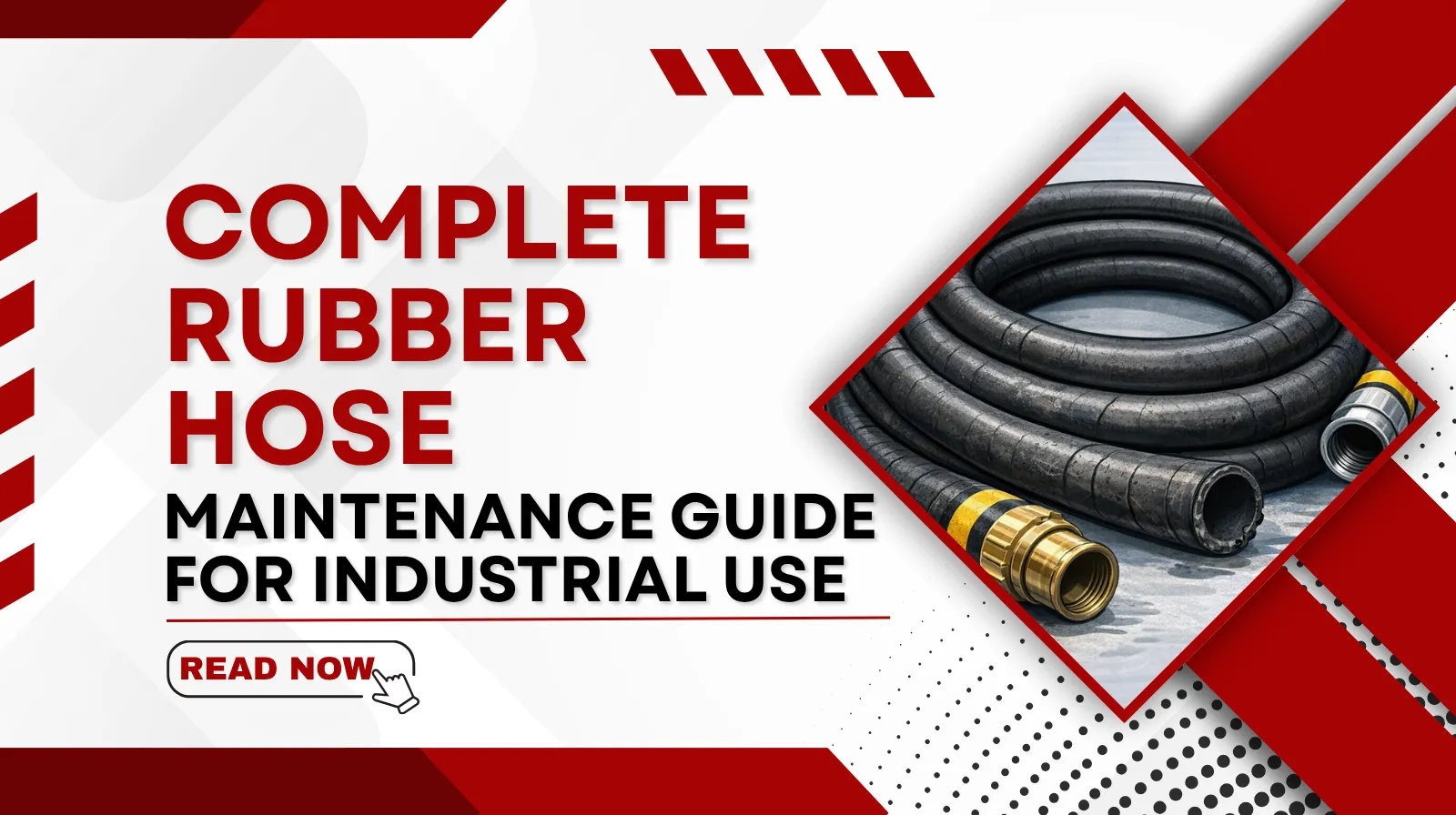
Industrial rubber hoses are the lifelines of many manufacturing and processing operations. They transport water, chemicals, petroleum, and abrasive materials under extreme pressures and temperatures. Proper rubber hose maintenance is not just a recommendation; it is a critical requirement for facility safety and operational efficiency. Failing to implement a solid rubber hose maintenance program can lead to catastrophic leaks, equipment downtime, and serious safety hazards for your workforce. This guide will walk you through everything you need to know to keep your hoses in top working condition. By following this rubber hose care guide, you can maximize your investment and maintain a safe working environment. Why Rubber Hose Maintenance is Important Implementing a strict rubber hose maintenance schedule offers three massive benefits for any industrial operation. Safety Risks Damaged hoses pose severe safety risks. A sudden burst can spray toxic chemicals, scalding liquids, or high-pressure air across the factory floor. Consistent rubber hose maintenance prevents these unexpected failures, keeping your team safe. Cost Savings Replacing heavy-duty industrial hoses is expensive. Regular inspections and proper care extend rubber hose life, saving your facility thousands of dollars in premature replacement costs and unplanned downtime. Equipment Efficiency A hose with internal blockages or minor leaks forces pumps and compressors to work harder. Keeping hoses clean and leak-free ensures your entire system operates at peak efficiency. Daily, Weekly, and Monthly Maintenance Routine A structured routine is the foundation of excellent industrial hose servicing. Breaking tasks down by frequency ensures no detail goes unnoticed. Daily Tasks: Operators should perform visual checks before every shift. Look for obvious signs of damage like kinks, severe twisting, or jacket cuts. Weekly Tasks: Maintenance teams should conduct a deeper physical inspection. Feel the hose for soft spots, check connections for minor leaks, and wipe away harsh chemicals from the exterior. Monthly Tasks: Schedule comprehensive industrial hose servicing. This includes pressure testing, checking fitting integrity, and documenting the hose condition in your maintenance log. Industrial Hose Inspection Checklist Use this snippet-friendly hose inspection checklist to standardize your review process. Train your team to look for these specific issues: Inspect the outer cover for cuts, abrasions, and exposed wire reinforcement. Check for blisters, bulges, or soft spots along the hose body. Examine fittings for rust, cracks, or slippage from the hose end. Verify that the hose remains free from severe kinks or crushed sections. Look inside the hose (when uncoupled) for tube degradation or chemical swelling. Test flexibility to ensure the rubber has not become hard and brittle. Following this hose inspection checklist regularly will catch minor issues before they become major problems. Common Causes of Hose Damage & Hose Wear Prevention Understanding why hoses fail is the first step in hose wear prevention. Abrasion: Hoses often drag across rough concrete or vibrate against sharp machinery. Use protective sleeves or elevate hoses to practice effective hose wear prevention. Pressure Spikes: Operating above the maximum working pressure degrades the internal tube. Always use pressure relief valves. Chemical Incompatibility: Using a hose for the wrong chemical causes the rubber to swell or melt. Always verify the chemical compatibility chart before use. Extreme Temperatures: High heat bakes the rubber, making it brittle. Protect hoses from direct heat sources and sunlight. Rubber Hose Care Guide (Best Practices) To maximize performance, follow this essential rubber hose care guide. Proper Cleaning: Flush hoses after transporting corrosive materials. Use cleaning solutions compatible with the specific rubber compound. Safe Handling: Never lift a heavy hose by the fittings. Use slings and support the hose body to prevent stretching. Usage Tips: Avoid crossing hoses over walkways where vehicles might crush them. Use hose bridges if traffic must cross the hose path. Integrating this rubber hose care guide into your standard operating procedures will greatly reduce unexpected failures. Rubber Hose Storage Tips Improper storage destroys hoses before you even use them. Implement these rubber hose storage tips to protect your inventory. Storage Conditions: Store hoses in a cool, dark, and dry room. Keep temperatures between 50°F and 70°F. Coiling: Never hang hoses on sharp nails or hooks. Store them flat on a shelf or coiled on a wide saddle to prevent kinking. Environment: Keep hoses away from electrical equipment that generates ozone, as ozone degrades rubber rapidly. Keep them away from direct sunlight and harsh solvents. These rubber hose storage tips are critical for preserving the integrity of backup hoses. How to Extend Rubber Hose Life Want to know how to extend rubber hose life? It requires a proactive approach. First, always select the correct hose for the specific application. A water hose cannot handle hydraulic oil. Second, adhere to the recommended bend radius. Forcing a hose into a tight corner stresses the reinforcement layers. Finally, rotate your stock. Use a first-in, first-out method in your storage room. Applying these industrial hose maintenance tips will consistently extend rubber hose life across your entire facility. Rubber Hose Replacement Tips Knowing when to retire a hose is crucial. Follow these rubber hose replacement tips to avoid disastrous blowouts. Replace the hose immediately if the wire reinforcement is exposed. Replace hoses that show significant fitting slippage. Do not patch or tape high-pressure industrial hoses; replacement is the only safe option. Use these rubber hose replacement tips to ensure you swap out aging equipment before it fails. Industrial Hose Safety Maintenance Industrial hose safety maintenance focuses on protecting workers. Always depressurize the system before decoupling a hose. Wear appropriate personal protective equipment (PPE), including gloves and safety glasses, during inspections. Routine pressure checks should be part of your industrial hose safety maintenance program. Hydrostatic testing confirms the hose can still handle its rated pressure without leaking. Industry-Specific Maintenance Tips Different environments require tailored industrial hose maintenance tips. Cement Industry Abrasive dust is the main enemy here. Focus your rubber hose maintenance on checking the inner tube for rapid wear and the outer cover for abrasion from dragging over concrete floors. Oil & Gas Petroleum products degrade certain rubbers. Use specialized hose maintenance best practices

The Rubber Hose Manufacturing Process 2026
A poorly manufactured rubber hose can fail under pressure, leading to costly downtime, safety hazards, and equipment damage. In industrial environments, choosing the right hose is not just a technical decision — it directly impacts performance, safety, and long-term operational costs. Understanding how rubber hoses are made is crucial for engineers and industrial buyers. The right industrial hose ensures safety, operational efficiency, and long-term cost savings. This guide explores the complete rubber hose manufacturing process. You will learn about material selection, extrusion, reinforcement, vulcanization, and quality control. By the end, you will know exactly what goes into creating a reliable, high-performance rubber hose. What Is the Rubber Hose Manufacturing Process? The rubber hose manufacturing process transforms raw synthetic or natural rubber into durable, flexible conduits. This multi-step procedure guarantees that the final product can handle extreme pressures, abrasive materials, and harsh chemicals. Every stage of the rubber hose production process requires precision. A typical hose consists of three main components: an inner tube, a reinforcement layer, and an outer cover. Engineers must align each component perfectly to meet specific industry standards. Whether you need hoses for hydraulic systems, chemical transport, or water delivery, the fundamental steps remain similar, though specific materials and techniques vary. Step-By-Step Rubber Hose Manufacturing Process The rubber hose manufacturing process follows a structured sequence to ensure durability and performance: Material Selection – Choosing the right elastomers and additives Compounding – Mixing rubber with strengthening agents Extrusion – Forming the inner tube through an extruder Reinforcement – Adding textile or steel layers Outer Cover Application – Protecting against external damage Vulcanization – Curing rubber under heat and pressure Quality Testing – Ensuring performance and safety standards How Are Raw Materials Selected for Industrial Hose Manufacturing? Before production begins, industrial hose manufacturing relies on meticulous material selection. The specific application determines which rubber compounds provide the best performance, durability, and chemical resistance. In Simple Terms: The performance of a rubber hose depends on selecting the right elastomer and additives based on temperature, pressure, and chemical exposure. Choosing the Right Elastomers Engineers choose elastomers based on chemical compatibility, temperature resistance, and flexibility requirements. Common choices include Nitrile for oil resistance, EPDM for weather and heat resistance, and Neoprene for general industrial use. Selecting the correct base polymer determines the core capabilities of the hose. Nitrile Vs EPDM Vs Neoprene: Quick Comparison Nitrile (NBR): Best for oil and fuel resistance EPDM: Ideal for heat, weather, and ozone resistance Neoprene: Suitable for general industrial applications Use Nitrile for oil-based systems, EPDM for outdoor conditions, and Neoprene for balanced performance. The Role of Compounding Agents Raw rubber alone lacks the strength required for industrial applications. Technicians add compounding agents like carbon black, sulfur, plasticizers, and antioxidants to the mix. These additives enhance durability, improve flexibility, and prepare the rubber for the curing phase. Compounding agents can significantly improve hose performance, enhancing tensile strength, flexibility, and resistance to wear and environmental stress. Selecting the wrong material can lead to premature hose failure, reduced efficiency, and increased maintenance costs in industrial systems. Also, Read: Types of Industrial Rubber Hoses How Does the Rubber Hose Extrusion Process Work? The rubber hose extrusion process forms the foundational inner tube of the hose. This inner tube directly carries the conveyed material, making its strength, chemical resistance, and structural integrity critical for overall hose performance. In Simple Terms: Extrusion shapes raw rubber into a seamless inner tube, which directly carries fluids and determines the hose’s leak resistance and flow efficiency. The Inner Tube Extrusion Phase During extrusion, workers feed the compounded rubber into an extruder machine. A rotating screw pushes the rubber through a heated barrel, forcing it through a specifically sized die. This creates a continuous, seamless rubber tube. The seamless nature prevents leaks and ensures smooth fluid flow. This process ensures consistent wall thickness and uniform internal structure, which are essential for maintaining pressure stability during operation. Temperature and Pressure Controls Operators carefully monitor temperature and pressure throughout the extrusion. If the temperature gets too high, the rubber might cure prematurely. If the pressure fluctuates, the tube’s wall thickness becomes uneven. Maintaining strict control ensures a uniform inner tube. Even slight variations in temperature or pressure can lead to defects such as weak spots, uneven thickness, or reduced durability in the final hose. Proper extrusion control plays a crucial role in preventing leaks, ensuring consistent flow, and maintaining the long-term reliability of industrial hoses. What Are the Stages of Reinforced Hose Manufacturing? An unreinforced rubber tube expands and bursts under pressure. Reinforced hose manufacturing enhances strength, pressure resistance, and structural stability, enabling hoses to perform reliably in high-pressure industrial environments. In Simple Terms: Reinforcement adds strength to the rubber hose, preventing expansion, improving pressure resistance, and ensuring safe operation in demanding conditions. Textile Braiding and Spiraling For medium-pressure applications, manufacturers use textile reinforcements like polyester, nylon, or aramid fibers. Machines weave or spiral these yarns tightly around the inner tube. This step in rubber hose construction provides flexibility while preventing the hose from expanding under internal pressure. The reinforcement layer controls hose expansion under pressure, ensuring dimensional stability and preventing sudden failure during operation. Wire Reinforcement Techniques High-pressure applications, such as hydraulic systems, require metal reinforcement. Machines wrap high-tensile steel wire around the inner tube. Manufacturers use either a braided pattern for flexibility or a spiraled pattern for maximum pressure resistance. Braided Vs Spiral Reinforced Hoses Braided Reinforcement: Offers higher flexibility and is suitable for medium-pressure applications Spiral Reinforcement: Provides maximum strength and is ideal for high-pressure hydraulic systems Braided hoses are preferred where flexibility is required, while spiral hoses are used in heavy-duty, high-pressure conditions. Using the wrong type of reinforcement can lead to hose bursts, reduced lifespan, and increased maintenance costs in industrial systems. How Is the Outer Cover Applied in Rubber Hose Construction? After reinforcement, the hose needs protection from external environments. The outer cover protects the internal layers from abrasion, UV exposure, chemicals, and extreme environmental conditions, extending the hose’s lifespan
Industrial Rubber Hose Applications in India: Complete Industry-Wise Guide (2026)
Industrial rubber hose applications span almost every sector of India’s manufacturing and processing economy, from steel plants and chemical units to food processing lines and irrigation networks. A hose carrying compressed air on a shop floor faces completely different demands than one transferring sulphuric acid in a chemical plant or hot water in a boiler room. Choosing the wrong hose for a given duty does not just cause inconvenience — it leads to leakage, pressure failure, contamination, and in worst cases, safety incidents on the plant floor. For factory owners, purchase managers, maintenance engineers, OEMs, and contractors across India, understanding which hose belongs in which application is one of the most overlooked but high-impact purchasing decisions. The right hose improves safety, ensures consistent fluid transfer efficiency, handles pressure swings without failure, stays compatible with the chemicals or materials it carries, and reduces unplanned downtime. This guide breaks down industrial rubber hose applications industry by industry, so buyers can match hose type to actual operating conditions instead of relying on guesswork or habit. What Are Industrial Rubber Hoses? An industrial rubber hose is built in three layers, each doing a specific job. The inner tube is the layer in direct contact with the fluid, gas, or material being transferred, and it must be chemically compatible with that substance — whether it is water, diesel, caustic soda, or a food-grade liquid. Around the inner tube sits the reinforcement layer, usually made of braided or spiralled textile, steel wire, or a combination of both. This layer is what gives the hose its pressure rating and burst strength. On the outside, the cover protects the hose from abrasion, ozone, UV exposure, oil spillage, and general wear from handling. Fittings — whether crimped, clamped, or threaded — connect the hose to pumps, valves, machinery, or storage tanks, and a mismatched fitting is one of the most common causes of on-site leakage. Every hose also carries a pressure rating (working pressure and burst pressure) and a temperature range that defines its safe operating window; pushing a hose beyond either limit shortens its life dramatically or causes outright failure. Flexibility and bend radius matter for hoses routed through tight machinery spaces, while abrasion resistance matters more for hoses dragged across factory floors or construction sites. Many industrial hoses are also rated for both suction and discharge duty, meaning they can pull fluid from a tank as well as push it under pressure — a critical distinction for transfer and cleaning applications. Understanding these basics is the foundation for choosing the right hose, whether you are sourcing standard rubber industrial hoses off the shelf or working with a supplier on custom rubber hose assemblies built for a specific machine. Why Application-Based Hose Selection Matters Not every rubber hose is interchangeable, even when two hoses look similar from the outside. A hose designed for compressed air will not safely carry hydraulic oil at 200 bar, and a hose rated for cold water degrades quickly if used to transfer hot chemicals. This is why rubber hose for industries handling chemicals, fuels, or food products cannot be selected on price alone. Application-based selection directly affects: Safety — an incorrect hose under pressure can rupture, putting operators at risk. Leakage prevention — poor chemical compatibility softens or swells the inner tube, causing seepage at joints and fittings. Pressure failure — undersized reinforcement layers burst once working pressure exceeds the hose’s rated limit. Material compatibility — oils, solvents, acids, and food products each need a different inner tube compound. Abrasion and handling wear — hoses dragged over rough surfaces need tougher covers than fixed installation hoses. Temperature extremes — steam lines and hot-fluid transfer need heat-resistant compounds; the wrong hose hardens or cracks. Hose life and total cost — a hose correctly matched to its duty lasts years longer than one forced into the wrong job. Downtime — hose failure mid-shift halts production, and emergency replacement always costs more than planned procurement. For Indian industrial buyers managing tight production schedules, getting this right the first time avoids repeat costs and unplanned stoppages. Major Industrial Rubber Hose Applications by Industry Industrial rubber hose applications differ significantly depending on the sector. Below is an industry-wise breakdown of manufacturing industry hoses and other sector-specific hose uses, covering common applications, recommended hose types, key material requirements, risks of incorrect selection, and practical buyer tips. 1. Manufacturing and Engineering Plants Common hose uses: Compressed air lines, coolant transfer, pneumatic tool supply, and lubrication systems across machine shops and fabrication units. Recommended hose type: Multipurpose rubber air/water hose with textile-braided reinforcement. Key material/reinforcement requirement: Oil-resistant cover and abrasion-resistant outer layer for shop-floor handling. Risk if wrong hose is used: Air leaks reduce tool efficiency, and oil-incompatible covers swell and crack over time. Buyer tip: Match hose ID to the machine inlet size to avoid pressure drop across the line. 2. Hydraulic Systems and Machinery Common hose uses: Hydraulic oil transfer in presses, cranes, excavators, and injection moulding machines — one of the most demanding hydraulic hose applications in any plant. Recommended hose type: Wire-braided or spiral wire reinforced hydraulic hose rated to SAE 100R series standards. Key material/reinforcement requirement: Synthetic rubber inner tube resistant to mineral oil, with multiple steel wire reinforcement layers for high pressure. Risk if wrong hose is used: An undersized pressure rating causes hose burst, which can injure operators and damage machinery. Buyer tip: Size hydraulic hose to the system’s working AND surge pressure, not just average operating pressure. 3. Chemical and Solvent Transfer Common hose uses: Acid transfer, alkali transfer, solvent loading and unloading, and tank-to-tank transfer in process industries. Recommended hose type: Chemical industry rubber hose with a specialty inner tube such as UHMWPE or EPDM, selected against the specific fluid. Key material/reinforcement requirement: Chemical compatibility between the fluid and inner tube compound is essential, not optional. Risk if wrong hose is used: The wrong inner tube material swells, blisters, or dissolves, leading to contamination or hazardous leakage. Buyer tip: Always share
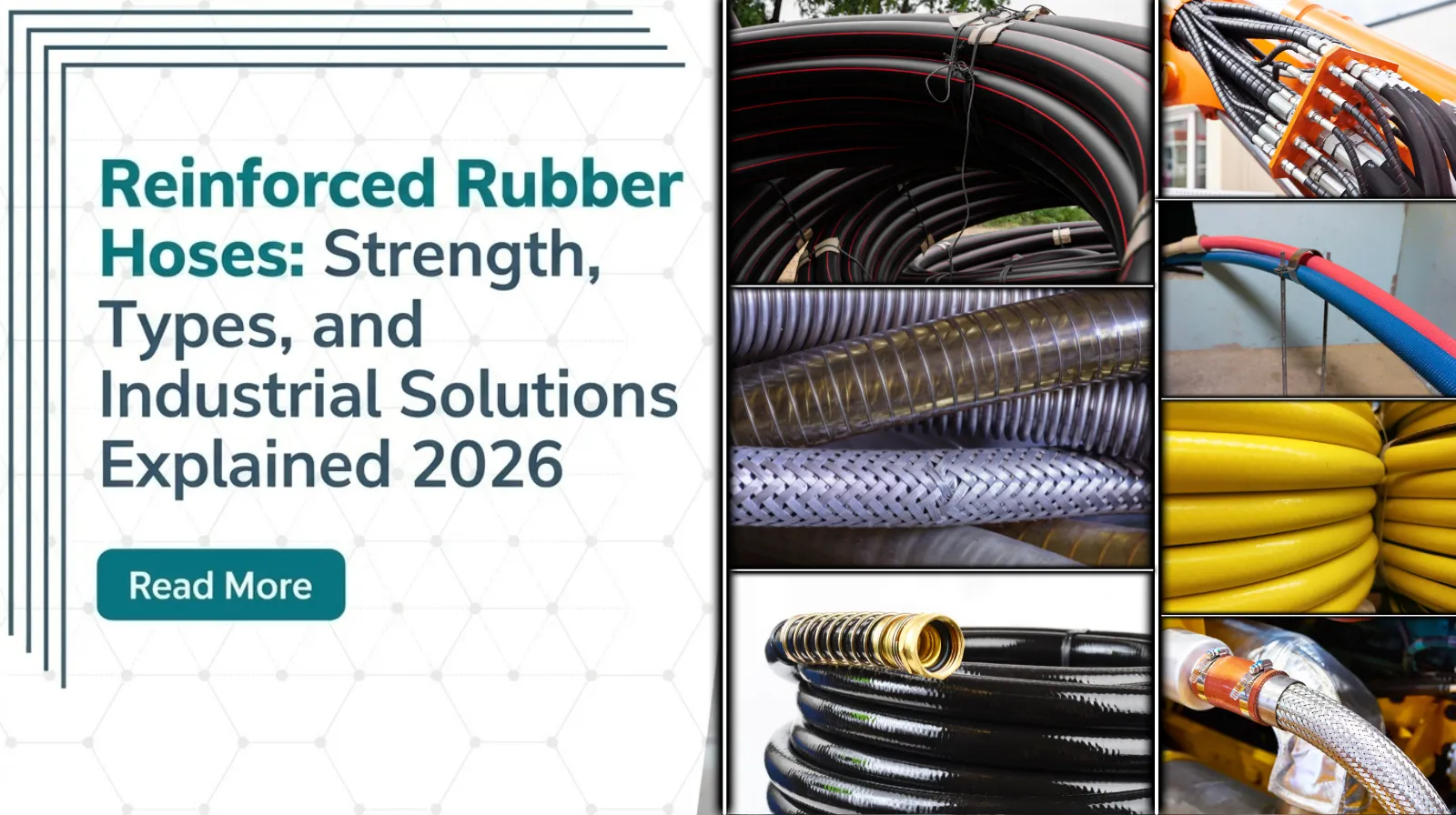
Reinforced Rubber Hoses: Strength, Types, and Industrial Solutions Explained 2026
In the world of industrial and commercial operations, the transfer of fluids and materials is a fundamental process. From water and air to chemicals and abrasive solids, the conduits that carry these substances must be strong, durable, and reliable. Standard hoses often fall short when faced with high pressure, extreme temperatures, or harsh materials. This is where the reinforced rubber hose steps in as an indispensable component, providing the strength and resilience needed for demanding environments. A reinforced rubber hose is not just a simple tube; it is an engineered solution designed to withstand intense operational stress. Its multi-layered construction provides a powerful defense against bursting, kinking, and abrasion, ensuring safety and efficiency. As a leading provider, Rubber Hose India understands the critical role these hoses play across countless industries. This guide will cover everything you need to know about the different rubber hose reinforcement types, their applications, and how to choose the right one for your specific needs. What Exactly is a Reinforced Rubber Hose? At its core, a reinforced rubber hose is a flexible pipe constructed from synthetic rubber and fortified with one or more layers of strengthening material. This reinforcement is the key element that distinguishes it from a non-reinforced hose, giving it the ability to handle significant internal pressure and external forces. The typical construction of a reinforced hose pipe consists of three main layers: Inner Tube: This is the innermost layer that is in direct contact with the material being transported. It is made from a specific type of synthetic rubber (like Nitrile, EPDM, or Neoprene) chosen for its chemical compatibility with the fluid, ensuring it does not corrode or degrade. Reinforcement Layer: This is the heart of the hose’s strength. Sandwiched between the inner and outer layers, this component is designed to resist internal pressure and prevent the hose from expanding or bursting. The material used for reinforcement—such as textile yarns, steel wires, or synthetic fibers—determines the hose’s pressure rating and flexibility. Outer Cover: The outermost layer serves as a protective shield against the external environment. It is designed to resist abrasion, weathering, UV radiation, chemicals, and physical damage. This cover ensures the longevity and safety of the entire hose assembly. The synergy between these layers makes the reinforced rubber hose a robust solution for a vast array of reinforced hose applications, from light-duty air lines to heavy duty rubber hose systems for mining and construction. Exploring Rubber Hose Reinforcement Types The type of reinforcement material and its design are the most critical factors influencing a hose’s performance characteristics, such as pressure capacity, flexibility, and durability. Let’s delve into the most common rubber hose reinforcement types. 1. Fabric Reinforced Rubber Hose A fabric reinforced rubber hose is one of the most common and versatile types available. It uses layers of textile yarns or synthetic fabrics, such as polyester, nylon, or cotton, for reinforcement. These fabrics are either braided or wrapped in multiple layers around the inner tube. Construction: The fabric layers provide excellent flexibility and good pressure resistance for low to medium-pressure applications. They are lightweight compared to their steel-reinforced counterparts, making them easier to handle. Applications: This type of hose is ideal for transferring air, water, oil, and fuel in general industrial settings, automotive applications, and pneumatic tool lines. Its flexibility makes it perfect for use in tight spaces or where frequent movement is required. 2. Steel Wire Reinforced Hose For high-pressure and heavy-duty tasks, a steel wire reinforced hose is the go-to solution. It uses high-tensile steel wires for reinforcement, which provides exceptional strength and resistance to kinking and crushing. The steel wires can be applied in two primary ways: braiding or spiraling. Construction: The steel wires create a rigid skeleton that can handle extreme internal pressures. This makes it an ideal high pressure rubber hose. While incredibly strong, it is less flexible than fabric-reinforced hoses. Applications: These hoses are essential in hydraulic systems, construction machinery (excavators, loaders), high-pressure jet washing, and for transferring abrasive materials like concrete or slurry. A heavy duty rubber hose used in mining or dredging is almost always steel-reinforced. 3. Braided Rubber Hose In a braided rubber hose, the reinforcement material (either fabric or steel wire) is woven in a crisscross pattern around the inner tube. This design offers a balanced combination of flexibility and pressure resistance. A hose can have a single braid or multiple braids for higher pressure ratings. Construction: The braided pattern allows the hose to flex without kinking and effectively distributes pressure stress across the entire structure. A steel wire reinforced hose with a braided design is a popular choice for hydraulic lines. Applications: Braided hoses are widely used in hydraulic and pneumatic systems, fuel lines in vehicles, and industrial machinery where a blend of strength and maneuverability is needed. Also, Read: Maximizing Industrial Rubber Hose Lifespan: A Complete Guide 4. Spiral Reinforced Hose A spiral reinforced hose features reinforcement wires (almost always steel) that are wound in a parallel, helical pattern around the inner tube. These hoses typically have four or six layers of spiral wires and are designed for the most extreme pressure applications. Construction: The spiral design provides the highest possible pressure rating and superior impulse resistance, which is the ability to withstand rapid pressure fluctuations common in heavy-duty hydraulic systems. However, this makes them the most rigid and least flexible type of reinforced hose pipe. Applications: You will find spiral hoses in the most demanding environments, such as on large-scale construction equipment, off-shore oil rigs, and in ultra-high-pressure hydraulic presses where operational failure is not an option. Key Reinforced Hose Applications Across Industries The versatility of the reinforced rubber hose means it is a cornerstone component in nearly every major industry. Its ability to be customized for specific pressures, temperatures, and media makes it an adaptable solution. Construction and Mining The construction and mining industries rely on heavy duty rubber hose systems for a variety of tasks. Steel wire reinforced hose lines are used to power hydraulic excavators, bulldozers,
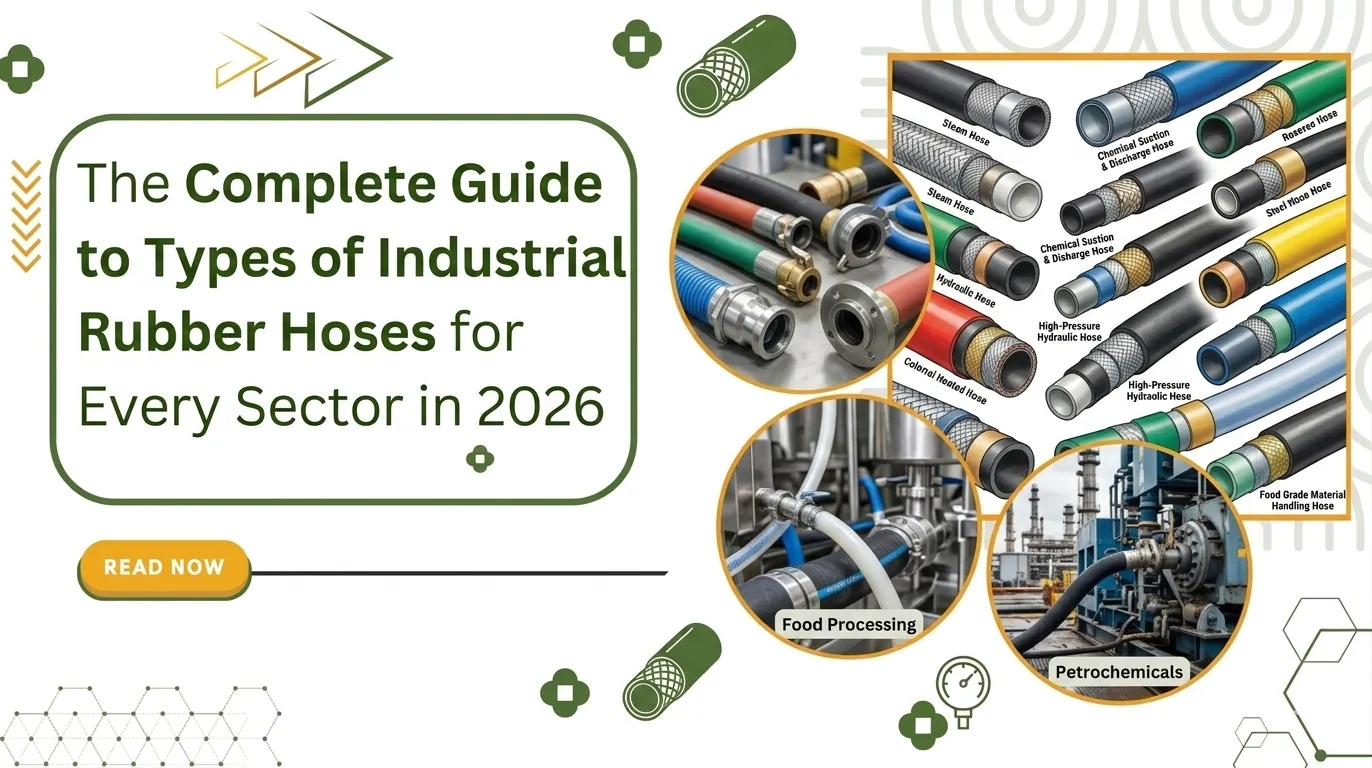
The Complete Guide to Types of Industrial Rubber Hoses for Every Sectors in 2026
In the complex world of industrial manufacturing and heavy machinery, the humble hose is often the unsung hero. It is the lifeline that transports vital fluids, gases, and materials safely across a facility. Choosing the wrong hose can lead to catastrophic failures, costly downtime, and safety hazards. That is why understanding the specific types of industrial rubber hoses available in the market is crucial for any procurement manager or site engineer. At Rubber Hose India, we don’t just sell products; we provide solutions. As a leading manufacturer, we understand that every application demands a specific set of properties. Whether you are dealing with high-pressure hydraulics, abrasive slurries, or volatile chemicals, there is a specific hose designed for the job. This comprehensive guide will break down the various types of industrial rubber hoses, their specific applications, and how to choose the right one for your operations. Why Proper Hose Selection Matters Before diving into the specific types of industrial rubber hoses, it is important to understand the stakes. Using a general-purpose hose for a specialized application is a recipe for disaster. Safety: A hose failure with high-pressure steam or chemicals can cause severe injury. Efficiency: The right hose ensures optimal flow rates and pressure maintenance. Longevity: Using a heavy duty rubber hose designed for abrasion will outlast a standard hose by years. Cost Savings: Preventing leaks and reducing replacement frequency saves money. When you source from Rubber Hose India, you are getting access to engineering expertise that ensures your selection matches your operational needs perfectly. Understanding Rubber Hose Classification To navigate the market effectively, you need to understand the basic rubber hose classification. Hoses are generally categorized based on the medium they convey, the pressure they withstand, and their construction material. Most industrial hoses consist of three main parts: The Tube: The inner lining that contacts the medium. The Reinforcement: Layers of fabric, wire, or yarn that provide strength. The Cover: The outer layer that protects against environment, weather, and abrasion. Best Types of Industrial Rubber Hoses 2026 The specific types of industrial rubber hoses are defined by how these three components are engineered. Hydraulic Rubber Hoses One of the most critical types of industrial rubber hoses found in machinery is the hydraulic rubber hose. These are the veins of any hydraulic system, transmitting power via fluid pressure. Characteristics These hoses are built to withstand extreme pressure. A high-quality hydraulic rubber hose from Rubber Hose India is typically reinforced with multiple layers of high-tensile steel wire. Applications Excavators and earthmovers Industrial presses Injection molding machines Mining equipment Because hydraulic failure can stop production instantly, investing in the best product from a reliable manufacturer is non-negotiable. Chemical Rubber Hoses Handling aggressive acids, solvents, and alkalis requires specialized types of industrial rubber hoses. A chemical rubber hose is engineered with a specialized inner tube—often made from UHMWPE or XLPE—that resists chemical attack. Safety First Standard rubber dissolves when exposed to certain harsh chemicals. Using the correct chemical rubber hose prevents leaks that could cause environmental damage or worker injury. Rubber Hose India ensures that our chemical hoses meet strict safety standards. Key Features Corrosion resistance Temperature tolerance Non-contaminating inner tubes Water and Liquid Suction Hoses While water seems harmless, moving it in industrial quantities requires robust industrial hose pipe solutions. Among the various types of industrial rubber hoses, water suction and discharge hoses are the most common. General Purpose vs. Heavy Duty For simple dewatering, a standard hose works. However, for construction sites or mines, you need a heavy duty rubber hose. These are often reinforced with a steel wire helix to prevent the hose from collapsing under vacuum pressure during suction. Air and Pneumatic Hoses Compressed air is a primary power source in many factories. The types of industrial rubber hoses used for air need to handle high pressure but remain flexible enough for operators to use pneumatic tools. The Importance of Safety Factors Air is compressible, which makes it dangerous if a hose bursts. A reinforced rubber hose for air applications typically has a high safety factor (often 4:1) to ensure burst pressure is significantly higher than working pressure. Rubber Hose India manufactures air hoses that prioritize operator safety. Steam Hoses Steam creates a unique challenge: high heat combined with high pressure. This is one of the most dangerous applications if the wrong hose is used. High-Temperature Performance The types of industrial rubber hoses designed for steam usually utilize EPDM rubber, which offers excellent heat resistance. Failure in a steam hose is not just a leak; it is an explosion of scalding vapor. Warning: Never use a standard industrial hose pipe for steam. Always specify the temperature and pressure requirements to your supplier. Material Handling and Abrasive Hoses When you are moving sand, cement, grain, or slurry, you are dealing with abrasion. Standard rubber will wear through in days. This application requires distinct types of industrial rubber hoses with thick, abrasion-resistant inner tubes. Sandblast and Concrete Hoses These are classic examples of a heavy duty rubber hose. The inner tube is often made of natural rubber or specific synthetic blends that absorb the impact of the particles rather than chipping away. Applications Sandblasting operations Concrete placement Grain transfer Dredging Oil and Petroleum Hoses Petroleum products attack natural rubber, causing it to swell and degrade. Therefore, types of industrial rubber hoses meant for fuel must use Nitrile (NBR) rubber. Transfer vs. Suction Whether you are pumping fuel off a truck or dispensing it at a station, the hose construction matters. Rubber Hose India provides specialized industrial hose suppliers with distinct hoses for tank trucks, fuel dispensing, and oil rig operations. Food Grade Hoses In the food and beverage industry, hygiene is paramount. Types of industrial rubber hoses used here must be FDA approved. Clean and Safe These hoses use white, non-toxic, taste-free, and odorless rubber compounds. They must also withstand aggressive cleaning cycles (CIP) involving hot water and sanitizing chemicals. Comparing Reinforced Rubber Hoses Almost all industrial applications require a reinforced
The Ultimate Guide to Hose Size and Diameter Selection 2026
In the world of industrial operations, a hose is never just a hose. It is a critical artery in a larger system, responsible for conveying fluids, gases, or solids safely and efficiently. Whether you are managing a hydraulic system on an excavator, setting up a chemical transfer line in a processing plant, or simply organizing a washdown station, the integrity of your operation hinges on correct hose size selection. Choosing the wrong size—whether it’s the diameter or length—is one of the most common causes of system failure. An undersized hose can strangle flow and increase pressure, leading to dangerous bursts or pump failure. Conversely, an oversized hose adds unnecessary cost, weight, and bulk, making installation difficult. This comprehensive guide is your definitive industrial hose sizing guide. We will dissect the physics of flow, explain the critical difference between hose inner diameter and hose outer diameter, and walk you through the math of hose flow rate calculation. By the end of this article, you will have a master-level understanding of industrial hose specifications and how to apply them to your specific needs. Why Precise Hose Size and Diameter Selection Matters Before diving into the charts and calculations, it is vital to understand why hose size and diameter selection is the cornerstone of system efficiency. Many maintenance professionals treat hose replacement as a “grab whatever fits” scenario. If the coupling threads onto the port, they assume the hose is correct. This is a dangerous misconception. The hose diameter dictates the fluid dynamics of the entire system. 1. The Pressure Drop Phenomenon Fluid moving through a hose experiences friction against the inner walls. This friction causes energy loss, which manifests as a drop in pressure from one end of the hose to the other. Too Small: If the hose inner diameter is too small for the required flow rate, fluid velocity skyrockets. This creates excessive turbulence and heat. The result is a significant pressure drop, meaning your tools or actuators receive less power than the pump is producing. Too Large: While a larger hose reduces friction, it increases the volume of fluid in the system and the physical footprint of the assembly. In mobile applications, this adds weight and reduces fuel efficiency. 2. System Heat and Efficiency Heat is the enemy of hydraulic and pneumatic systems. When you force a high volume of fluid through a narrow orifice (an undersized hose), the friction generates immense heat. This can degrade the hose liner, cook seals, and reduce the viscosity of hydraulic oil, leading to catastrophic system failure. Correct hose size selection keeps fluid velocity within acceptable limits, maintaining thermal stability. 3. Safety and Catastrophic Failure Perhaps most importantly, undersized hoses often operate near or above their pressure limits due to pressure spikes caused by restricted flow. This significantly increases the risk of the hose blowing off the fitting or bursting mid-operation, posing severe safety risks to personnel. The Anatomy of a Hose: Dimensions Defined To master industrial hose dimensions, you must speak the language of hose geometry. There are three primary measurements you must know: ID, OD, and Length. Hose Inner Diameter (ID) The hose inner diameter (ID) is the most critical dimension for flow capability. It is the measurement of the empty space inside the hose where the media flows. Impact: The ID determines the flow rate and velocity. Even a small change in ID has a massive impact on flow area. For example, doubling the ID quadruples the flow area. Measurement: ID is typically measured in inches, millimeters, or “Dash sizes” (more on this later). Hose Outer Diameter (OD) The hose outer diameter (OD) measures the entire cross-section of the hose, including the tube, reinforcement layers, and the outer cover. Impact: The OD is critical for selecting the right clamps, determining routing through bulkheads, and ensuring the hose fits within protective sleeves or tight machine spaces. Variation: Two hoses with the same ID can have vastly different ODs depending on their pressure rating. A high-pressure spiral wire hydraulic hose will have a much thicker wall (and larger OD) than a low-pressure suction hose of the same ID. Hose Length While diameter controls flow physics, hose length calculation controls physical routing. Overall Length (OAL): The length of the assembly from the very end of one fitting to the end of the other. Cut Length: The length of the rubber hose segment before fittings are attached. Live Length: The flexible portion of the hose between the ferrules/crimps of the fittings. This is the only part of the hose that can bend. Understanding Dash Sizes: The Industrial Standard If you look at industrial hose specifications, you will often see sizes listed as “-4”, “-8”, or “-16”. These are known as Dash Sizes. This system is the industry standard for shorthand hose size and diameter selection. The Dash number represents the hose inner diameter in sixteenths of an inch. The Formula: $$ \text{Dash Size} = \text{ID (in inches)} \times 16 $$ Common Dash Size Conversions: -4 Size: 4/16″ = 1/4 inch ID -6 Size: 6/16″ = 3/8 inch ID -8 Size: 8/16″ = 1/2 inch ID -12 Size: 12/16″ = 3/4 inch ID -16 Size: 16/16″ = 1 inch ID -32 Size: 32/16″ = 2 inch ID Crucial Note on Exceptions: While this rule holds true for virtually all hydraulic hoses and rigid piping, there is a notable exception in the world of SAE 100R5 hoses and some PTFE hoses (often used in trucking and aerospace). These hoses are sometimes sized based on the OD of the metal tube they replace, rather than their own ID. Always verify the actual ID in inches or millimeters on the manufacturer’s rubber hose size chart before purchasing. The Science of Flow: Hose Flow Rate Calculation The heart of correct hose size selection is matching the hose ID to the required flow rate of your system. To do this, you must manage Fluid Velocity. Fluid velocity is the speed at which the fluid travels through the hose. It is

Industrial Hose Pressure Rating: Complete Guide to Safe & Correct Hose Selection 2026
In any industrial setting, from chemical plants to construction sites, hoses are the arteries that carry vital fluids. Whether it’s water, oil, fuel, or harsh chemicals, these flexible conduits are essential for daily operations. However, their reliability hinges on one critical factor: the industrial hose pressure rating. Choosing a hose with the wrong pressure rating is not just an operational mistake; it’s a significant safety hazard that can lead to catastrophic failures, costly downtime, and severe injuries. The risks associated with hose failure are immense. A burst hose can release high-pressure fluids, causing direct harm to personnel, damaging expensive equipment, and creating environmental contamination. Unfortunately, misunderstandings about pressure ratings are common. Many users confuse working pressure with burst pressure or fail to consider how factors like temperature and chemical exposure can degrade a hose’s capacity over time. This guide will demystify the complexities of industrial hose pressure rating. We will provide engineers, industrial buyers, and safety officers with the practical knowledge needed to select the right hose for the right application, ensuring both operational efficiency and workplace safety. For clarity, let’s establish a core definition. The industrial hose pressure rating defines the maximum safe pressure a hose can handle during operation without failure. This rating is the cornerstone of safe hose selection and use. What Is Industrial Hose Pressure Rating? An industrial hose pressure rating is a value assigned by the manufacturer that specifies the maximum internal pressure the hose can safely withstand during continuous operation. This is often referred to as the Maximum Allowable Working Pressure (MAWP). It’s not just a number; it’s a promise of performance and safety under specific conditions. In industrial applications, this rating is paramount. Systems often operate under dynamic pressures, with fluctuations, surges, and constant stress. The pressure rating ensures that the hose assembly can manage these forces without rupturing or leaking. It directly impacts the reliability of your machinery and the safety of your team. It’s crucial to distinguish between the hose’s pressure rating and the system’s actual operating pressure. The operating pressure is the force exerted by the fluid within the system during normal use. For safe operation, the system’s maximum operating pressure, including any potential spikes, must always be lower than the hose’s designated industrial hose pressure rating. Hose Pressure Rating Units – PSI vs Bar Explained When reviewing industrial hose specifications, you will encounter two primary units of pressure: PSI and bar. Understanding both is essential for making accurate comparisons and selections. What PSI Means PSI stands for “Pounds per Square Inch.” It is an imperial unit of pressure, widely used in the United States and certain other regions. It measures the force in pounds applied to an area of one square inch. When you see a hose pressure rating PSI, it tells you how many pounds of pressure can be exerted on every square inch of the hose’s inner surface. What Bar Means The bar is a metric unit of pressure. One bar is approximately equal to the atmospheric pressure at sea level. It is the standard unit used in Europe and most parts of the world, including India, for industrial applications. A rating in bar indicates the pressure in multiples of atmospheric pressure. Conversion Basics The conversion between PSI and bar is straightforward and important to know: 1 bar = 14.5038 PSI 1 PSI = 0.0689 bar For quick mental calculations, you can often approximate 1 bar to 14.5 PSI. Many manufacturers list both units on their products to cater to a global market. Knowing how to convert between a hose pressure rating PSI and a hose pressure rating bar ensures you are comparing products accurately. Both units are prevalent in industrial hose specifications because manufacturers serve international markets. An OEM in India might design a system using bar, while a component sourced from the US might be rated in PSI. Being fluent in both is a necessity for modern engineers and buyers. Working Pressure vs Burst Pressure – Key Differences Confusing working pressure and burst pressure is one of the most dangerous mistakes in hose selection. These two values represent vastly different aspects of a hose’s capability. Working Pressure Working pressure, or MAWP, is the maximum pressure at which a hose is designed to operate continuously. It is the rating you must use when selecting a hose for your application. This value is determined with a safety factor built-in to account for minor pressure fluctuations and normal wear. Burst Pressure Burst pressure is the pressure at which a hose is expected to rupture or fail. This value is determined during destructive testing in a controlled laboratory environment. It is a theoretical limit and not an operational parameter. You should never operate a hose at or near its burst pressure. Safety Factor The safety factor is the ratio between the burst pressure and the working pressure. Safety Factor = Burst Pressure / Working Pressure A common safety factor for industrial hoses is 4:1, meaning the burst pressure is four times the working pressure. For example, a hose with a working pressure of 500 PSI might have a burst pressure of 2000 PSI. Some applications, particularly those involving steam or highly hazardous materials, may require a higher safety factor, such as 10:1. The safety factor provides a crucial buffer for unexpected pressure surges and gradual degradation of the hose over its service life. Let’s illustrate with an example: Hose A: Rated for 20 bar working pressure. Safety Factor: 4:1. Calculated Burst Pressure: 20 bar x 4 = 80 bar. This means Hose A can safely handle 20 bar in daily use, but it will fail around 80 bar. Attempting to use it for an application requiring 60 bar, even though it’s below the burst pressure, is extremely dangerous and will lead to premature failure. Rubber Hose Pressure Limits – What Affects Them? A hose’s pressure rating is not a static value. Several factors can influence its ability to contain pressure, and understanding these is key to maintaining rubber

Oil and Fuel Rubber Hose: Complete Guide for Safe & Reliable Fuel Transfer
Handling volatile substances like oil and fuel demands specialized equipment where every component is critical. The humble hose, often overlooked, is a vital link in the chain of safe fuel transfer. Using a general-purpose hose for these applications is a recipe for disaster. The inherent risks of leakage, environmental contamination, and catastrophic fire are too high to ignore. Standard hoses are not designed to withstand the corrosive nature of petroleum products, leading to rapid degradation, leaks, and potential system failure. This comprehensive guide is designed for industrial buyers, procurement managers, and maintenance engineers in the oil and gas sector. We will explore the specifics of the oil and fuel rubber hose, a component engineered for safety and reliability. By the end, you will understand the different types available, how to select the right hose for your application, and the quality standards that ensure operational integrity. An oil and fuel rubber hose is a specialized conduit made from synthetic rubber compounds designed to safely convey petroleum-based products like gasoline, diesel, and lubricating oils. Its multi-layer construction resists chemical degradation, pressure, and external abrasion, ensuring leak-free performance in demanding industrial environments. What Is an Oil and Fuel Rubber Hose? An oil and fuel rubber hose is a purpose-built pipe constructed from specific synthetic rubber materials. These materials are chosen for their ability to resist the aggressive chemical properties of petroleum products. Unlike a normal rubber hose, which might be suitable for water or air, a fuel hose pipe is engineered to prevent the fuel from degrading the hose material from the inside out. The key difference lies in the composition of the inner tube. A standard rubber hose will quickly swell, soften, and eventually dissolve when exposed to gasoline, diesel, or oil. An oil and fuel rubber hose uses compounds like Nitrile (NBR) or Neoprene, which maintain their structural integrity and flexibility when in constant contact with hydrocarbons. These hoses are designed to handle a wide range of fluids, including: Petrol (Gasoline) Diesel Kerosene Crude Oil Lubricating Oils Hydraulic Fluids Select industrial chemicals Applications of Oil and Fuel Rubber Hoses in Industry The specialized nature of the oil and fuel rubber hose makes it indispensable across various sectors that handle, store, or dispense petroleum products. Its applications are centered around ensuring the safe and efficient movement of flammable liquids. Fuel Transfer Systems: Used for loading and unloading fuel from tankers, railcars, and ships to storage tanks. Petroleum Storage & Depots: Connecting storage tanks, manifolds, and pumping stations within large-scale fuel depots. Oil Refineries: Employed in various stages of the refining process for transferring crude oil and its derivatives. Fuel Dispensing Units: Found in commercial and retail petrol pumps connecting the dispenser to the underground storage tank lines. Industrial Machinery Fuel Lines: Serving as flexible fuel supply lines for large generators, construction equipment, and heavy machinery. Marine Fueling: Used in docks and ports for refueling ships and boats. Aviation: Specialized hoses are used for refueling aircraft on the ground. Types of Oil & Fuel Rubber Hoses The term “oil and fuel rubber hose” covers a family of products, each designed for specific conditions. Understanding the distinctions is crucial for selecting the correct component for your needs. Fuel Hose Pipe This is a general term often used to describe hoses for standard fuel delivery applications, such as in vehicles or from a small storage tank. A fuel hose pipe typically handles lower pressures and is designed for common fuels like gasoline and diesel. Petroleum Rubber Hose This is a more robust, industrial-grade hose designed for heavy-duty applications. A petroleum rubber hose is used for bulk transfer of petroleum products in refineries, depots, and on tanker trucks. It features higher pressure ratings and a more durable construction to withstand the rigors of industrial use. High Pressure Fuel Hose As the name suggests, a high pressure fuel hose is built to handle significant internal pressure. These are required in applications like fuel injection systems or hydraulic systems that use oil-based fluids. Their construction includes multiple layers of high-tensile reinforcement. Industrial Fuel Hose An industrial fuel hose is a broad category that encompasses hoses used in manufacturing plants, power generation facilities, and construction sites. They are designed for durability and resistance to both the fluid inside and external factors like abrasion, weather, and oil spills on the outside. Chemical Resistant Hose While some fuels are chemicals, a dedicated chemical resistant hose is designed for a broader range of aggressive substances, including acids, solvents, and bases. While some may be suitable for certain fuels, it’s critical to verify compatibility. Not all chemical hoses are rated for flammable petroleum products. Why Oil Resistant Rubber Hose Is Critical for Safety Using a non-oil-resistant hose for fuel is not a matter of if it will fail, but when. The term oil resistant rubber hose signifies a fundamental safety feature. When standard rubber is exposed to petroleum, a process of chemical degradation begins immediately. The hydrocarbons in the fuel act as a solvent, causing the rubber polymers to swell and lose their elasticity. This swelling weakens the hose structure, making it soft and spongy. Over time, the material becomes brittle and cracks, leading to leaks. A tiny leak of a flammable liquid like gasoline can create a vapor cloud that can be ignited by a single spark, resulting in a devastating fire or explosion. Consider the cost of failure. A leading automobile manufacturer faced a massive recall because a sub-component supplier used a hose that was not adequately oil-resistant in the fuel line assembly. Minor fuel seepage was detected, and while no major incidents occurred, the cost of recalling and replacing the part on thousands of vehicles ran into millions of dollars, not to mention the damage to their brand reputation for safety and quality. In an industrial setting, a similar failure at a fuel depot could lead to environmental cleanup costs, regulatory fines, and catastrophic loss of life and property. An oil resistant rubber hose is designed to last for

Rubber Hose for Cement Industry: Complete Guide to Heavy-Duty Material Handling
Cement manufacturing is one of the most abrasive environments in the industrial world. From the moment limestone is crushed to the final loading of cement bags or bulkers, every component in the system is subjected to extreme wear and tear. In this harsh landscape, the humble rubber hose plays a vital role in keeping production lines moving. However, treating a rubber hose for cement industry applications as a generic commodity is a costly mistake that many plant owners and procurement managers make. The sheer abrasive nature of cement powder, clinker dust, and fly ash acts like sandpaper on the internal lining of transfer lines. General-purpose hoses, designed for water or air, simply cannot withstand this constant grinding. They fail rapidly, leading to frequent downtime, expensive replacements, and dangerous leaks that create environmental hazards in the plant. This comprehensive guide is designed to help maintenance engineers, procurement managers, and plant owners in India understand the nuances of heavy-duty material handling hoses. We will explore the critical importance of abrasion resistance, dissect the construction of a heavy duty cement hose, and provide a clear roadmap for selecting the right product for your specific needs. By the end of this guide, you will know exactly what to look for to ensure longevity, safety, and operational efficiency. What Is Rubber Hose for Cement Industry? A rubber hose for cement industry is a specialized, reinforced flexible tube designed specifically to convey highly abrasive materials like dry cement, limestone, fly ash, and slurry. Unlike standard hoses, these are engineered with a thick, abrasion-resistant inner tube (often made of natural rubber or specialized synthetic compounds) to resist wear and tear caused by friction, ensuring a longer service life in heavy-duty applications. To the untrained eye, black rubber hoses may all look the same. However, a rubber hose for cement industry is a distinct breed of engineering. It is not just a tube; it is a flexible pipeline built to survive a war of attrition against abrasive particles. Definition and Purpose In simple terms, these hoses are heavy-duty conduits used to transport bulk solids and slurries. They connect fixed piping systems to mobile equipment, allow for vibration isolation, and bridge gaps where rigid piping is impractical. The primary differentiator is the “wear liner”—the innermost layer of the hose. In a cement hose, this liner is significantly thicker and chemically formulated to bounce back from the impact of particles rather than tearing. Difference Between Normal Rubber Hose and Cement Industry Hoses A standard water or air hose typically has a thin inner tube made of SBR or EPDM rubber. If you were to pump dry cement through such a hose, the particles would scour through the thin liner in a matter of hours or days. In contrast, cement industry hoses utilize high-grade natural rubber or poly-butadiene blends that offer exceptional resilience and cut-and-gouge resistance. They also feature stronger reinforcement layers to handle the weight of the dense material and the vacuum or pressure of the pneumatic conveying system. Typical Materials Handled These hoses are the lifelines for moving: Dry Cement: Fine powder that is highly abrasive at high velocities. Clinker Dust: Coarse, sharp particles produced after the kiln process. Fly Ash: A byproduct of coal combustion, extremely fine and abrasive. Slurry: A mixture of limestone and water, which is abrasive and heavy. Limestone & Gypsum: Raw materials used in the initial grinding stages. Where Rubber Hoses Are Used in Cement Plants The versatility of rubber hoses makes them indispensable across various stages of cement production. Understanding where they fit into your process flow is key to selecting the right industrial hose for cement plant applications. Cement Feeding Systems: Connecting silos to weigh feeders or packing machines. These hoses handle the final product and must ensure zero contamination while resisting the flow of fine powder. Fly Ash Handling: Transporting fly ash from storage silos to the mixing unit. Since fly ash is finer than cement, leaks here can create massive dust clouds, making airtight hose connections critical. Slurry Transfer: In the wet process of cement manufacturing, slurry is pumped through large-diameter hoses. These must withstand both the abrasive nature of the solids and the hydraulic pressure of the pumping system. Bulk Material Unloading: The flexible connection between the bulk cement truck (bulker) and the plant’s storage silo. This is one of the most common applications for a cement hose pipe, requiring high flexibility for manual handling by truck operators. Pneumatic Conveying Lines: Used at bends and flexible joints in air-slide systems or pneumatic transport pipes. Rubber hoses are often installed at bends because rigid steel elbows wear out too quickly; the natural elasticity of rubber absorbs the impact of particles better than steel. Types of Cement Industry Rubber Hoses Not all hoses in a cement plant serve the same purpose. Manufacturers categorize them based on the specific material they carry and the pressure conditions they operate under. Cement Hose Pipe This is the standard hose used for the pneumatic discharge of dry cement and abrasive powders. It is lightweight enough to be handled by operators but tough enough to handle discharge pressures (typically around 5-10 bar). It is the standard “bulker hose” seen on trucks. Fly Ash Rubber Hose Fly ash is notoriously abrasive. A fly ash rubber hose often features an even thicker inner tube than a standard cement hose. It is specifically compounded to resist the fine scouring action of ash particles moving at high speeds. Slurry Rubber Hose Used for wet applications, a slurry rubber hose is designed to handle liquid-solid mixtures. It typically has a smooth bore to reduce friction loss and allows for higher flow rates. These are often used in mining and raw material preparation zones of the plant. Cement Feeding Hose These are often shorter, larger-diameter sleeves used in the packing plant. They connect the storage bin to the rotary packer. They operate under gravity flow or low pressure but see constant material movement. Material Handling Rubber Hose A broad category covering

Hydraulic Hose Buying Guide: How to Choose the Right Hose for Industrial Applications
Hydraulic systems are the muscle behind modern industry. From excavators digging foundations in Mumbai to injection molding machines in Gujarat’s manufacturing hubs, hydraulic power drives productivity. However, this power relies entirely on a single, often overlooked component: the hydraulic hose. When a hose fails, the machine stops. Worse, a burst high-pressure line can cause severe injury and environmental contamination. This is why correct hydraulic hose selection is not just a procurement task; it is a critical safety and engineering responsibility. Many industrial buyers, factory owners, and maintenance engineers struggle with the complexities of hose specifications, leading to mismatched components and premature failures. This hydraulic hose buying guide covers everything you need to know to make informed purchasing decisions. We will explore pressure ratings, hose types, reinforcement layers, essential standards, and how to identify reliable hydraulic hose manufacturers India. By the end of this article, you will have a clear roadmap to ensure safety, efficiency, and longevity in your hydraulic systems. What Is a Hydraulic Hose? A hydraulic hose is a specialized, high-pressure, synthetic rubber tube designed to convey hydraulic fluid within a system to transmit force. Unlike standard hoses, they are engineered with rigid reinforcement layers (wire or textile) to withstand extreme pressures and pressure spikes while maintaining flexibility for movement between components. At its core, a hydraulic hose is a conveyance method for fluid power. While it might look like a standard rubber tube, its internal engineering is vastly different. A garden hose moves water at 40-60 PSI; industrial hydraulic hoses often operate at pressures exceeding 5,000 PSI (345 Bar). The Three Critical Layers To understand what you are buying, you must understand the anatomy of the hose: Inner Tube: This layer carries the fluid. It must be chemically compatible with the hydraulic oil or fluid being used to prevent corrosion or deterioration. Reinforcement: This is the strength of the hose. Made from braided wire, spiral wire, or textile yarn, this layer allows the hose to withstand internal pressure without bursting. Outer Cover: The protective skin. It shields the reinforcement layers from weather, abrasion, chemicals, and impact. Difference Between Hydraulic Hose and Normal Hose The primary difference lies in the reinforcement and pressure capability. A standard industrial hose is designed for material transfer (water, air, chemicals) at low to medium pressures. A hydraulic hose is designed for force transmission. It must be rigid enough to hold pressure but flexible enough to move with the machine’s arms or pistons. Common Industrial Applications You will find these components in almost every sector: Construction: Excavators, loaders, cranes, and bulldozers. Manufacturing: Hydraulic presses, injection molding machines, and robotic arms. Agriculture: Tractors, harvesters, and irrigation systems. Mining: Drilling rigs and rock crushers. Oil & Gas: Offshore drilling equipment and pipeline maintenance tools. Why Hydraulic Hose Selection Is Critical for Safety & Performance In the world of high-pressure fluid power, there is no margin for error. A hydraulic hose buying guide isn’t just about finding a part number; it’s about risk mitigation. High-Pressure Risks Hydraulic fluid under high pressure is dangerous. A pinhole leak can release a fine stream of oil at velocities high enough to penetrate human skin, causing “injection injuries” that require immediate surgical intervention. This is often the result of using a hose with an insufficient pressure rating. System Failure and Component Damage Using the wrong hose can damage the entire hydraulic circuit. If a hose degrades internally due to chemical incompatibility, rubber particles can contaminate the oil. These particles then travel to expensive pumps, valves, and cylinders, causing scoring and catastrophic failure. Leakage and Burst Hazards Leaks are not just messy; they are expensive and hazardous. Hydraulic oil is flammable. A burst hose spraying oil onto a hot engine manifold is a common cause of industrial fires. Furthermore, just one liter of leaked oil can contaminate thousands of liters of groundwater, leading to severe environmental penalties. Downtime and Repair Costs Consider a factory in Pune producing automotive parts. If a main hydraulic line bursts on a press, production stops. The cost of the replacement hose might be ₹2,000, but the cost of four hours of lost production could be ₹2,00,000. Investing time in proper hydraulic hose selection minimizes these expensive interruptions. Hydraulic Hose Types Explained When navigating the market, you will encounter various classifications. Understanding these helps in narrowing down your hydraulic hose specifications. Low-Pressure Hydraulic Hose Construction: Typically textile braided reinforcement. Application: Used for return lines (taking fluid back to the tank) or low-pressure pilot lines. They are lightweight and very flexible. Pressure Range: Generally under 300 PSI (20 Bar). Medium-Pressure Hydraulic Hose Construction: Usually features one or two layers of braided steel wire (1SN or 2SN). Application: The workhorse of the hydraulic industry. Used in construction equipment, transportation, and general manufacturing. Pressure Range: 1,000 to 3,000 PSI depending on size. High-Pressure Hydraulic Hose Construction: Uses spiral wire reinforcement (4 or 6 layers of high-tensile steel wire wrapped in alternating directions). Application: Heavy-duty earthmoving equipment, hydrostatic drives, and high-impulse applications where pressure surges are frequent. Pressure Range: 4,000 to 6,000+ PSI. Wire Braided Hoses vs. Spiral Wire Hoses Wire Braided: The wire is crisscrossed (braided). This offers excellent flexibility and is suitable for medium to high pressures. However, under extremely high impulse loads, the wires can rub against each other and fatigue. Spiral Wire: The wires are wrapped in parallel spirals. This makes the hose stiffer and harder to bend but allows it to handle incredibly high pressures and millions of impulse cycles without fatigue. Hydraulic Hose Pressure Rating – Explained Simply If you take one thing away from this hydraulic hose buying guide, let it be pressure ratings. This is the most common point of failure. Working Pressure This is the maximum pressure the hose is designed to handle during continuous operation. Your system’s maximum operating pressure must never exceed the hose’s working pressure rating. Burst Pressure This is the pressure at which the hose will physically fail (explode) during testing. It is a theoretical limit used for