
Industrial rubber hose applications span almost every sector of India’s manufacturing and processing economy, from steel plants and chemical units to food processing lines and irrigation networks. A hose carrying compressed air on a shop floor faces completely different demands than one transferring sulphuric acid in a chemical plant or hot water in a boiler room. Choosing the wrong hose for a given duty does not just cause inconvenience — it leads to leakage, pressure failure, contamination, and in worst cases, safety incidents on the plant floor.
For factory owners, purchase managers, maintenance engineers, OEMs, and contractors across India, understanding which hose belongs in which application is one of the most overlooked but high-impact purchasing decisions. The right hose improves safety, ensures consistent fluid transfer efficiency, handles pressure swings without failure, stays compatible with the chemicals or materials it carries, and reduces unplanned downtime. This guide breaks down industrial rubber hose applications industry by industry, so buyers can match hose type to actual operating conditions instead of relying on guesswork or habit.
What Are Industrial Rubber Hoses?
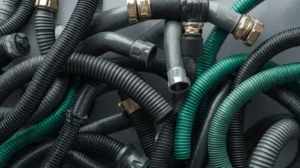
An industrial rubber hose is built in three layers, each doing a specific job. The inner tube is the layer in direct contact with the fluid, gas, or material being transferred, and it must be chemically compatible with that substance — whether it is water, diesel, caustic soda, or a food-grade liquid. Around the inner tube sits the reinforcement layer, usually made of braided or spiralled textile, steel wire, or a combination of both. This layer is what gives the hose its pressure rating and burst strength. On the outside, the cover protects the hose from abrasion, ozone, UV exposure, oil spillage, and general wear from handling.
Fittings — whether crimped, clamped, or threaded — connect the hose to pumps, valves, machinery, or storage tanks, and a mismatched fitting is one of the most common causes of on-site leakage. Every hose also carries a pressure rating (working pressure and burst pressure) and a temperature range that defines its safe operating window; pushing a hose beyond either limit shortens its life dramatically or causes outright failure.
Flexibility and bend radius matter for hoses routed through tight machinery spaces, while abrasion resistance matters more for hoses dragged across factory floors or construction sites. Many industrial hoses are also rated for both suction and discharge duty, meaning they can pull fluid from a tank as well as push it under pressure — a critical distinction for transfer and cleaning applications. Understanding these basics is the foundation for choosing the right hose, whether you are sourcing standard rubber industrial hoses off the shelf or working with a supplier on custom rubber hose assemblies built for a specific machine.
Why Application-Based Hose Selection Matters
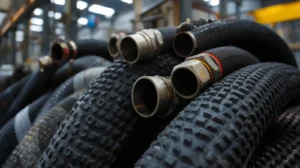
Not every rubber hose is interchangeable, even when two hoses look similar from the outside. A hose designed for compressed air will not safely carry hydraulic oil at 200 bar, and a hose rated for cold water degrades quickly if used to transfer hot chemicals. This is why rubber hose for industries handling chemicals, fuels, or food products cannot be selected on price alone. Application-based selection directly affects:
- Safety — an incorrect hose under pressure can rupture, putting operators at risk.
- Leakage prevention — poor chemical compatibility softens or swells the inner tube, causing seepage at joints and fittings.
- Pressure failure — undersized reinforcement layers burst once working pressure exceeds the hose’s rated limit.
- Material compatibility — oils, solvents, acids, and food products each need a different inner tube compound.
- Abrasion and handling wear — hoses dragged over rough surfaces need tougher covers than fixed installation hoses.
- Temperature extremes — steam lines and hot-fluid transfer need heat-resistant compounds; the wrong hose hardens or cracks.
- Hose life and total cost — a hose correctly matched to its duty lasts years longer than one forced into the wrong job.
- Downtime — hose failure mid-shift halts production, and emergency replacement always costs more than planned procurement.
For Indian industrial buyers managing tight production schedules, getting this right the first time avoids repeat costs and unplanned stoppages.
Major Industrial Rubber Hose Applications by Industry
Industrial rubber hose applications differ significantly depending on the sector. Below is an industry-wise breakdown of manufacturing industry hoses and other sector-specific hose uses, covering common applications, recommended hose types, key material requirements, risks of incorrect selection, and practical buyer tips.
1. Manufacturing and Engineering Plants
- Common hose uses: Compressed air lines, coolant transfer, pneumatic tool supply, and lubrication systems across machine shops and fabrication units.
- Recommended hose type: Multipurpose rubber air/water hose with textile-braided reinforcement.
- Key material/reinforcement requirement: Oil-resistant cover and abrasion-resistant outer layer for shop-floor handling.
- Risk if wrong hose is used: Air leaks reduce tool efficiency, and oil-incompatible covers swell and crack over time.
- Buyer tip: Match hose ID to the machine inlet size to avoid pressure drop across the line.
2. Hydraulic Systems and Machinery
- Common hose uses: Hydraulic oil transfer in presses, cranes, excavators, and injection moulding machines — one of the most demanding hydraulic hose applications in any plant.
- Recommended hose type: Wire-braided or spiral wire reinforced hydraulic hose rated to SAE 100R series standards.
- Key material/reinforcement requirement: Synthetic rubber inner tube resistant to mineral oil, with multiple steel wire reinforcement layers for high pressure.
- Risk if wrong hose is used: An undersized pressure rating causes hose burst, which can injure operators and damage machinery.
- Buyer tip: Size hydraulic hose to the system’s working AND surge pressure, not just average operating pressure.
3. Chemical and Solvent Transfer
- Common hose uses: Acid transfer, alkali transfer, solvent loading and unloading, and tank-to-tank transfer in process industries.
- Recommended hose type: Chemical industry rubber hose with a specialty inner tube such as UHMWPE or EPDM, selected against the specific fluid.
- Key material/reinforcement requirement: Chemical compatibility between the fluid and inner tube compound is essential, not optional.
- Risk if wrong hose is used: The wrong inner tube material swells, blisters, or dissolves, leading to contamination or hazardous leakage.
- Buyer tip: Always share the exact chemical name and concentration with the supplier — a generic “chemical hose” request often leads to a mismatched compound.
4. Oil and Gas / Fuel Transfer
- Common hose uses: Diesel and petrol transfer, fuel dispensing, tanker loading, and refinery transfer lines.
- Recommended hose type: Oil and gas rubber hose, typically with a nitrile (NBR) tube and steel wire or fabric reinforcement.
- Key material/reinforcement requirement: Fuel- and oil-resistant inner tube, with anti-static construction for fuel-handling hoses.
- Risk if wrong hose is used: Non-conductive hoses used in fuel transfer can build up static charge, creating a fire hazard.
- Buyer tip: Ask specifically for anti-static or conductive hose for any fuel-handling application.
5. Construction and Cement Industry
- Common hose uses: Concrete pumping, grout transfer, water spraying on site, and general cement industry hose duty for material conveying.
- Recommended hose type: Heavy duty rubber hose applications here need an abrasion-resistant cover with high-tensile reinforcement.
- Key material/reinforcement requirement: Thick rubber cover to withstand abrasive cement and aggregate particles.
- Risk if wrong hose is used: Thin-cover hoses wear through quickly when pumping abrasive concrete mix, leading to frequent replacement.
- Buyer tip: Choose cover thickness based on aggregate size and pumping pressure, not on price alone.
6. Mining and Material Handling
- Common hose uses: Slurry transfer, dewatering, and suction and discharge hose applications for ore and mineral transport.
- Recommended hose type: Heavy duty suction and discharge material handling hose with helix wire reinforcement to prevent collapse under vacuum.
- Key material/reinforcement requirement: Abrasion- and impact-resistant cover, often with a thicker tube for particulate-laden slurry.
- Risk if wrong hose is used: Collapse under suction or rapid wear from abrasive slurry causes frequent unplanned stoppage.
- Buyer tip: Confirm the vacuum rating, not just the pressure rating, for any suction-side mining application.
7. Food and Beverage Industry
- Common hose uses: Milk, juice, syrup, and beverage transfer, plus clean-in-place (CIP) cleaning lines.
- Recommended hose type: Food grade rubber hose with an FDA- or WHO-compliant inner tube material.
- Key material/reinforcement requirement: Smooth-bore, odour-free, non-toxic inner tube that will not taint product taste.
- Risk if wrong hose is used: A non-food-grade hose can leach compounds into the product or harbour bacteria in a rough bore surface.
- Buyer tip: Ask for food-grade certification documentation, not just a verbal assurance, before purchase.
8. Pharmaceutical and Hygienic Transfer
- Common hose uses: Pharmaceutical hose pipe duty for purified water, solvent transfer, and hygienic liquid handling in cleanrooms.
- Recommended hose type: Silicone or EPDM-lined hygienic hose meeting pharma-grade hygiene standards.
- Key material/reinforcement requirement: Smooth interior with minimal microbial harbourage points; many grades are steam-sterilisable.
- Risk if wrong hose is used: An incompatible or rough-bore hose introduces contamination risk into a regulated process.
- Buyer tip: Ask for batch traceability and compliance documentation for any regulated pharma application.
9. Agriculture and Irrigation
- Common hose uses: Irrigation water transfer, sprayer hose for pesticide and fertiliser application, and water pump suction lines.
- Recommended hose type: Lightweight suction and discharge hose with a UV-resistant cover for outdoor exposure.
- Key material/reinforcement requirement: UV-stabilised cover to prevent cracking under prolonged sun exposure.
- Risk if wrong hose is used: A non-UV-resistant hose becomes brittle and cracks after a few seasons outdoors.
- Buyer tip: For pesticide or fertiliser hoses, check chemical resistance separately from plain water irrigation hose.
10. Air, Water, Steam, and General Utility Applications
- Common hose uses: Compressed air supply, washdown water lines, low-pressure steam transfer, and general industrial hose solutions across a plant.
- Recommended hose type: Rubber industrial hoses rated for the specific medium — air, water, or steam — selected separately rather than substituted.
- Key material/reinforcement requirement: Steam duty needs an EPDM tube rated for higher temperatures; air and water hoses can use standard NBR or rubber blends.
- Risk if wrong hose is used: Using a standard water hose for steam leads to rapid degradation and a potential burst from heat.
- Buyer tip: Never substitute a water or air hose for steam duty — steam-rated hose is a distinct category.
Application-Wise Hose Selection Table
Use this table as a quick reference before placing an order — it summarises the detail from each industry section above.
| Industry / Application | Recommended Hose Type | Key Requirement | Common Risk | Selection Tip |
|---|---|---|---|---|
| Manufacturing and Engineering Plants | Multipurpose air/water hose | Oil-resistant, abrasion-resistant cover | Pressure drop, premature cover failure | Match hose bore to inlet size |
| Hydraulic Systems and Machinery | Wire-braided / spiral hydraulic hose | Oil-resistant tube, steel wire reinforcement | Burst under surge pressure | Size for surge, not just average pressure |
| Chemical and Solvent Transfer | Chemical hose (UHMWPE/EPDM lined) | Verified chemical compatibility | Inner tube swelling, leakage | Share exact chemical name and concentration |
| Oil and Gas / Fuel Transfer | NBR fuel/oil transfer hose | Anti-static, fuel-resistant tube | Static build-up, fire hazard | Confirm anti-static rating before purchase |
| Construction and Cement Industry | Abrasion-resistant concrete/grout hose | Thick cover, high-tensile reinforcement | Rapid cover wear from aggregate | Pick cover thickness for aggregate size |
| Mining and Material Handling | Helix wire suction/discharge hose | Vacuum rating, impact-resistant cover | Hose collapse, abrasive wear | Check vacuum rating, not just pressure rating |
| Food and Beverage Industry | FDA/WHO-compliant food grade hose | Smooth bore, non-toxic tube | Product contamination, taste taint | Verify certification documentation |
| Pharmaceutical and Hygienic Transfer | Silicone/EPDM hygienic hose | Sterilisable, low microbial harbourage | Contamination of regulated process | Request batch traceability documentation |
| Agriculture and Irrigation | UV-resistant suction/discharge hose | UV-stabilised cover | Cracking, brittleness outdoors | Check chemical resistance for sprayer use |
| Air, Water, Steam, and General Utility Applications | Medium-specific air/water/steam hose | EPDM tube for steam; NBR for air/water | Heat degradation if substituted | Buy steam-rated hose separately |
STAMPED Method for Choosing the Right Hose
The STAMPED method is a quick checklist used across the hose industry to avoid mismatched purchases. Run through each letter before finalising an order:
- S – Size: Confirm the inner diameter, outer diameter, and overall length needed for the connection points and routing.
- T – Temperature: Check both the fluid temperature and the surrounding ambient temperature the hose will face in operation.
- A – Application: Define exactly what the hose will do — suction, discharge, transfer, or a combination — and where it sits in the process.
- M – Material: Match the inner tube compound to the fluid or material being carried, based on a chemical compatibility reference.
- P – Pressure: Confirm working pressure and surge/burst pressure, not just the system’s average operating pressure.
- E – Ends/Fittings: Verify fitting type, size, and connection style match the pump, valve, or machine port exactly.
- D – Delivery/Documentation: Ask for compliance certificates, test reports, and lead time confirmation before placing a bulk order.
Common Mistakes Buyers Should Avoid
- Using a water hose for chemical transfer — inner tube compounds for water are rarely compatible with acids, solvents, or alkalis.
- Ignoring pressure rating — buying on price without checking working and burst pressure against actual system demand.
- Choosing the wrong fittings — a hose rated correctly but paired with an incompatible fitting still leaks or fails at the joint.
- Not checking bend radius — forcing a hose into a tighter bend than rated kinks the reinforcement and shortens its life.
- Ignoring abrasion resistance — selecting a thin-cover hose for floor-dragged or outdoor use leads to early failure.
- Buying low-quality or counterfeit hose — unbranded hose with no documented pressure rating is a false economy in industrial settings.
- Not inspecting hose before installation — skipping a visual check for cracks, bulges, or fitting damage before fitting a new hose.
Why Choose Rubber Hose India LLP
Rubber Hose India LLP works with factory owners, purchase teams, OEMs, and contractors across India as a rubber hose manufacturer in India focused on getting hose selection right the first time. The team supplies industrial rubber hoses, hydraulic hoses, and custom rubber hose assemblies built to the pressure, temperature, and chemical requirements of the actual application rather than a generic catalogue match.
Beyond manufacturing, the team offers technical guidance during the selection process, supports buyers with quality testing documentation, and assists with fittings and hose assembly for plant-specific requirements. For businesses comparing suppliers, working with an industrial rubber hose supplier in India that asks application-specific questions upfront — fluid type, pressure, temperature, and fitting style — usually results in fewer returns and longer hose life.
If you are unsure which hose suits your process, reach out to the Rubber Hose India LLP team with your application details for a hose recommendation suited to your specific operating conditions.
Buy: Hose fittings and adapters
Conclusion
Industrial rubber hose applications in India span sectors as different as cement plants and pharmaceutical cleanrooms, but the underlying selection logic stays the same: match the hose to the fluid, pressure, temperature, and environment it will actually face. Buyers who treat hose selection as a technical decision rather than a routine purchase reduce leakage, downtime, and safety risk across all the rubber hose uses and industrial rubber hose uses covered in this guide — from hydraulic systems and chemical transfer to food-grade and steam lines.
Use the STAMPED method, check the selection table whenever a new application comes up, and avoid the common mistakes listed above. For application-specific guidance, technical documentation, or custom rubber hose assemblies, the Rubber Hose India LLP team can help you match the right hose to your exact operating conditions before you place an order.
Also, Read:
Frequently Asked Questions
Which rubber hose is used in chemical industries?
Chemical industry rubber hose typically uses a specialty inner tube such as UHMWPE or EPDM, chosen specifically to match the chemical being transferred.
Which hose is best for hydraulic applications?
Wire-braided or spiral wire reinforced hose rated to the SAE 100R series is the standard choice for most hydraulic hose applications.
Can one rubber hose be used for all fluids?
No. Inner tube compounds vary by fluid type, and using one hose across incompatible fluids risks swelling, contamination, or failure.
What is the difference between suction and discharge hose?
Discharge hose pushes fluid under pressure, while suction hose is built to resist collapse when pulling fluid or material under vacuum.
Which hose is used in cement and construction industries?
Heavy duty rubber hose with an abrasion-resistant cover and high-tensile reinforcement is used for concrete pumping and grout transfer.
How do I choose the right industrial rubber hose?
Use the STAMPED method — size, temperature, application, material, pressure, ends/fittings, and delivery documentation — to match the hose to the actual operating conditions.
Why is pressure rating important in hose selection?
A hose used beyond its rated working or surge pressure can burst, risking operator injury, machinery damage, and unplanned downtime.
How often should industrial rubber hoses be inspected?
Most industrial settings inspect hoses at least monthly, and before every use in high-pressure or chemical transfer duty, checking for cracks, bulges, and fitting wear.
Where can I buy industrial rubber hoses in India?
Established manufacturers and suppliers such as Rubber Hose India LLP supply industrial rubber hoses with technical guidance for application-specific selection.