
Handling industrial fluids requires precision, safety, and the right equipment. A chemical resistant rubber hose is essential for industries managing acids, alkalis, solvents, corrosive liquids, and other harsh industrial chemicals. Using the correct hose prevents dangerous leaks, rapid corrosion, costly downtime, and severe safety risks to your workforce. When you select the appropriate chemical hose pipe, you ensure a smooth, secure, and highly efficient fluid transfer process that protects both your personnel and your bottom line.
What Is a Chemical Resistant Rubber Hose?
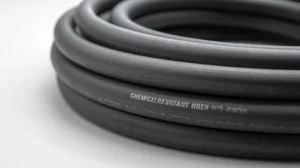
A chemical resistant rubber hose is a specialized industrial tube designed specifically for the safe transfer of aggressive chemicals in demanding environments. Unlike standard water or air hoses, these hoses feature robust construction engineered to withstand chemical attacks from acids, alkalis, solvents, and corrosive fluids.
The primary difference between a normal rubber hose and a chemical hose pipe lies in the inner tube lining and overall structural reinforcement. Standard rubber degrades quickly when exposed to harsh industrial fluids, leading to swelling, cracking, or complete structural failure. In contrast, a rubber hose for chemicals uses advanced synthetic materials that resist chemical degradation. The inner lining acts as an impermeable barrier, while the strong reinforcement layers ensure the hose can handle high-pressure applications. This specialized design plays a vital role in safe and efficient chemical handling across various industrial sectors.
Why Chemical Resistance Is Important
Using normal hoses for chemical transfer is a dangerous and costly mistake. Chemical attack can rapidly destroy ordinary hoses, dissolving the rubber and compromising the structural integrity of the tube.
When you use a non-specialized hose for aggressive fluids, you face several severe risks:
- Risk of Leakage and Spills: Degraded hoses easily rupture, spilling hazardous chemicals onto the facility floor or into the environment.
- Corrosion and Hose Failure: Harsh acids and solvents eat away at standard rubber, leading to sudden and catastrophic hose failure.
- Safety Risks for Workers: Chemical bursts can cause severe burns, respiratory issues, and other dangerous injuries to your employees.
- Damage to Machines and Production Lines: Spilled chemicals can corrode nearby machinery, ruining expensive equipment and halting production.
To mitigate these risks, industrial operations require a reliable corrosion resistant hose. Investing in specialized industrial chemical hoses ensures your operations remain safe, compliant, and continuously productive.
Key Features of Chemical Hose Pipe
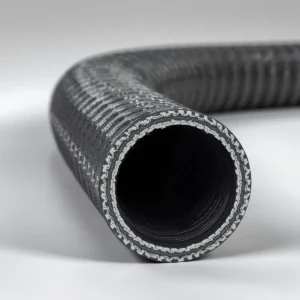
A high-quality chemical hose pipe comes with specific features designed to handle extreme industrial conditions. When evaluating a chemical resistant rubber hose, look for these essential characteristics:
- High Resistance to Acids and Alkalis: Built to endure both low and high pH levels without degrading.
- Corrosion-Resistant Inner Lining: Features a smooth, specialized inner tube that prevents chemical penetration.
- Flexible Rubber Body: Allows for easy maneuvering and installation in tight or complex industrial spaces.
- Strong Reinforcement: Utilizes synthetic fabrics or wire helixes to handle high-pressure environments.
- Abrasion-Resistant Outer Cover: Protects the hose from external wear, dragging, and environmental damage.
- Weather and Ozone Resistance: Ensures the hose does not crack or degrade when exposed to outdoor elements.
- Leak-Proof Performance: Engineered for secure connections with industrial fittings to prevent hazardous drips.
- Temperature Resistance: Capable of maintaining structural integrity in extreme hot or cold chemical transfers.
- Suitable for Suction and Discharge: Reinforced with wire to prevent collapse under vacuum pressure.
- Long Service Life: Durable construction reduces the frequency of replacements and lowers long-term operational costs.
Materials Used in Chemical Resistant Rubber Hose
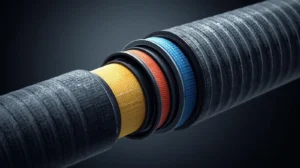
The effectiveness of an industrial chemical hose depends entirely on its construction materials. Manufacturers use specific synthetic rubbers and polymers to ensure broad chemical compatibility.
Common inner lining materials include:
- EPDM (Ethylene Propylene Diene Monomer): Highly effective for handling acids, alkalis, and many water-based chemicals. It also offers excellent weather and ozone resistance.
- UHMWPE / UPE (Ultra-High Molecular Weight Polyethylene): Used for aggressive chemical transfer. This lining can handle nearly 98% of all common industrial chemicals, making it highly versatile.
- XLPE (Cross-Linked Polyethylene): A strong choice for a wide range of acids, alkalis, and solvents, providing excellent structural stability.
- Synthetic Rubber Options: Tailored based on specific chemical compatibility requirements for targeted industrial processes.
To handle pressure and maintain shape, these hoses use robust reinforcement layers. Depending on the pressure requirements, a hose might feature textile braid, wire braid, or a steel wire helix. A steel helix is particularly important if the hose is used for suction applications, as it prevents the hose from collapsing inward.
Material selection depends entirely on your specific application. You must base your choice on the type of chemical, chemical concentration, fluid temperature, working pressure, and whether you require suction or discharge capabilities. Always verify chemical compatibility before finalizing your selection.
Types of Chemical Resistant Rubber Hoses
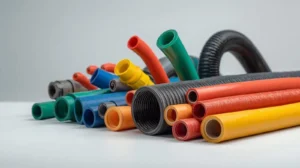
Different chemicals require different hose formulations. Understanding the specific types of hoses available helps you make a safer, more effective choice.
Acid Resistant Rubber Hose
An acid resistant rubber hose is engineered specifically for transferring acidic liquids, diluted acids, and corrosive chemical solutions. You will commonly find these hoses in chemical processing plants, metal finishing facilities, and fertilizer manufacturing units. Acid compatibility matters greatly because acidic media can rapidly eat through standard rubber. The specialized inner lining ensures the acid flows safely without breaking down the hose wall, providing significant safety benefits for facility operators.
Alkali Resistant Hose
An alkali resistant hose is designed to handle caustic and alkaline solutions, such as sodium hydroxide or potassium hydroxide. These hoses see frequent use in processing plants, chemical cleaning operations, and industrial liquid handling. Maintaining long-term resistance to alkaline media is critical, as bases can cause normal rubber to harden, crack, and eventually burst.
Chemical Transfer Hose
A chemical transfer hose serves as a versatile conduit for the safe movement of acids, alkalis, solvents, and other industrial chemicals. Operations use these hoses for tanker loading and unloading, plant-to-plant fluid movement, and production line chemical supply. They are built for rigorous daily use, ensuring fluids move securely from storage tanks to processing units.
Industrial Chemical Hose
An industrial chemical hose is a heavy-duty option used in large-scale environments like chemical plants, refineries, petrochemical units, and large manufacturing industries. These hoses feature heavy-duty construction, high pressure handling capabilities, and extreme durability. They provide absolute safety in the most demanding industrial environments where failure is not an option.
Common Chemical Hose Applications
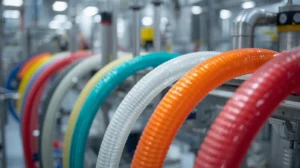
A chemical resistant rubber hose supports safe and efficient fluid movement across a vast array of industries. Common chemical hose applications include:
- Chemical Manufacturing Plants: Moving raw chemical ingredients and finished products safely.
- Pharmaceutical Industries: Transferring precise chemical formulas with high purity and safety standards.
- Fertilizer Plants: Handling corrosive ammonia, phosphoric acid, and other aggressive compounds.
- Petrochemical Industries: Safely routing harsh solvents, additives, and petroleum byproducts.
- Paint and Solvent Industries: Moving highly aggressive solvents that would dissolve standard rubber.
- Water Treatment Plants: Transferring chlorine, coagulants, and pH-balancing chemicals.
- Agriculture Chemical Transfer: Spraying and distributing liquid fertilizers and strong pesticides.
- Paper and Pulp Industries: Handling bleaching agents and caustic chemical washes.
- Oil and Gas Industries: Routing aggressive drilling fluids and refinery chemicals.
- Tanker Loading and Unloading: Providing a flexible, secure link between transport trucks and storage silos.
- Industrial Cleaning and Maintenance: Pumping harsh detergents and descaling chemicals.
- Manufacturing Units Handling Corrosive Liquids: Ensuring safe, continuous supply lines for production processes.
In every single one of these applications, the right hose ensures uninterrupted production, protects workers, and prevents environmental contamination.
Benefits of Using Rubber Hose for Chemicals
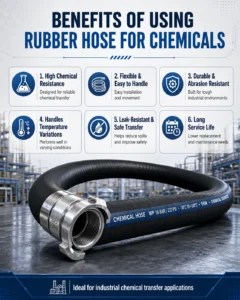
Switching to a specialized rubber hose for chemicals offers numerous practical advantages for your facility.
- Safe Handling of Corrosive Chemicals: The specialized lining traps harsh fluids safely inside the tube.
- Better Flexibility Than Rigid Piping: Hoses can bend around obstacles and connect moving machinery easily.
- Reduced Leakage Risk: High-quality construction and secure fittings keep hazardous liquids contained.
- Long Service Life: Chemical resistance prevents premature wear, saving you money on constant replacements.
- Improved Workplace Safety: Fewer leaks and bursts mean fewer chemical exposure incidents for your staff.
- Reduced Downtime: Reliable equipment keeps your production lines running smoothly without unexpected maintenance stops.
- Easy Installation and Movement: Flexible hoses are much easier to route, install, and adjust than hard pipes.
- Strong Pressure and Temperature Performance: Engineered to maintain safety even under extreme operational stress.
- Cost-Effective Chemical Transfer Solution: The upfront investment pays off quickly through reduced maintenance and improved longevity.
- Suitable for Different Industrial Environments: Rugged covers protect the hose whether it is used indoors or outdoors.
How to Choose the Right Chemical Resistant Rubber Hose
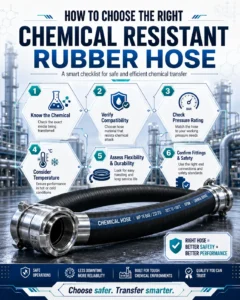
Selecting the perfect hose requires a thorough evaluation of your operational needs. Use this buyer’s guide to ensure you make the right choice:
- Type of Chemical Being Transferred: Identify exactly what fluid will run through the hose.
- Chemical Compatibility: Determine if you need acid, alkali, solvent, or mixed chemical compatibility.
- Chemical Concentration: A hose that handles 10% sulfuric acid might fail quickly when exposed to 90% sulfuric acid.
- Working Temperature: Heat accelerates chemical reactions. Ensure the hose is rated for the fluid’s maximum temperature.
- Working Pressure: Check your system’s pressure output and choose a hose with a matching or higher working pressure rating.
- Hose Diameter: The internal diameter must match your required flow rate.
- Hose Length: Measure the exact distance needed, accounting for necessary slack and bending.
- Suction or Discharge Application: Ensure you have wire reinforcement if the hose will operate under vacuum pressure.
- Inner Lining Material: Match the lining (e.g., EPDM, UHMWPE) to the specific chemical.
- Reinforcement Type: Choose textile braids for pressure or wire helixes for suction and extreme durability.
- Bend Radius and Flexibility: Ensure the hose can make the necessary turns without kinking or restricting flow.
- End Fittings and Coupling Compatibility: The fittings must securely attach and must also be resistant to the chemical.
- Safety Standards and Testing: Look for hoses that meet recognized industrial safety certifications.
- Manufacturer’s Chemical Compatibility Chart: Always verify your specific chemical against the manufacturer’s official chart.
Never select a hose based solely on size or price. Chemical compatibility and operating conditions remain the most critical factors for safety and performance.
Chemical Compatibility and Safety Considerations
Not every chemical hose is suitable for every chemical. A corrosion resistant hose designed for one specific application might fail catastrophically in another. For example, some hoses handle powerful acids perfectly but will swell and burst if exposed to industrial solvents. Similarly, a hose that handles diluted chemicals safely might degrade rapidly when pumping highly concentrated versions of the exact same chemical.
High temperatures severely impact chemical resistance. A chemical that is safe to pump at room temperature might become highly aggressive and damage the hose at elevated temperatures. You must also ensure that your pressure rating matches the application, and remember that the end fittings must possess the same chemical resistance as the hose lining itself.
Always consult a detailed chemical compatibility chart before putting a hose into service. Use proper Personal Protective Equipment (PPE) and enforce strict safety practices during chemical transfer. Finally, implement a strict inspection schedule. Replace damaged, swollen, cracked, or leaking hoses immediately to prevent severe workplace accidents.
Acid Resistant Hose vs Alkali Resistant Hose
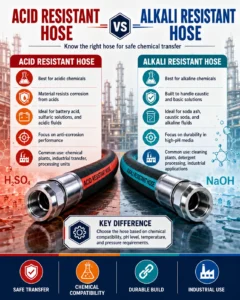
Understanding the difference between an acid resistant rubber hose and an alkali resistant hose helps you source the right equipment.
An acid resistant rubber hose is designed specifically to withstand acidic media, effectively handling low pH liquids without degrading. In contrast, an alkali resistant hose is built to manage caustic, alkaline solutions with high pH levels.
While these functions differ, some chemical resistant rubber hoses feature advanced lining materials (like UHMWPE) that can handle both acidic and alkaline environments safely. Your final selection depends entirely on the chemical type, concentration, fluid temperature, and system pressure. Always verify the compatibility of both the hose and its fittings before initiating any chemical transfer.
Industries That Use Industrial Chemical Hoses
The demand for industrial chemical hoses spans numerous high-intensity sectors. The industries that rely most heavily on these robust transfer solutions include:
- Chemical Plants: For mixing, processing, and transferring bulk chemical materials.
- Refineries: Managing crude oil byproducts, aggressive additives, and harsh cleaning agents.
- Petrochemical Units: Moving complex, volatile fluid compounds safely.
- Pharmaceutical Plants: Ensuring pure, uncontaminated transfer of active pharmaceutical ingredients.
- Food and Beverage Industries: Utilizing specialized food-grade chemical hoses for facility sanitation and cleaning lines.
- Fertilizer Industries: Handling highly corrosive nitrogen and phosphorus-based liquid compounds.
- Water Treatment Plants: Distributing harsh water purification and balancing chemicals.
- Paint and Coating Industries: Pumping volatile solvents and resin mixtures.
- Industrial Maintenance Companies: Using portable chemical hoses for heavy-duty descaling and industrial cleaning.
- Tanker and Logistics Companies: Requiring durable, flexible connections for loading and unloading hazardous chemical cargo.
How to Choose Chemical Hose Manufacturers in India
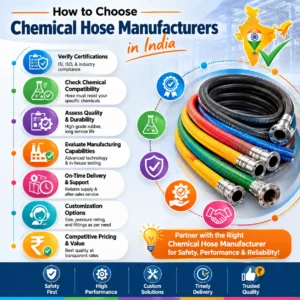
Finding reliable chemical hose manufacturers India requires careful evaluation to ensure you receive a safe, high-quality product. When sourcing industrial chemical hoses, procurement teams should look for:
- Experience in Industrial Hose Manufacturing: Look for established companies with a proven track record in heavy-duty industrial applications.
- Availability of Options: Ensure they offer specialized acid and alkali resistant hose variations.
- Quality of Materials: Verify they use premium rubber compounds and specialized linings like EPDM or UHMWPE.
- Custom Size Availability: The manufacturer should be able to produce specific lengths and diameters to fit your exact system.
- Pressure and Temperature Testing: They must rigorously test their products to ensure safety under extreme conditions.
- Chemical Compatibility Support: Good manufacturers provide detailed charts and expert guidance to help you match the hose to your chemicals.
- Strong Reinforcement Options: They should offer both textile and wire helix reinforcement based on your needs.
- Bulk Supply Capacity: Ensure they can meet your facility’s volume demands without long delays.
- Timely Delivery: Reliable supply chains are critical to minimizing your facility’s downtime.
- Technical Guidance: Their sales and engineering teams should be able to answer complex application questions.
- After-Sales Support: Choose a partner who stands behind their product with reliable customer service.
- Compliance with Standards: Verify that their hoses meet relevant domestic and international industrial safety standards.
Seek out manufacturers who focus on transparency, rigorous testing, and clear technical support rather than those relying on exaggerated marketing claims.
Maintenance and Storage Tips for Chemical Hoses
Proper maintenance extends the life of your chemical hose pipe and ensures absolute safety during operation. Follow these best practices:
- Inspect Hose Before Use: Always perform a visual check before initiating fluid transfer.
- Check for Damage: Look closely for any cracks, swelling, leakage, stiffness, or signs of exterior abrasion.
- Clean or Flush After Use: When required, flush the hose to remove chemical residue that could degrade the lining over time.
- Store in a Cool and Dry Place: Extreme storage temperatures can prematurely age the rubber.
- Avoid Direct Sunlight: Long-term UV exposure degrades rubber compounds, causing them to crack.
- Avoid Sharp Bends and Tight Coiling: Store hoses with wide loops to prevent kinking and internal structural damage.
- Keep Away From Incompatible Chemicals: Ensure storage areas are free from fumes or spills that could attack the hose exterior.
- Check Fittings and Couplings Regularly: Ensure clamps and fittings remain tight, corrosion-free, and secure.
- Do Not Exceed Limits: Never push the hose past its stated maximum pressure and temperature limits.
- Replace Worn-Out Hoses on Time: Implement a strict replacement schedule before a hose fails completely.
Conclusion
A high-quality chemical resistant rubber hose is an absolute necessity for safe, reliable, and efficient chemical transfer in any heavy-duty industrial environment. Utilizing the correct hose prevents catastrophic leaks, protects your workers from hazardous exposure, and saves your business from costly operational downtime.
Remember that selecting the right hose requires careful attention to detail. Your choice depends heavily on chemical compatibility, system pressure, operating temperature, the appropriate lining material, and the specific application type. Taking the time to evaluate these factors ensures your fluid transfer systems remain secure and efficient for the long term.
To guarantee the safety and productivity of your facility, always choose a reliable manufacturer or supplier who can provide high-quality industrial chemical hoses tailored to your specific chemical processing needs. Ensure you have the right technical guidance to make an informed, safety-first purchasing decision.