
In the complex world of industrial piping and fluid transfer, rigidity is often the enemy. Machinery vibrates, thermal expansion shifts pipelines, and installation spaces are rarely perfect straight lines. This is where the stainless steel flexible hose becomes an unsung hero. Whether you are managing a petrochemical plant, a pharmaceutical facility, or a high-pressure steam system, understanding the capabilities of metal hose technology is crucial for operational efficiency and safety.
At Rubber Hose India, we specialize in delivering high-quality industrial solutions. While our name honors our roots in rubber, our expertise extends deep into the realm of stainless steel hose assemblies. This comprehensive guide will walk you through everything you need to know about SS flexible hose, its benefits, applications, and why it remains the superior choice for demanding environments.
What is a Stainless Steel Flexible Hose?
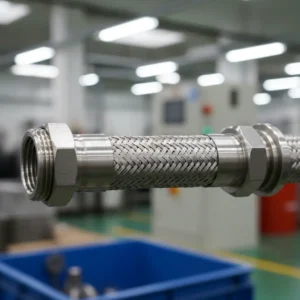
A stainless steel flexible hose (often referred to as an SS flexible hose or metal hose pipe) is a piping element designed to transfer liquids and gases while accommodating physical movement. Unlike rigid piping, these hoses can bend, flex, and absorb vibration without compromising structural integrity.
The core of an SS hose typically consists of two main components:
- The Corrugated Tube: This is the inner core, often called a corrugated hose. It is made from a thin-walled stainless steel tube that has been formed into corrugations (ripples). This corrugation allows the tube to bend and stretch.
- The Braiding: To prevent the inner tube from elongating under pressure, it is covered with a stainless steel braided flex hose layer. This braided flexible hose mesh provides the necessary strength to withstand high internal pressures while protecting the core from external damage.
When these elements combine, you get a steel hose pipe that is robust, flexible, and ready for extreme conditions.
Key Components Breakdown
- Core Material: Usually 300 series stainless steel (SS 304, SS 316, SS 321).
- Braiding: Single or double layers of SS braided hose wire.
- End Connections: Flanges, threaded fittings (BSP, NPT), or camlocks welded to the ends.
Why Choose SS Flexible Hose Over Rubber or Plastic?
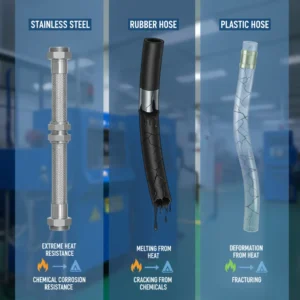
While rubber hoses have their place, an SS hose pipe offers distinct advantages that make it indispensable in specific scenarios.
1. Extreme Temperature Resistance
Rubber and plastic degrade quickly under extreme heat or cold. A stainless steel flexible pipe can operate efficiently in temperatures ranging from cryogenic levels (-200°C) up to extreme heat (+700°C). This makes metal hose the only viable option for transferring liquid nitrogen or superheated steam.
2. Chemical Compatibility
The “stainless” in stainless steel hose refers to its resistance to corrosion. An SS flexible hose pipe made from SS 316L is highly resistant to aggressive chemicals, acids, and alkalis that would eat through a standard rubber hose in minutes.
3. Permeation Resistance
Gases can permeate through the wall of rubber or PTFE hoses over time. A corrugated hose made of metal offers zero permeation, ensuring that hazardous or expensive gases stay exactly where they belong—inside the pipe.
4. Fire Safety
In the event of a fire, rubber melts and feeds the flames. A flexible steel pipe maintains its integrity much longer, providing a critical safety margin in hazardous industries like oil and gas.
Types of Stainless Steel Hoses
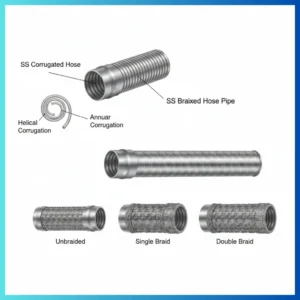
Understanding the specific type of ss flexible pipe you need is vital for system longevity.
SS Corrugated Hose
The ss corrugated hose is the heart of the assembly. There are two main types of corrugation:
- Helical Corrugation: The corrugations run in a spiral, like a screw thread. This is less common in high-pressure industrial applications but offers good flexibility.
- Annular Corrugation: The corrugations are individual parallel rings. SS corrugated hose pipe with annular forming provides superior flexibility and is the industry standard for high-pressure assemblies.
SS Braided Hose Pipe
The braid is the muscle of the hose.
- Unbraided: Used only for vacuum or very low-pressure applications where only flexibility is required.
- Single Braid: The standard for most industrial applications. The ss braided hose pipe layer prevents the hose from stretching under pressure.
- Double Braid: For extremely high-pressure environments, a second layer of braid is added to the stainless steel braided flex hose to increase its pressure rating significantly.
Industrial Applications of Metal Hose Pipe
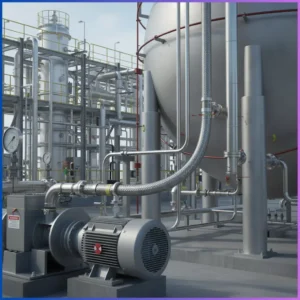
The versatility of metal hose pipe solutions means they are found in almost every heavy industry in India.
Steel Plants and Blast Furnaces
In the intense heat of a steel plant, cooling water lines and oxygen lances must withstand molten splatter and constant movement. A robust stainless steel flexible hose pipe is the standard choice here, often protected by an additional heat-insulating sleeve.
Petrochemical and Refineries
Refineries are networks of pipes connecting reacting vessels, storage tanks, and pumps. Due to thermal expansion and pump vibration, rigid pipes would crack. SS flexible hose assemblies are used as “jumpers” or bypass lines to absorb these stresses safely.
Power Generation
Whether it’s a thermal power plant or a nuclear facility, high-pressure steam is the medium of power. SS hose assemblies are critical for steam turbine connections, where they handle both high pressure and the thermal growth of the turbine casing.
Pharmaceutical and Food Processing
Hygiene is paramount here. Smooth-bore stainless steel flexible pipe options (or those lined with PTFE but armored with steel) ensure that fluids are transferred without contamination. The corrosion resistance of SS 316 is essential for handling cleaning agents and sanitary fluids.
HVAC and Piping Systems
In large commercial buildings, pumps circulate water for heating and cooling. These pumps vibrate. Connecting them directly to rigid copper or steel pipes would transmit noise and eventually cause fatigue failure. Installing a short flexible steel pipe connector isolates the vibration, protecting the system.
Technical Specifications: What to Look For
When ordering from Rubber Hose India, knowing your specifications helps us engineer the perfect ss flexible pipe for you.
1. Material Grade (Alloy)
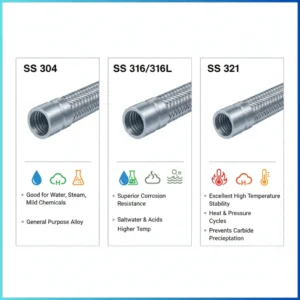
- SS 304: The general-purpose grade. Excellent for water, steam, and oil. It is cost-effective and widely used for general ss hose pipe applications.
- SS 316/316L: The marine grade. It contains molybdenum, which drastically increases corrosion resistance against chlorides and acids. If you are pumping chemicals or operating near saltwater, this is the metal hose material you need.
- SS 321: Titanium-stabilized stainless steel. It offers superior resistance to intergranular corrosion at high temperatures.
2. Pressure Ratings
The working pressure of an ss corrugated hose depends on its diameter, the number of braid layers, and the operating temperature. As temperature rises, the pressure rating of any metal hose decreases. Always consult our technical charts to ensure safety.
3. Flexibility (Bend Radius)
Every stainless steel flexible hose has a “Minimum Bend Radius.”
- Static Bend Radius: The minimum radius the hose can be bent to for installation.
- Dynamic Bend Radius: The minimum radius allowed when the hose is constantly moving (flexing) during operation.
Exceeding these limits will cause the corrugated hose to fatigue and crack.
Installation Best Practices for SS Hose
Even the best ss braided hose will fail if installed incorrectly. Proper installation is critical for safety and longevity.
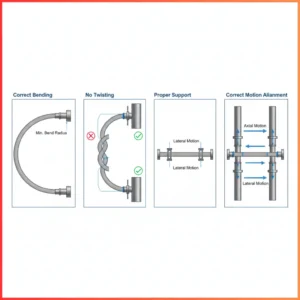
Avoid Torque (Twisting)
Torque is the number one killer of metal hose pipe. A stainless steel hose is designed to bend, not twist. During installation, ensure the hose is not twisted when tightening the flanges or fittings. Using a swivel flange or a union joint can help prevent this.
Avoid Sharp Bends
Never bend the hose right at the fitting. There should be a straight section of pipe coming out of the ferrule before the bend starts. Bending immediately at the collar puts stress on the weld, leading to premature failure of the ss flexible hose pipe.
Use Support
While they are strong, long lengths of stainless steel flexible hose pipe can sag under their own weight (and the weight of the fluid). Use saddles or trays to support long runs to prevent excessive stress on the end connections.
Motion Analysis
Install the hose in the same plane as the movement. If a machine vibrates vertically, the flexible steel pipe should be installed in a loop that allows vertical flex. Lateral offset (where the hose is sheared sideways) severely reduces the life of a ss corrugated hose pipe.
Maintenance and Inspection
Unlike rubber hoses, a metal hose does not “age” or degrade just by sitting on a shelf. However, in service, they must be inspected.
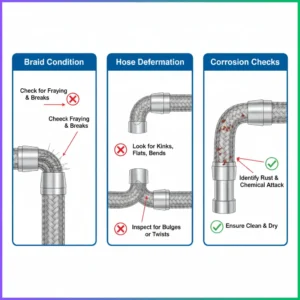
- Look for Broken Braids: If the ss braided hose pipe mesh is fraying or wires are broken, the pressure capability is compromised. The hose must be replaced immediately.
- Check for Deformation: If the hose looks crushed, flattened, or kinked, the inner corrugated hose is damaged.
- Corrosion: While stainless, it is not immune. Look for pitting or rust spots, which indicate chemical attack or galvanic corrosion.
Why Rubber Hose India?
You might wonder why a company named Rubber Hose India is the authority on stainless steel flexible hose. The answer lies in our commitment to total fluid transfer solutions. We understand that industrial clients need the right hose for the job, not just the one made of rubber.
We source high-grade raw materials to manufacture ss flexible hose assemblies that meet international standards (like ISO 10380). Our welding processes are certified, ensuring that the connection between the ss hose and the end fitting is as strong as the pipe itself.
Whether you need a massive metal hose pipe for a blast furnace or a precision ss flexible pipe for a laboratory instrument, we have the engineering capability to deliver.
Also Read: Thermo Plastic Hose Assemblies – The Smarter Alternative to Rubber Hoses
At Rubber Hose India, we are dedicated to keeping your operations flowing smoothly. Contact us today to discuss your stainless steel flexible hose requirements and experience the difference quality makes.
Frequently Asked Questions (FAQ)
Can I use a metal hose pipe for vacuum applications?
Yes, absolutely. Because the inner core is a rigid steel tube formed into corrugations, a stainless steel hose will not collapse under vacuum like some soft rubber hoses might. They are excellent for vacuum lines.
How do I measure the length of an SS flexible hose assembly?
Length is typically measured "Tip-to-Tip" or "Face-to-Face." This means the total length of the assembly including the fittings. However, it is crucial to specify this clearly. For ss corrugated hose pipe assemblies with elbows, specify the centerline length.
Why is there a braid on the outside of the hose?
The ss braided hose layer acts as a restraint. Without it, the internal pressure would cause the corrugations of the ss flexible hose pipe to stretch out like an accordion, elongating the hose and ruining it. The braid holds the corrugations in place while allowing them to flex.
Does a stainless steel flexible pipe absorb vibration?
Yes, this is one of its primary functions. A metal hose installed near pumps or compressors interrupts the transmission of vibration, protecting rigid piping and sensitive equipment downstream.
What is the life expectancy of a stainless steel hose?
It depends entirely on the application. In a static installation (no movement) with non-corrosive fluids, a steel hose pipe can last for decades. In high-vibration or high-cycle applications (constant moving), fatigue life becomes the limiting factor. Proper installation significantly extends service life.
Can you repair a damaged SS flexible hose?
Generally, no. If the ss corrugated hose core is cracked or the braided flexible hose layer is compromised, the assembly cannot be safely repaired. Welding over a leak in a corrugated hose damages the thin wall further. Replacement is the only safe option.