
In the world of power transmission, efficiency, reliability, and performance are paramount. For decades, engineers and maintenance professionals have relied on various belt drives to power everything from automotive engines to massive industrial machinery. Among these, the poly v belts has emerged as a superior solution, offering unparalleled advantages in a compact and durable design. This comprehensive guide will explore every facet of these remarkable components, from their fundamental design to their diverse applications and the reasons why they are a critical asset for modern B2B operations.
We will delve into the specifics of what makes a poly v belt the go-to choice for demanding applications. We’ll cover everything from the poly v belt advantages over traditional V-belts to detailed breakdowns of their construction and how to select the right one for your needs. Whether you are designing new machinery, upgrading existing systems, or responsible for plant maintenance, understanding the power of the poly v belt is essential for optimizing performance and reducing operational costs.
What is a Poly V Belt?
A poly v belt, also known as a micro v belt or a serpentine belt, is a single, continuous belt with multiple V-shaped ribs along its length. These ribs run longitudinally, which answers the common question: in what direction do the ribs on a poly v belt run? This design allows the belt to fit snugly into corresponding grooves on a pulley, creating a large contact area for superior torque transmission.
Unlike traditional V-belts that often require multiple belts to be used in parallel (a matched set), a single poly v belt can drive multiple accessories simultaneously. This is commonly seen in automotive applications, where one belt powers the alternator, power steering pump, water pump, and air conditioning compressor. This same principle makes it highly effective for complex industrial poly v belt drives. The thin cross-section of the belt allows it to be more flexible, enabling it to wrap around smaller pulleys and handle reverse bends, making it incredibly versatile.
The design of a classic poly-v belt combines the best attributes of flat belts (flexibility) and V-belts (high power grip). This hybrid nature is the key to its high efficiency and power-carrying capacity.
Key Differences: Poly V Belt vs. Traditional V-Belts
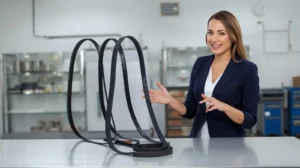
To truly appreciate the engineering behind the poly v belt, it’s helpful to compare it to its predecessors.
- Power Transmission: Due to the increased surface area from multiple ribs, a poly v belt can transmit more power than a traditional V-belt of the same width. The load is distributed evenly across the ribs, reducing wear and improving efficiency.
- Flexibility and Speed: The reduced thickness of a poly v belt allows it to operate at higher speeds and use smaller pulley diameters. This leads to more compact and lighter drive systems, a significant advantage in modern machinery design.
- Vibration and Noise: The continuous engagement of the ribs in the pulley grooves results in smoother, quieter operation with significantly less vibration compared to single or multiple V-belt setups.
- Belt Tension: Poly v belts operate effectively under lower tension, which reduces the load on bearings and shafts. This extends the life of associated components like the poly v belt alternator and other driven machinery, leading to lower maintenance costs.
- Drive Complexity: A single poly v belt can replace a set of multiple V-belts, simplifying drive design, reducing inventory, and eliminating the need for belt matching. This is especially true for systems that require driving multiple components, easily visualized in a poly v belt diagram.
Ready to upgrade your power transmission systems? Explore our extensive range of high-performance poly v belts and find the perfect fit for your industrial needs. Contact Rubber Hose India today!
The Anatomy of a High-Quality Poly V Belt
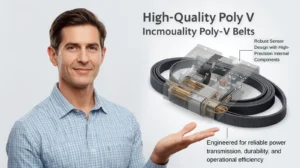
Not all belts are created equal. The performance and longevity of a poly v belt depend heavily on its construction and the materials used. A typical high-quality belt consists of several distinct layers, each serving a critical function.
- Top Fabric/Tension Section: This outer layer is often made of a wear-resistant woven fabric. It provides rigidity to the top of the belt and protects the internal components from oil, heat, and abrasion.
- Tension Cords: Embedded within the rubber compound, these are the backbone of the belt. They are typically made from high-strength, low-stretch materials like polyester, aramid, or fiberglass. These cords carry the tensile load of the drive, preventing the belt from stretching and ensuring consistent power delivery. This is a key feature of a duralast poly v belt and other premium brands.
- Adhesion Gum: This layer ensures a strong bond between the tension cords and the rubber body of the belt. A superior adhesion layer prevents separation under high stress and heat, which is a common failure point in lower-quality belts.
- Compression Section/Ribs: This is the core of the belt, made from a specially formulated synthetic rubber compound (like EPDM – Ethylene Propylene Diene Monomer). This material is designed to be durable, flexible, and resistant to cracking, heat, and contaminants. The V-shaped ribs are precisely molded to ensure perfect contact with the belt pulley poly v belt grooves.
This advanced construction is why brands like Continental Gatorback belt and Dayco belts are trusted in the industry. They invest heavily in material science to produce belts that can withstand extreme conditions. When you need the best quality v belt, looking for one with a robust, multi-layered construction is essential.
Types of Poly V Belts and Their Profiles
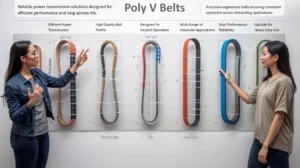
Poly v belts are not a one-size-fits-all solution. They come in several standardized cross-sections or profiles, denoted by letters. The most common profiles in industrial applications are H, J, K, L, and M.
- J Profile: One of the most common profiles. A j poly v belt is known for its versatility and is used in a vast range of applications, from power tools and home appliances to automotive drives. You might find specific part numbers like belt poly v 723 j 10 or belt poly v 406 jz 8, where the numbers indicate length and rib count.
- K Profile: Primarily designed for automotive applications. The dimensions of a K-profile belt, like a micro v belt nissan altima, are optimized for modern engine accessory drives.
- L Profile: A larger, more robust profile used in medium to heavy-duty industrial applications, such as industrial fans, pumps, and agricultural machinery. A belt designated as poly v belt 1100 lz 8 would fall into this category.
- H Profile: A smaller profile used for light-duty applications, often found in office equipment or small appliances.
- M Profile: The largest and most heavy-duty profile, capable of transmitting immense power. These are reserved for the most demanding industrial drives, like those in rock crushers, large compressors, and forestry equipment.
The choice of profile depends on the power requirements, speed, and pulley sizes of the application. Many manufacturers provide a poly v belt length calculator to help engineers and technicians determine the exact belt needed for their system.
Special Variants
Beyond standard profiles, specialized poly v belt types exist for unique challenges:
- Double Sided Poly V Belt: This innovative belt features ribs on both the top and bottom surfaces. It allows for serpentine drives where pulleys contact both sides of the belt, enabling engineers to create highly complex and compact power transmission paths.
- Elasticated/Stretch Belts: Some belts, like the poly fnr v belt, are designed to be installed without a tensioner. They are manufactured to a specific length and stretched into place, maintaining tension through their elastic properties. This simplifies the drive system and reduces component count.
Unsure which poly v belt profile is right for your machinery? Our technical experts are here to help. Contact us for a free consultation and personalized recommendation.
Understanding Poly V Belt Sizing and Nomenclature
Decoding the numbers and letters on a poly v belt can seem confusing, but it follows a logical system. While it can vary slightly between manufacturers, the nomenclature generally provides three key pieces of information:
- Rib Count: The number of ribs on the belt.
- Profile: The letter (J, K, L, etc.) indicating the cross-sectional size and shape of the ribs.
- Length: The effective length of the belt.
Let’s break down a few examples:
- belt poly v 520j8 kr150: This likely indicates a J-profile belt (j8 means 8 ribs) with an effective length of 520mm. The additional codes may be manufacturer-specific.
- belt poly v ph 6 rib 170mm lg: This is more straightforward. It’s a PH-profile belt with 6 ribs and a length of 170mm.
- poly v belt 1100 lz 8: This typically denotes an L-profile belt with 8 ribs and a length of 1100mm.
Understanding micro v belt dimensions is crucial for replacement. Always measure the old belt if possible or consult the equipment manufacturer’s specifications. Using a Dayco belt finder or similar tools from manufacturers can also simplify the process of finding the correct replacement.
Key Applications of Industrial Poly V Belts
The versatility of the poly v belt has led to its adoption across a wide spectrum of industries. Its ability to deliver high power in a compact space makes it ideal for modern machinery where space and weight are critical design considerations.
Manufacturing and Automation
In automated production lines, conveyors, and robotic arms, poly v belt drives provide the smooth and precise motion control necessary for high-speed operations. Their low vibration characteristic is especially important in applications where precision is key, such as in CNC machines and packaging equipment. The industrial poly v belt is a workhorse in these environments.
HVAC and Air Handling
Large commercial and industrial HVAC systems rely on powerful fans and blowers to move vast quantities of air. Poly v belts are the ideal choice to drive these fans, offering quiet operation, high efficiency, and long service life. This reduces energy consumption and maintenance needs in buildings and industrial facilities.
Agriculture and Forestry
Agricultural machinery, from combines and balers to irrigation pumps, operates in harsh, dusty environments. The durability and high grip of poly v belts, including specialized types like the poly grip v belt, ensure reliable performance when it matters most. Similarly, in forestry equipment like woodchippers and sawmills, these belts can handle the high shock loads and intermittent power demands.
[Image Placeholder 5: A large piece of agricultural machinery, like a combine harvester, with a visible poly v belt drive.]
Automotive and Transportation
While often associated with passenger cars, the poly v belt is also a critical component in heavy-duty transportation. On a mercedes sprinter poly v belt system, for example, it reliably drives essential components under high-mileage, demanding conditions. They are used in buses, trucks, and off-highway vehicles to power everything from the alternator to the cooling fans.
Power Generation and Pumps
In power plants and water treatment facilities, poly v belts are used to drive generators, large water pumps, and compressors. Their efficiency directly translates to energy savings, and their reliability ensures that essential services are not interrupted due to belt failure. The poly v belt roller or tensioner is a key part of maintaining optimal performance in these critical systems.
Discover the impact of upgrading to industrial poly v belts. Download our case study on how we helped a major manufacturing plant increase efficiency and reduce downtime by 25%.
Are Poly V Belts Worth the Extra Cost? An In-Depth Analysis
It’s a common question for procurement managers and engineers: are poly v belts worth the extra cost compared to traditional V-belts? While the initial purchase price of a poly v belt may be higher than a single V-belt, a total cost of ownership (TCO) analysis almost always reveals it to be the more economical choice in the long run.
Reduced Maintenance and Downtime
A single poly v belt replaces a matched set of multiple V-belts. This eliminates the labor-intensive process of matching, tensioning, and re-tensioning individual belts. More importantly, it reduces the points of failure. The failure of one belt in a multi-belt system can cause a cascade failure and lead to unscheduled downtime, which is often far more costly than the belt itself.
Increased Energy Efficiency
Poly v belts can be up to 98% efficient, compared to 94-95% for traditional V-belts. This difference might seem small, but over thousands of hours of operation in a high-power application, a 3-4% improvement in efficiency translates to significant energy savings. The lower tension requirements also reduce frictional losses and bearing wear, further contributing to overall system efficiency.
Longer Component Life
Because poly v belts run smoothly and require less tension, they impose less radial load on the shafts and bearings of the motor and driven components. This reduction in stress leads to a longer operational life for these expensive parts, reducing the frequency of costly repairs and replacements.
Compact and Lighter Designs
For OEMs (Original Equipment Manufacturers), the ability to design smaller, lighter, and more powerful equipment is a major competitive advantage. The use of a poly v belt allows for smaller pulley diameters and shorter center distances, resulting in a more compact drive package. This can reduce material costs and make the final product more appealing to end-users.
Considering these factors, the higher initial investment in a poly v belt is quickly offset by lower operating costs, reduced downtime, and improved overall system performance.
Installation and Maintenance Best Practices
Proper installation and regular maintenance are key to maximizing the life and performance of your poly v belt drives. Neglecting these simple steps can lead to premature failure, damage to other components, and costly downtime.
Pre-Installation Checks
- Safety First: Always follow lock-out/tag-out procedures before beginning any work on machinery. Ensure the machine is de-energized and cannot be accidentally started.
- Inspect Pulleys: Before installing a new belt, carefully inspect the pulley grooves for wear, damage, or debris. Worn pulleys will rapidly destroy a new belt. A pulley gauge can be used to check for excessive wear. Ensure pulleys are clean and free of oil, grease, or rust.
- Check Alignment: Misalignment is a leading cause of belt failure. Use a straight edge or laser alignment tool to ensure the drive and driven pulleys are perfectly aligned.
Installation Steps
- Select the Right Belt: Double-check that you have the correct belt for the application. Using a belt that is too long or too short will cause tensioning problems and lead to failure. If you need a micro v belt near me, ensure you are getting the exact replacement.
- Loosen the Tensioner: Never pry or force a belt onto the pulleys. This can damage the internal tension cords. Always loosen the poly v belt roller or tensioner mechanism to create enough slack to slip the belt on easily.
- Route the Belt Correctly: Refer to the poly v belt diagram for the specific machine. Ensure the belt is routed around all pulleys in the correct path. For serpentine drives, this is especially critical.
- Apply Correct Tension: This is the most critical step. Use a tension gauge to apply the manufacturer’s recommended tension. Over-tensioning will damage bearings and the belt, while under-tensioning will cause slippage, squealing, and heat buildup.
Ongoing Maintenance
- Regular Inspection: Visually inspect belts regularly for signs of wear, such as cracking, glazing, fraying, or contamination from oil.
- Listen for Noise: Unusual noises like squealing, chirping, or grinding are early warning signs of a problem with the belt, tensioner, or a pulley bearing.
- Check Tension: Belt tension should be checked periodically as part of a preventative maintenance schedule, as belts can stretch slightly over their initial run-in period.
Ensure optimal performance and longevity for your equipment. Download our free Poly V Belt Installation and Maintenance Checklist to guide your team.
Choosing the Best V Belt Brands in India
When sourcing components for critical industrial operations, quality and reliability are non-negotiable. For businesses in India, partnering with the right poly v belt manufacturers in India is essential. The market offers a wide range of options, but focusing on established brands known for their quality materials and manufacturing excellence is the wisest strategy.
The best v belt brand is one that offers:
- Advanced Materials: Look for manufacturers who use high-quality EPDM rubber compounds and aramid or polyester tension cords.
- Precision Manufacturing: The consistency of the rib profile and belt length is critical for smooth operation. Top manufacturers use advanced molding processes to ensure tight tolerances.
- Rigorous Testing: The best v belt brands in india subject their products to extensive testing for durability, heat resistance, and load capacity.
- Technical Support: A good supplier, like Rubber Hose India, doesn’t just sell products. We provide technical expertise to help you select the right belt and troubleshoot any issues with your drive system.
While searching for parts like a micro v belt repco, micro v belt nz, or translating terms like micro v belt in spanish (correa micro-v), it’s clear that quality is a global concern. By choosing a reputable domestic partner, you gain access to world-class products with local support and availability.
Clearing Up Common Misconceptions
There are a few persistent questions and misconceptions about poly v belts. Let’s address them directly.
- Is a poly v belt a timing belt? No. This is a critical distinction. A timing belt (or camshaft belt) has teeth that mesh with toothed sprockets to ensure the precise synchronization of engine components like the camshaft and crankshaft. A poly v belt, on the other hand, is a friction-based drive belt. The ribs increase friction, but they do not provide the positive engagement required for engine timing. The two are not interchangeable.
- Is a poly v belt a cambelt? No, for the same reason as above. “Cambelt” is another term for a timing belt.
- Is a poly v belt a drive belt? Yes. This is a correct and general term. A poly v belt is a specific type of drive belt used to transmit power from a driving source (like an engine or motor) to driven accessories or components.
- Can a poly v belt run both pulley types? This question, “can a poly v belt run both pulley types“, usually refers to running on both grooved and flat pulleys. The answer is yes. In many serpentine drive systems, the back (flat side) of the belt is used to drive certain pulleys, which is possible due to its flexible design.
The Future of Power Transmission
The drive for greater efficiency, more compact machinery, and lower operational costs continues to shape industrial design. The poly v belt is perfectly positioned to meet these demands. As poly v belt manufacturers continue to innovate with even more advanced materials and designs, we can expect to see belts that are stronger, last longer, and operate with even greater efficiency.
From the complex drive of a mercedes sprinter poly v belt system to a simple pump in a factory, the poly v design has proven its superiority. For any B2B operation looking to optimize its mechanical power transmission systems, embracing the poly v belt is not just an upgrade—it’s a strategic investment in reliability, efficiency, and future performance.
Your machinery deserves the best. Partner with Rubber Hose India, a leading supplier of the best quality v belt solutions in the market. Request a quote today and see how we can enhance your operations.
Frequently Asked Questions (FAQs)
What is a micro v belt? Is it different from a poly v belt?
"Micro v belt" is another name for a poly v belt. The terms are used interchangeably, along with "serpentine belt," especially in the automotive industry. They all refer to a single, flat belt with multiple longitudinal V-shaped ribs.
How do I find the correct replacement poly v belt for my machine?
The best way is to check the part number printed on the old belt. If it's unreadable, you'll need to identify the belt profile (e.g., J, K, L) and measure its length and number of ribs. You can use a manufacturer's catalog, an online tool like a Dayco belt finder, or consult with a technical expert from a supplier like Rubber Hose India for assistance.
What does the "J" in a "j poly v belt" mean?
The letter in a poly v belt's designation refers to its cross-sectional profile. The "J" profile is a very common industrial and automotive standard, defining the specific size, spacing, and angle of the V-ribs. Different letters (H, K, L, M) denote different profile sizes for various load capacities.
What causes a poly v belt to squeal or make noise?
Noise is typically caused by one of four things: incorrect tension (too loose), misalignment of the pulleys, wear on the belt or pulleys, or contamination from fluids like oil or coolant. It is an early warning sign that the drive system needs inspection.
Can I replace a poly v belt myself?
For those with mechanical experience, replacing a poly v belt is a manageable task. It requires following safety procedures (lock-out/tag-out), releasing the tensioner, routing the new belt correctly, and applying the proper tension with a gauge. For critical or complex systems, professional installation is recommended.
How often should an industrial poly v belt be replaced?
There is no fixed replacement interval, as life depends on the application, operating hours, and conditions. Replacement should be based on regular inspections. Look for signs of wear such as cracks (3 or more cracks per inch is a common rule), glazing, rib separation, or material loss. Proactive replacement as part of a preventive maintenance program is the best practice to avoid unexpected failures.
What is the difference between a poly v belt and a timing belt?
This is a critical distinction. A poly v belt is a friction drive belt with ribs, used for driving accessories. A timing belt has teeth that engage with sprocketed pulleys to precisely synchronize the rotation of internal engine components (like crankshafts and camshafts). They are not interchangeable and serve completely different functions.