
In the complex world of industrial manufacturing and heavy machinery, the humble hose is often the unsung hero. It is the lifeline that transports vital fluids, gases, and materials safely across a facility. Choosing the wrong hose can lead to catastrophic failures, costly downtime, and safety hazards. That is why understanding the specific types of industrial rubber hoses available in the market is crucial for any procurement manager or site engineer.
At Rubber Hose India, we don’t just sell products; we provide solutions. As a leading manufacturer, we understand that every application demands a specific set of properties. Whether you are dealing with high-pressure hydraulics, abrasive slurries, or volatile chemicals, there is a specific hose designed for the job.
This comprehensive guide will break down the various types of industrial rubber hoses, their specific applications, and how to choose the right one for your operations.
Why Proper Hose Selection Matters

Before diving into the specific types of industrial rubber hoses, it is important to understand the stakes. Using a general-purpose hose for a specialized application is a recipe for disaster.
- Safety: A hose failure with high-pressure steam or chemicals can cause severe injury.
- Efficiency: The right hose ensures optimal flow rates and pressure maintenance.
- Longevity: Using a heavy duty rubber hose designed for abrasion will outlast a standard hose by years.
- Cost Savings: Preventing leaks and reducing replacement frequency saves money.
When you source from Rubber Hose India, you are getting access to engineering expertise that ensures your selection matches your operational needs perfectly.
Understanding Rubber Hose Classification
To navigate the market effectively, you need to understand the basic rubber hose classification. Hoses are generally categorized based on the medium they convey, the pressure they withstand, and their construction material.
Most industrial hoses consist of three main parts:
- The Tube: The inner lining that contacts the medium.
- The Reinforcement: Layers of fabric, wire, or yarn that provide strength.
- The Cover: The outer layer that protects against environment, weather, and abrasion.
Best Types of Industrial Rubber Hoses 2026
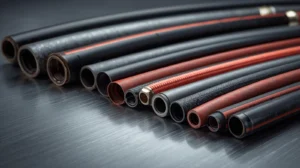
The specific types of industrial rubber hoses are defined by how these three components are engineered.
Hydraulic Rubber Hoses
One of the most critical types of industrial rubber hoses found in machinery is the hydraulic rubber hose. These are the veins of any hydraulic system, transmitting power via fluid pressure.
Characteristics
These hoses are built to withstand extreme pressure. A high-quality hydraulic rubber hose from Rubber Hose India is typically reinforced with multiple layers of high-tensile steel wire.
Applications
- Excavators and earthmovers
- Industrial presses
- Injection molding machines
- Mining equipment
Because hydraulic failure can stop production instantly, investing in the best product from a reliable manufacturer is non-negotiable.
Chemical Rubber Hoses
Handling aggressive acids, solvents, and alkalis requires specialized types of industrial rubber hoses. A chemical rubber hose is engineered with a specialized inner tube—often made from UHMWPE or XLPE—that resists chemical attack.
Safety First
Standard rubber dissolves when exposed to certain harsh chemicals. Using the correct chemical rubber hose prevents leaks that could cause environmental damage or worker injury. Rubber Hose India ensures that our chemical hoses meet strict safety standards.
Key Features
- Corrosion resistance
- Temperature tolerance
- Non-contaminating inner tubes
Water and Liquid Suction Hoses
While water seems harmless, moving it in industrial quantities requires robust industrial hose pipe solutions. Among the various types of industrial rubber hoses, water suction and discharge hoses are the most common.
General Purpose vs. Heavy Duty
For simple dewatering, a standard hose works. However, for construction sites or mines, you need a heavy duty rubber hose. These are often reinforced with a steel wire helix to prevent the hose from collapsing under vacuum pressure during suction.
Air and Pneumatic Hoses
Compressed air is a primary power source in many factories. The types of industrial rubber hoses used for air need to handle high pressure but remain flexible enough for operators to use pneumatic tools.
The Importance of Safety Factors
Air is compressible, which makes it dangerous if a hose bursts. A reinforced rubber hose for air applications typically has a high safety factor (often 4:1) to ensure burst pressure is significantly higher than working pressure. Rubber Hose India manufactures air hoses that prioritize operator safety.
Steam Hoses
Steam creates a unique challenge: high heat combined with high pressure. This is one of the most dangerous applications if the wrong hose is used.
High-Temperature Performance
The types of industrial rubber hoses designed for steam usually utilize EPDM rubber, which offers excellent heat resistance. Failure in a steam hose is not just a leak; it is an explosion of scalding vapor.
Warning: Never use a standard industrial hose pipe for steam. Always specify the temperature and pressure requirements to your supplier.
Material Handling and Abrasive Hoses
When you are moving sand, cement, grain, or slurry, you are dealing with abrasion. Standard rubber will wear through in days. This application requires distinct types of industrial rubber hoses with thick, abrasion-resistant inner tubes.
Sandblast and Concrete Hoses
These are classic examples of a heavy duty rubber hose. The inner tube is often made of natural rubber or specific synthetic blends that absorb the impact of the particles rather than chipping away.
Applications
- Sandblasting operations
- Concrete placement
- Grain transfer
- Dredging
Oil and Petroleum Hoses
Petroleum products attack natural rubber, causing it to swell and degrade. Therefore, types of industrial rubber hoses meant for fuel must use Nitrile (NBR) rubber.
Transfer vs. Suction
Whether you are pumping fuel off a truck or dispensing it at a station, the hose construction matters. Rubber Hose India provides specialized industrial hose suppliers with distinct hoses for tank trucks, fuel dispensing, and oil rig operations.
Food Grade Hoses
In the food and beverage industry, hygiene is paramount. Types of industrial rubber hoses used here must be FDA approved.
Clean and Safe
These hoses use white, non-toxic, taste-free, and odorless rubber compounds. They must also withstand aggressive cleaning cycles (CIP) involving hot water and sanitizing chemicals.
Comparing Reinforced Rubber Hoses
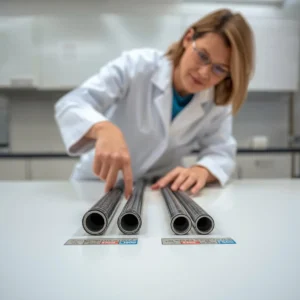
Almost all industrial applications require a reinforced rubber hose, but the type of reinforcement varies.
- Textile Reinforcement: Uses fabric braids. Good for lower pressures and flexibility.
- Wire Braid: Uses braided steel wire. Standard for hydraulics.
- Wire Spiral: Uses spiral-wrapped steel. Necessary for very high-pressure impulse applications.
- Helix Wire: Uses a spring-like wire coil. Essential for suction to prevent collapse.
Understanding these reinforcements helps you navigate the types of industrial rubber hoses more effectively.
Detailed Breakdown of Industrial Hose Applications
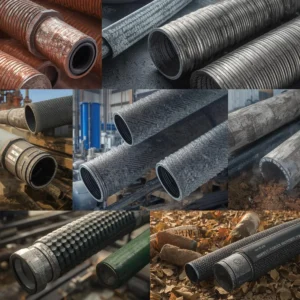
To truly understand which types of industrial rubber hoses you need, we must look at where they are used.
The Construction Sector
Construction sites are abusive environments. They require a heavy duty rubber hose for almost every task:
- Air: Jackhammers
- Water: Pump discharge
- Hydraulics: Excavators
- Concrete: Pumping structural cement
The Mining Industry
Mining requires the toughest types of industrial rubber hoses. The abrasive nature of ore and slurry demands thick, resilient walls. Rubber hose manufacturers India, specifically Rubber Hose India, have developed specialized compounds to extend the life of hoses in these grueling conditions.
Manufacturing and Automotive
Here, precision is key. A hydraulic rubber hose on a robotic arm needs to be flexible yet powerful. An air hose on an assembly line needs to be lightweight to reduce worker fatigue.
How to Select the Right Hose: The STAMPED Method

When you contact industrial hose suppliers like Rubber Hose India, having the right information speeds up the process. We recommend the STAMPED method to identify the correct types of industrial rubber hoses:
- S – Size: What is the inner diameter (ID), outer diameter (OD), and length?
- T – Temperature: What is the temp of the material and the environment?
- A – Application: Where and how will it be used? (e.g., is it a chemical rubber hose application?)
- M – Material: What is being conveyed?
- P – Pressure: What is the working pressure and surge pressure?
- E – Ends: What type of couplings or fittings are needed?
- D – Delivery: When do you need it?
The Role of Rubber Hose India in the Market
As premier rubber hose manufacturers India, our role goes beyond manufacturing. We are partners in your productivity.
We understand that the market is flooded with various industrial hose types, some of which are subpar imports. At Rubber Hose India, we manufacture our products to meet global standards (SAE, DIN, ISO). When you are looking for specific types of industrial rubber hoses, knowing the source ensures traceability and quality assurance.
Heavy Duty vs. Standard Duty: Making the Choice
Cost is always a factor in B2B procurement. It might be tempting to save money by choosing a standard hose over a heavy duty rubber hose. However, consider the Total Cost of Ownership (TCO).
If a standard industrial hose pipe fails every three months, and a heavy-duty version lasts a year, the heavy-duty option is cheaper—not even counting the cost of downtime. We help clients analyze their usage to recommend the most cost-effective types of industrial rubber hoses for their budget and lifecycle needs.
The Science of Reinforced Rubber Hose
The magic of a reinforced rubber hose lies in the bonding. It is not just about layering rubber and wire; they must adhere to each other perfectly.
If the bond is weak, the layers separate (delamination) under pressure. This is a common failure point in inferior types of industrial rubber hoses. Rubber Hose India utilizes advanced adhesion promoters and vulcanization processes to create a unified, inseparable structure.
Specialized Industrial Hose Types
Beyond the basics, there are niche types of industrial rubber hoses for specific industries.
Fire Fighting Hoses
These must be heat resistant, lightweight, and capable of high pressure.
Aircraft Refueling Hoses
These require strict adherence to API standards to ensure fuel purity and safety.
Marine Hoses
Used for offshore oil transfer, these types of industrial rubber hoses must withstand saltwater corrosion, wave motion, and immense tensile stress.
Maintenance of Industrial Rubber Hose Types
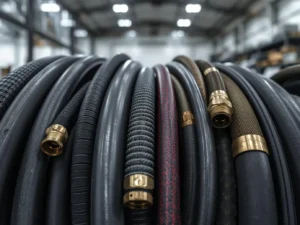
Even the best product from Rubber Hose India needs care. Proper maintenance extends the life of all types of industrial rubber hoses.
- Visual Inspection: Check for cracks, bubbles, or abrasions daily.
- Hydrostatic Testing: Periodically pressure test critical hoses (like a chemical rubber hose) to ensure integrity.
- Proper Storage: Keep hoses away from direct sunlight (UV damages rubber) and ozone sources.
- Correct Handling: Don’t drag a heavy duty rubber hose over sharp rocks if it can be avoided.
Troubleshooting Common Hose Failures
Understanding why hoses fail helps you choose better types of industrial rubber hoses in the future.
- Tube Swelling: The hose material is incompatible with the fluid. You may need a different chemical rating.
- Cover Blisters: Usually indicates gaseous permeation through the tube.
- Crushed Hose: You used a discharge hose for suction. You need a reinforced rubber hose with a helix wire.
- Burst at Fitting: Often caused by improper crimping or exceeding pressure limits.
The Future of Industrial Hose Pipe Technology
The world of industrial hose types is evolving. We are seeing the integration of smart technology.
Imagine a hydraulic rubber hose with embedded sensors that alert you when the reinforcement is fatiguing. Or a chemical rubber hose that changes color if the inner tube is compromised. As top-tier rubber hose manufacturers India, Rubber Hose India is constantly monitoring these trends to bring the latest innovations to our clients.
Why Sourcing Locally Matters
Choosing rubber hose manufacturers India offers distinct advantages for Indian businesses:
- Faster Logistics: No waiting for international shipping.
- Customization: Easier to communicate specific needs for unique types of industrial rubber hoses.
- Support: Immediate technical assistance.
A Recap of Industrial Hose Applications
To summarize the versatility of these products, let’s look at the broad spectrum of industrial hose applications:
- Agriculture: Irrigation, pesticide spraying, seed transfer.
- Pharmaceutical: Ultra-pure water transfer, pill dust collection.
- Steel Mills: Cooling water lines near furnaces.
- Waste Management: Sewage suction and pump trucks.
Every one of these industrial hose applications requires a different specification. One size never fits all.
Understanding Pressure Ratings
When discussing types of industrial rubber hoses, pressure is the primary constraint.
- Working Pressure (WP): The maximum pressure the hose is designed to handle continuously.
- Burst Pressure (BP): The pressure at which the hose will fail.
- Safety Factor: The ratio of BP to WP. For a hydraulic rubber hose, this is usually 4:1. For water, it might be 3:1.
Never exceed the WP. Doing so compromises the lifespan of even the best reinforced rubber hose.
Selecting Connectors for Industrial Hose Types
A hose is only as good as its connection. You cannot discuss types of industrial rubber hoses without mentioning couplings.
- Camlock: Quick connect/disconnect. Good for water and fuel.
- Flanges: For high pressure and large bore pipes.
- Threaded Fittings: Standard for hydraulics.
Rubber Hose India supplies hoses as complete assemblies, ensuring the fitting matches the hose rating perfectly.
The Rubber Hose India Advantage
Why choose us among other industrial hose suppliers?
- Quality Control: Every batch is tested.
- Range: We stock all major types of industrial rubber hoses.
- Expertise: Our team knows the difference between a hose for 98% sulfuric acid and 50% sulfuric acid.
- Availability: Large inventory of industrial hose pipe ready to ship.
Chemical Compatibility Guide
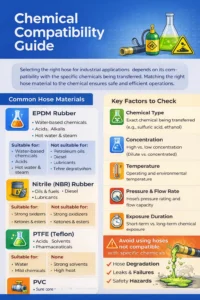
One of the most complex areas of rubber hose classification is chemical resistance.
- EPDM: Good for ketones, steam, and acids. Bad for oil.
- Nitrile (NBR): Excellent for oil and fuel. Bad for ozone.
- Neoprene: Good all-rounder. Moderate oil and weather resistance.
- Viton: Premium resistance for aggressive chemicals and high heat.
When ordering a chemical rubber hose, always provide the Safety Data Sheet (SDS) of the chemical to Rubber Hose India.
High-Pressure vs. High-Volume
There is often a trade-off.
- A hydraulic rubber hose handles high pressure but usually has a smaller diameter (low volume).
- A dredging hose handles massive volume but lower pressure.
Knowing the difference ensures you select the right types of industrial rubber hoses for your system’s design.
The Importance of Flexibility
In dynamic applications, the hose moves. The “Minimum Bend Radius” is a critical spec for types of industrial rubber hoses. If you bend a hose tighter than its rating, you stress the reinforcement.
A reinforced rubber hose with a wire helix is less flexible than a fabric-braided one. If your machine requires tight routing, consult Rubber Hose India for high-flexibility options.
Purchasing from Industrial Hose Suppliers
When you are ready to buy, vet your industrial hose suppliers.
- Do they offer certification?
- Do they understand industrial hose applications?
- Can they crimp assemblies in-house?
Rubber Hose India checks all these boxes, distinguishing us from mere resellers.
Conclusion
Navigating the various types of industrial rubber hoses can be daunting, but it is a critical task for operational efficiency and safety. From the high-pressure demands of a hydraulic rubber hose to the delicate safety requirements of a chemical rubber hose, every product serves a distinct purpose.
By understanding rubber hose classification and the specific needs of your industrial hose applications, you can make informed decisions that save money and prevent accidents. Whether you need a massive heavy duty rubber hose for mining or a precise industrial hose pipe for manufacturing, the quality of the product dictates the quality of your output.
Rubber Hose India stands ready to be your partner. As the leading manufacturer and supplier, we provide the expertise and inventory you need to keep your operations flowing. Don’t compromise on quality—choose the experts who understand every inch of the types of industrial rubber hoses you rely on.
Ready to upgrade your industrial hoses?
Contact Rubber Hose India today. Our team of experts is waiting to help you select the perfect types of industrial rubber hoses for your specific requirements. Ensure safety, efficiency, and durability with the best product in the market.
Frequently Asked Questions
How do I measure hose diameter?
Always measure the Internal Diameter (ID) for flow, and Outer Diameter (OD) for clamping.
What is the shelf life of a rubber hose?
Generally, 5 to 7 years if stored correctly. All types of industrial rubber hoses degrade over time due to rubber aging.