
Cement manufacturing is one of the most abrasive environments in the industrial world. From the moment limestone is crushed to the final loading of cement bags or bulkers, every component in the system is subjected to extreme wear and tear. In this harsh landscape, the humble rubber hose plays a vital role in keeping production lines moving. However, treating a rubber hose for cement industry applications as a generic commodity is a costly mistake that many plant owners and procurement managers make.
The sheer abrasive nature of cement powder, clinker dust, and fly ash acts like sandpaper on the internal lining of transfer lines. General-purpose hoses, designed for water or air, simply cannot withstand this constant grinding. They fail rapidly, leading to frequent downtime, expensive replacements, and dangerous leaks that create environmental hazards in the plant.
This comprehensive guide is designed to help maintenance engineers, procurement managers, and plant owners in India understand the nuances of heavy-duty material handling hoses. We will explore the critical importance of abrasion resistance, dissect the construction of a heavy duty cement hose, and provide a clear roadmap for selecting the right product for your specific needs. By the end of this guide, you will know exactly what to look for to ensure longevity, safety, and operational efficiency.
What Is Rubber Hose for Cement Industry?
A rubber hose for cement industry is a specialized, reinforced flexible tube designed specifically to convey highly abrasive materials like dry cement, limestone, fly ash, and slurry. Unlike standard hoses, these are engineered with a thick, abrasion-resistant inner tube (often made of natural rubber or specialized synthetic compounds) to resist wear and tear caused by friction, ensuring a longer service life in heavy-duty applications.
To the untrained eye, black rubber hoses may all look the same. However, a rubber hose for cement industry is a distinct breed of engineering. It is not just a tube; it is a flexible pipeline built to survive a war of attrition against abrasive particles.
Definition and Purpose
In simple terms, these hoses are heavy-duty conduits used to transport bulk solids and slurries. They connect fixed piping systems to mobile equipment, allow for vibration isolation, and bridge gaps where rigid piping is impractical. The primary differentiator is the “wear liner”—the innermost layer of the hose. In a cement hose, this liner is significantly thicker and chemically formulated to bounce back from the impact of particles rather than tearing.
Difference Between Normal Rubber Hose and Cement Industry Hoses
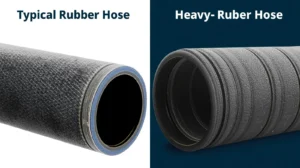
A standard water or air hose typically has a thin inner tube made of SBR or EPDM rubber. If you were to pump dry cement through such a hose, the particles would scour through the thin liner in a matter of hours or days. In contrast, cement industry hoses utilize high-grade natural rubber or poly-butadiene blends that offer exceptional resilience and cut-and-gouge resistance. They also feature stronger reinforcement layers to handle the weight of the dense material and the vacuum or pressure of the pneumatic conveying system.
Typical Materials Handled
These hoses are the lifelines for moving:
- Dry Cement: Fine powder that is highly abrasive at high velocities.
- Clinker Dust: Coarse, sharp particles produced after the kiln process.
- Fly Ash: A byproduct of coal combustion, extremely fine and abrasive.
- Slurry: A mixture of limestone and water, which is abrasive and heavy.
- Limestone & Gypsum: Raw materials used in the initial grinding stages.
Where Rubber Hoses Are Used in Cement Plants
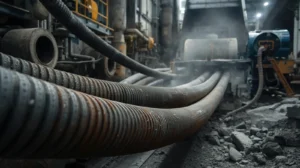
The versatility of rubber hoses makes them indispensable across various stages of cement production. Understanding where they fit into your process flow is key to selecting the right industrial hose for cement plant applications.
- Cement Feeding Systems: Connecting silos to weigh feeders or packing machines. These hoses handle the final product and must ensure zero contamination while resisting the flow of fine powder.
- Fly Ash Handling: Transporting fly ash from storage silos to the mixing unit. Since fly ash is finer than cement, leaks here can create massive dust clouds, making airtight hose connections critical.
- Slurry Transfer: In the wet process of cement manufacturing, slurry is pumped through large-diameter hoses. These must withstand both the abrasive nature of the solids and the hydraulic pressure of the pumping system.
- Bulk Material Unloading: The flexible connection between the bulk cement truck (bulker) and the plant’s storage silo. This is one of the most common applications for a cement hose pipe, requiring high flexibility for manual handling by truck operators.
- Pneumatic Conveying Lines: Used at bends and flexible joints in air-slide systems or pneumatic transport pipes. Rubber hoses are often installed at bends because rigid steel elbows wear out too quickly; the natural elasticity of rubber absorbs the impact of particles better than steel.
Types of Cement Industry Rubber Hoses
Not all hoses in a cement plant serve the same purpose. Manufacturers categorize them based on the specific material they carry and the pressure conditions they operate under.
Cement Hose Pipe
This is the standard hose used for the pneumatic discharge of dry cement and abrasive powders. It is lightweight enough to be handled by operators but tough enough to handle discharge pressures (typically around 5-10 bar). It is the standard “bulker hose” seen on trucks.
Fly Ash Rubber Hose
Fly ash is notoriously abrasive. A fly ash rubber hose often features an even thicker inner tube than a standard cement hose. It is specifically compounded to resist the fine scouring action of ash particles moving at high speeds.
Slurry Rubber Hose
Used for wet applications, a slurry rubber hose is designed to handle liquid-solid mixtures. It typically has a smooth bore to reduce friction loss and allows for higher flow rates. These are often used in mining and raw material preparation zones of the plant.
Cement Feeding Hose
These are often shorter, larger-diameter sleeves used in the packing plant. They connect the storage bin to the rotary packer. They operate under gravity flow or low pressure but see constant material movement.
Material Handling Rubber Hose
A broad category covering hoses used for suction and discharge of various abrasive materials like sand, gravel, and limestone chips. These are generally reinforced with a steel wire helix to prevent collapsing under vacuum.
Why Abrasion Resistant Rubber Hose Is Critical in Cement Plants
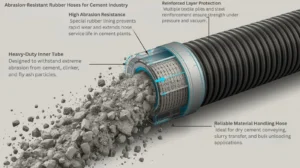
The single biggest enemy of equipment in a cement plant is abrasion. When millions of tiny, hard particles slide or impact against a surface, they remove material.
High Abrasion Nature of Cement & Fly Ash
Cement particles have sharp edges. When they travel through a hose at 20 meters per second in a pneumatic line, they act like a sandblaster. An abrasion resistant rubber hose uses the principle of elasticity to combat this. Instead of a hard surface that chips away (like steel), the rubber absorbs the kinetic energy of the particle and bounces back.
Internal Tube Wear
The wear usually happens internally, invisible to the operator until it’s too late. A standard hose might lose 1mm of thickness per week in a high-velocity line. A specialized heavy duty cement hose might only lose 0.1mm in the same period.
Hose Life Comparison & Cost
Let’s look at a real-world scenario from a plant in Rajasthan. They were using a generic material handling hose for fly ash unloading. The hose cost ₹3,000 but failed every 3 weeks. They switched to a premium rubber hose for cement industry costing ₹9,000. This new hose lasted 6 months.
- Generic Hose Annual Cost: ₹52,000 (plus labor for 17 replacements).
- Premium Hose Annual Cost: ₹18,000 (plus labor for 2 replacements).
The math is simple. The initial higher cost of an abrasion resistant rubber hose pays for itself multiple times over in reduced replacement costs and downtime.
Construction of Heavy Duty Cement Hose
To withstand the harsh environment, these hoses are built like tanks. Their construction typically involves three main components:
Inner Tube (The Wear Layer)
This is the most critical part. It is usually made from NR/BR (Natural Rubber / Polybutadiene) blends. Black, smooth, and highly abrasion-resistant, it often has antistatic properties to prevent static electricity buildup caused by the friction of dry powder. The thickness of this tube is a key quality indicator—ranging from 6mm to 12mm or more depending on the application.
Reinforcement Layers
This provides the structural integrity.
- Textile Plies: Layers of high-strength synthetic fabric (like nylon or polyester) provide pressure resistance.
- Copper Wire: An antistatic copper wire is often embedded to conduct static electricity to the ground, preventing sparks and potential explosions in dusty environments.
- Steel Helix: For suction applications, a steel wire helix is embedded to prevent the hose from flattening under vacuum.
Outer Cover Protection
The outer skin protects the reinforcement from the external environment. Made from weather-resistant rubber (like SBR or EPDM), it withstands UV radiation from the Indian sun, ozone, and physical dragging across concrete floors. In a heavy duty cement hose, this cover is also resistant to cuts and gouges.
Flexibility vs. Strength Balance
A hose must be strong, but if it is too stiff, operators will struggle to connect it to bulkers. Manufacturers engineer the reinforcement angle to maximize flexibility without compromising the pressure rating.
How to Select the Right Rubber Hose for Cement Industry
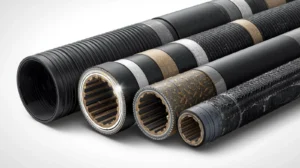
Choosing the correct rubber hose for cement industry applications requires a systematic approach. Don’t just ask for “a 4-inch hose.” You need to specify the parameters.
Step 1: Type of Material Handled
Be specific. Is it hot clinker or ambient temperature fly ash? Hot clinker requires a heat-resistant rubber compound (like EPDM), whereas fly ash requires maximum abrasion resistance (NR).
Step 2: Abrasion Level
How abrasive is the material? Sharp, large clinker particles require a thicker liner (wear tube) than fine cement powder.
Step 3: Pressure & Vacuum Requirement
Are you pushing material (discharge) or pulling it (suction)?
- Discharge: Requires textile reinforcement.
- Suction: Requires a steel wire helix to prevent collapse.
Check the working pressure of your system. Most cement unloading is done at 3-5 bar, but the hose should be rated higher for safety (e.g., 10 bar).
Step 4: Hose Diameter & Length
Incorrect diameter changes flow velocity. Too small causes blockages; too large reduces air velocity and causes material to settle. Length should be sufficient to allow a natural bend radius. A hose stretched too tight will fail at the coupling.
Step 5: Operating Temperature
Cement coming fresh from the grinding mill can be hot (80°C – 100°C). Standard natural rubber degrades above 70°C. If handling hot cement, ensure the hose specification explicitly states high-temperature resistance.
Step 6: Installation Conditions
Is the hose hanging vertically? Is it dragged over rough ground? If dragged, look for a hose with a corrugated outer cover for extra flexibility and wear resistance.
Cement Hose Pipe vs Slurry Rubber Hose – Key Differences
While both fall under the umbrella of cement industry hoses, they serve different masters.
| Feature | Cement Hose Pipe (Dry) | Slurry Rubber Hose (Wet) |
| Primary Material | Dry powder (Cement, Fly Ash) | Liquid mixture (Limestone slurry) |
| Internal Lining | Natural Rubber blend (Anti-static) | Natural/Synthetic Rubber (Hydrolytic stability) |
| Pressure Handling | Moderate (pneumatic pressure) | High (hydraulic pump pressure) |
| Reinforcement | Textile cords + Copper wire | Textile + Steel Helix (often heavy duty) |
| Wear Resistance | Optimized for sliding abrasion | Optimized for impact and wet abrasion |
| Typical Failure | Internal thinning from scouring | Bursting from pressure surges |
Understanding this distinction prevents the common error of using a slurry hose for dry cement (which is heavy and expensive) or a dry cement hose for slurry (which may burst).
Common Buying Mistakes in Cement Industry Hoses
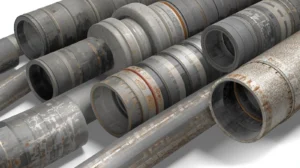
Even experienced procurement managers can fall into these traps when sourcing rubber hose manufacturers India.
Using Water Hoses for Cement
This is the most frequent error. A standard water suction hose looks similar but has a thin, non-abrasion-resistant liner. It will wear through in days, causing leaks.
Ignoring Abrasion Rating
Not all “abrasion-resistant” hoses are equal. There is a standard test (DIN 53516) that measures volume loss in cubic millimeters. A lower number means better resistance. Buying a hose without knowing its DIN abrasion value is a gamble.
Wrong Diameter Selection
Mismatched IDs (Inner Diameters) create turbulence at the coupling. Turbulence increases wear significantly. A 4-inch pipe needs a 4-inch ID hose, not a “close enough” fit.
Poor Quality Reinforcement
Cheap hoses use fewer layers of fabric or low-grade steel wire. These hoses balloon under pressure or kink easily, cutting off flow.
Choosing Price Over Durability
As shown in the earlier example, the cheapest hose often has the highest Total Cost of Ownership (TCO). In the cement industry, durability is king.
Quality Check for Cement Industry Rubber Hoses
Before you accept a delivery of material handling rubber hose, perform these checks.
Visual Inspection
Check the outer cover for blisters, cracks, or exposed wire. The branding/markings should be clear.
Lining Thickness
Use a caliper to measure the thickness of the inner tube at the ends. Does it match the datasheet? A 10mm specification should be 10mm, not 8mm.
Reinforcement Quality
Look at the cut end of the hose. The layers of fabric and rubber should be tightly bonded. If you see separation (delamination) at the cut end, the hose will fail quickly.
Flexibility Test
Try to bend the hose. A cement hose pipe should be flexible. If it feels rigid or makes a cracking sound when bent, the rubber may be old or over-cured.
Manufacturer Markings
Legitimate rubber hose manufacturers India will print their name, the hose type, working pressure (W.P.), and manufacturing date on the hose layline. No markings usually indicate a low-quality generic product.
Pre-Purchase Checklist
- Visual check: No surface defects.
- Dimensional check: ID and OD match order.
- Lining check: Smooth bore, correct thickness.
- Branding: Clear pressure ratings and date.
Industrial Hose Standards & Quality Expectations for Cement Plants
Reliability is backed by standards. In India, adhering to specific quality benchmarks ensures safety.
Indian Manufacturing Practices
Many top-tier Indian manufacturers follow IS (Indian Standards) guidelines for rubber hoses. For example, IS 13071 covers rubber hoses for sandblasting (similar abrasion requirements), and IS 3401 covers cement grouting hoses.
ISO Relevance
ISO 1307 defines dimensional tolerances for rubber hoses. DIN 53516 is the gold standard for testing abrasion resistance. When buying, ask the supplier if their rubber compound has been tested according to DIN standards and what the result was (e.g., < 60mm³ loss).
Internal QC & Testing
Reputable suppliers will have in-house testing rigs for:
- Hydrostatic Pressure Test: Checking for leaks under pressure.
- Burst Test: Determining the maximum pressure before failure.
- Abrasion Test: Verifying the wear resistance of the rubber batch.
Documentation Importance
Always ask for a Test Certificate (TC) with your shipment. It should certify that the specific batch of hoses meets the required pressure and abrasion specifications.
How to Choose Reliable Rubber Hose Manufacturers in India
The Indian market is flooded with traders and manufacturers. Filtering the best from the rest is crucial for procuring high-quality cement industry hoses.
Experience with Cement Industry Hoses
Does the manufacturer specifically list cement plants as their clients? A manufacturer who primarily makes agricultural hoses may not understand the severe abrasion requirements of clinker handling.
Custom Manufacturing Capability
Every plant is different. You might need a non-standard length or a hose with built-in flanged ends. A real manufacturer can customize the heavy duty cement hose to your specs; a trader cannot.
Testing & Quality Control
Ask to see their lab. If they don’t have an abrasion tester or a pressure test rig, they are likely outsourcing or guessing the quality.
Delivery & After-Sales Support
Cement production runs 24/7. You need a supplier who stocks standard sizes and can deliver quickly in an emergency. Good after-sales support includes visiting your plant to analyze premature hose failures and suggesting improvements.
Final Checklist – Before Buying Cement Industry Rubber Hoses
Before you sign that Purchase Order, run through this final checklist to ensure you are getting the right tool for the job.
- ✔ Abrasion-Resistant Lining: Is the DIN abrasion value specified (ideally < 60mm³)?
- ✔ Heavy-Duty Reinforcement: Does it have the right textile plies and copper wire for anti-static safety?
- ✔ Correct Diameter & Length: Have you verified the exact ID needed for your pipe fittings?
- ✔ Suitable for Application: Is it rated for suction (helix wire) if used in vacuum lines?
- ✔ Temperature Rating: Can it handle the heat if the cement is hot?
- ✔ Trusted Indian Manufacturer: Does the supplier offer a Test Certificate and warranty?
Conclusion
Selecting the right rubber hose for cement industry applications is about more than just connecting Point A to Point B. It is a strategic decision that impacts the safety of your workforce, the cleanliness of your plant, and the efficiency of your production line.
By moving away from generic hoses and investing in specialized, high-performance solutions like heavy duty cement hose and fly ash rubber hose, you can significantly reduce downtime and maintenance costs. Remember, the cost of the hose is minimal compared to the cost of a plant shutdown.
Make durability your priority. Partner with reputable rubber hose manufacturers India who understand the unique challenges of the cement sector. With the right knowledge and the right hose, you can ensure smooth, uninterrupted material handling for the long haul.
Need expert advice on selecting the perfect hose for your cement plant? Contact our technical team today for a custom consultation and quote.
FAQs – Rubber Hose for Cement Industry
Can fly ash hoses handle slurry?
Technically, yes, as they are abrasion-resistant. However, slurry hoses are often built with thicker walls and stronger suction reinforcement (steel helix) to handle the weight and potential vacuum of liquid transfer. It is best to use a dedicated slurry rubber hose for wet applications to prevent collapse.
Why is abrasion resistance important?
Cement and fly ash particles act like sandpaper. Without high abrasion resistance (specifically a DIN loss value < 50-60mm³), the inner tube will wear thin rapidly. This leads to hose bursts, product leakage, and environmental dust hazards, significantly increasing maintenance costs.
How often should cement hoses be replaced?
Hoses should be replaced preventatively rather than waiting for failure. Inspect hoses monthly. If the outer cover is damaged, or if the hose feels soft spots (indicating internal thinning), replace it immediately. Most plants replace critical loading hoses every 6-9 months.
Are Indian manufacturers reliable for cement hoses?
Yes, several rubber hose manufacturers India produce world-class hoses that meet international standards (ISO/DIN). The key is to source from established manufacturers who provide test certificates and guarantee abrasion resistance values, rather than buying unbranded generic hoses from traders.
What is the difference between discharge and suction hoses?
A discharge hose is used to push material under pressure and typically has textile reinforcement. A suction hose is used to pull material via vacuum and must have a steel wire helix embedded in the wall to prevent the hose from flattening or collapsing under the negative pressure.
Can I use a standard rubber hose for hot cement?
No. Standard natural rubber degrades and cracks at temperatures above 70-80°C. For hot cement (fresh from the mill), you must specify a heat-resistant rubber compound, such as a specialized EPDM blend, designed to handle temperatures up to 120°C or higher.
How do I store spare cement hoses?
Store hoses in a cool, dark, dry place away from direct sunlight and ozone sources (like electric motors). Lay them straight rather than coiled tightly. Sunlight and heat can age the rubber, causing it to crack before it is even installed.